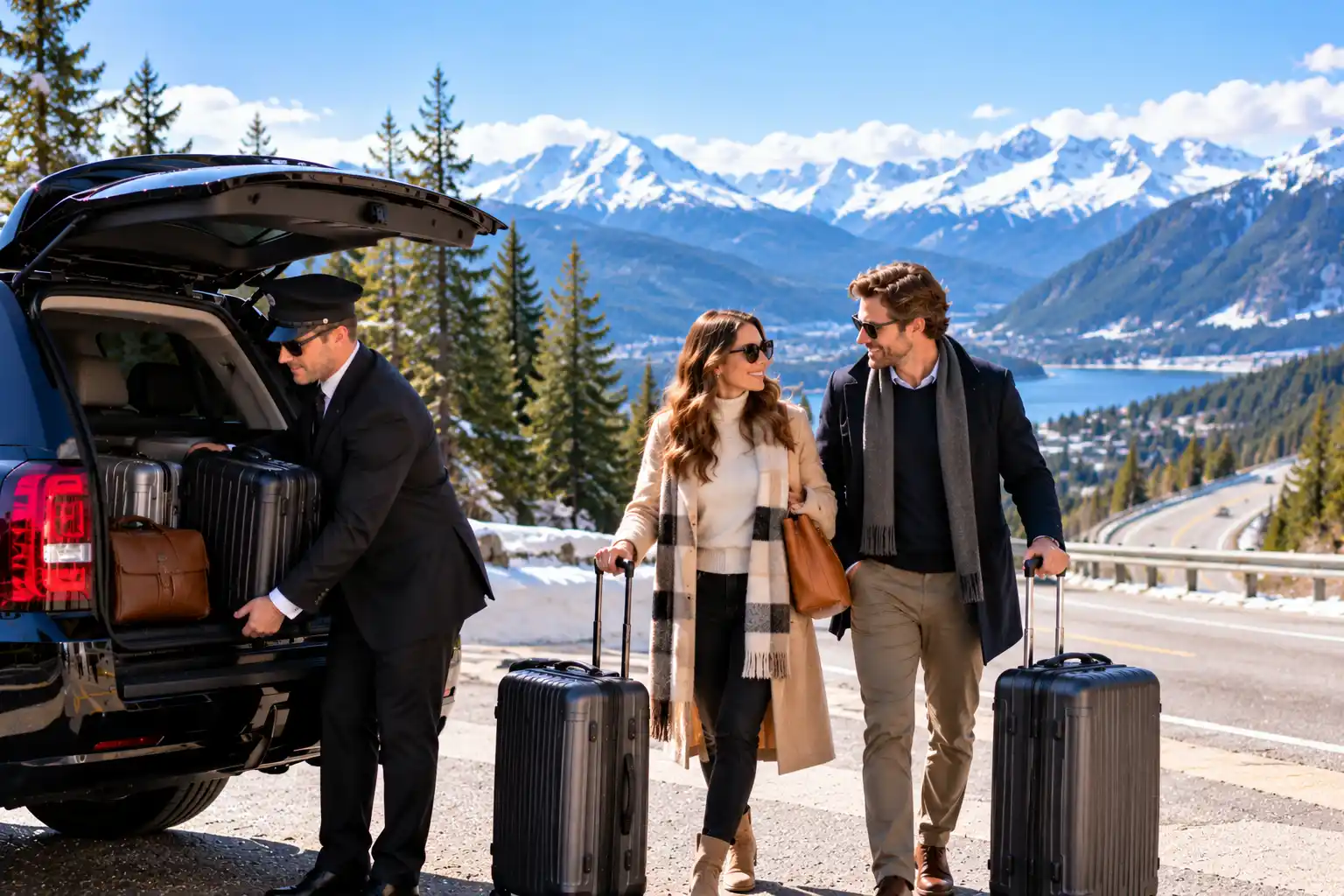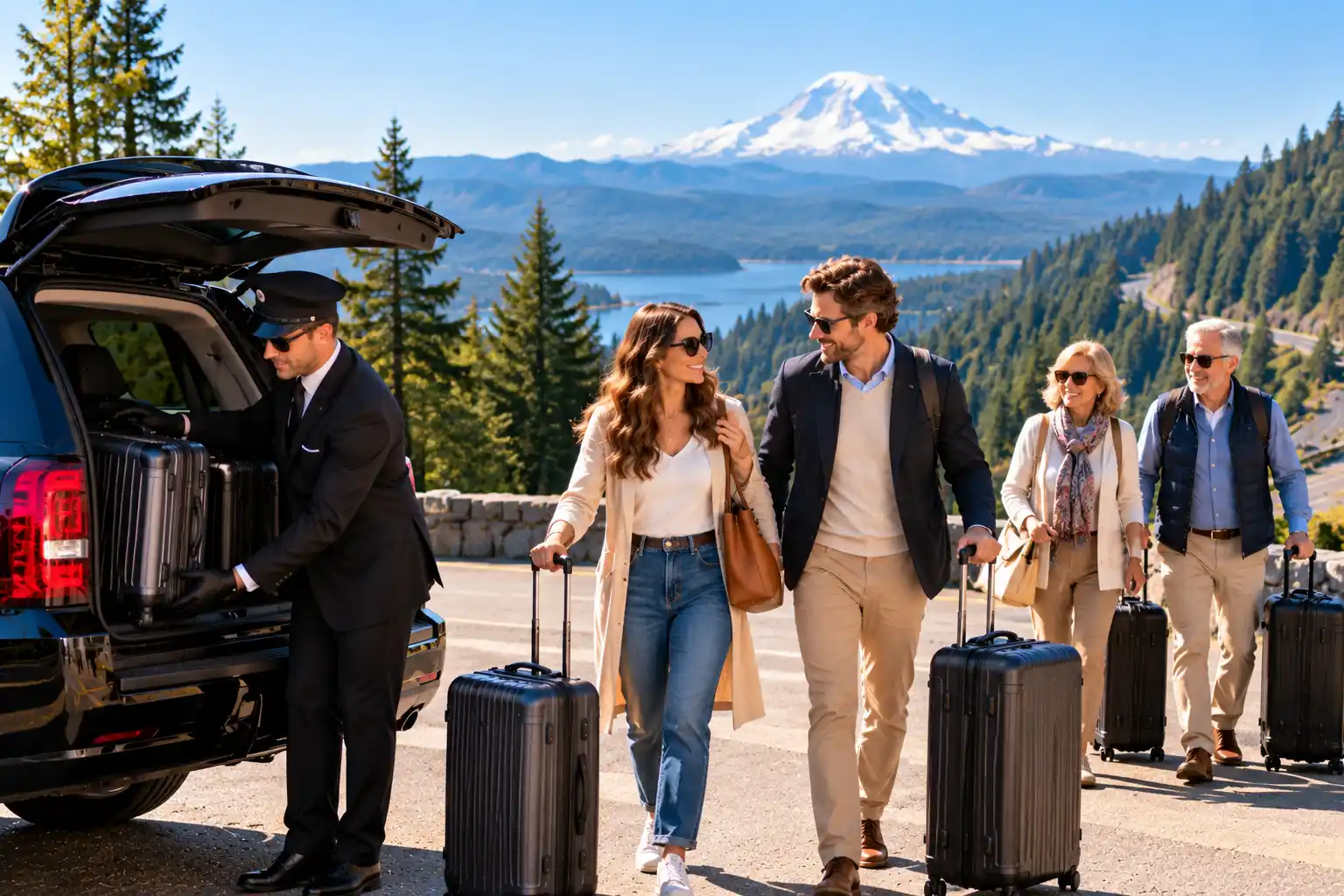












The last morning in Whistler tends to go quickly. Skis need packing, boots are still damp, someone wants one more coffee in the village, and the lodging wants its keys back by a set hour. Meanwhile, a flight is waiting at an airport that is anywhere from a couple of hours to well over four hours away.
This article is about that direction of travel only: leaving Whistler to catch a flight. It explains how to work out a departure time, which airport makes sense for the trip home, how to organize checkout morning, and what to expect if the route crosses back into the United States.
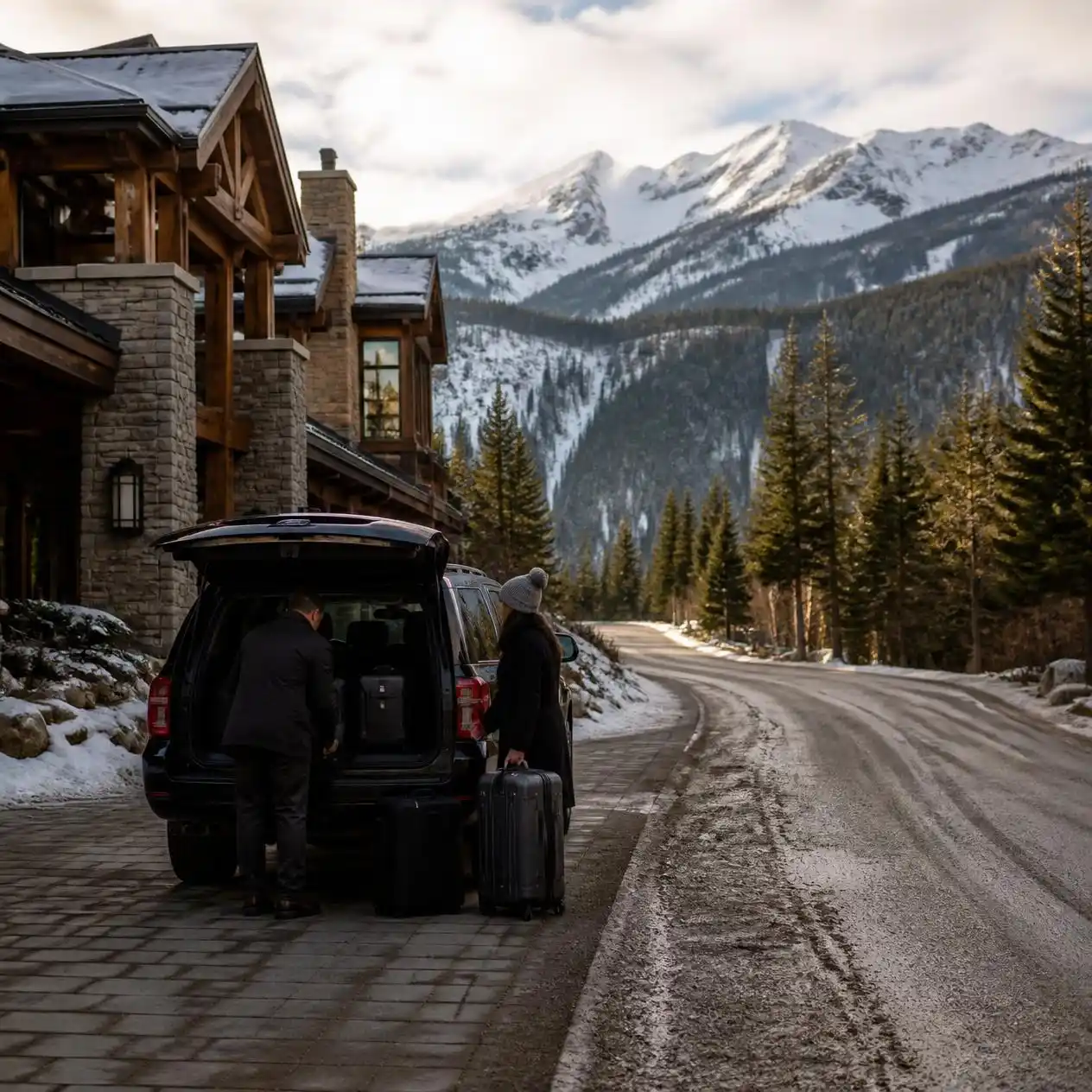
Leaving Whistler Is a Different Problem From Arriving
On the way up, a delay costs you an hour of holiday. On the way down, a delay can cost you a flight. That changes how the trip should be planned. Arrival transfers can be loose and flexible; departure transfers need a fixed latest-possible pickup time with margin built in.
The route out of Whistler is also a single road for the first stretch. Highway 99, the Sea-to-Sky, is the only paved highway connecting Whistler with Squamish and Vancouver. Weather, collisions or rockfall can slow it, and there is no simple detour. Departure planning should assume that the drive could take longer than usual.
Working Backwards From Your Flight Time
Start with the flight and subtract. A useful order of calculation:
– The airline’s recommended arrival time at the airport before departure, which is longer for international flights.
– Time to return a rental, check bags and pass security if the airport is busy.
– The drive itself, using a realistic estimate for the season and day of the week.
– For flights from the US side, the border crossing and a cushion for wait times.
– A buffer for weather or highway slowdowns.
The answer is the time the vehicle should leave your door. In winter, or on the last day of a holiday weekend when many visitors leave at once, add more cushion than you think you need. Your chauffeur can suggest a pickup time based on the season, but it helps to arrive at the conversation with your flight details and your airline’s check-in guidance.
Which Airport to Fly Home From
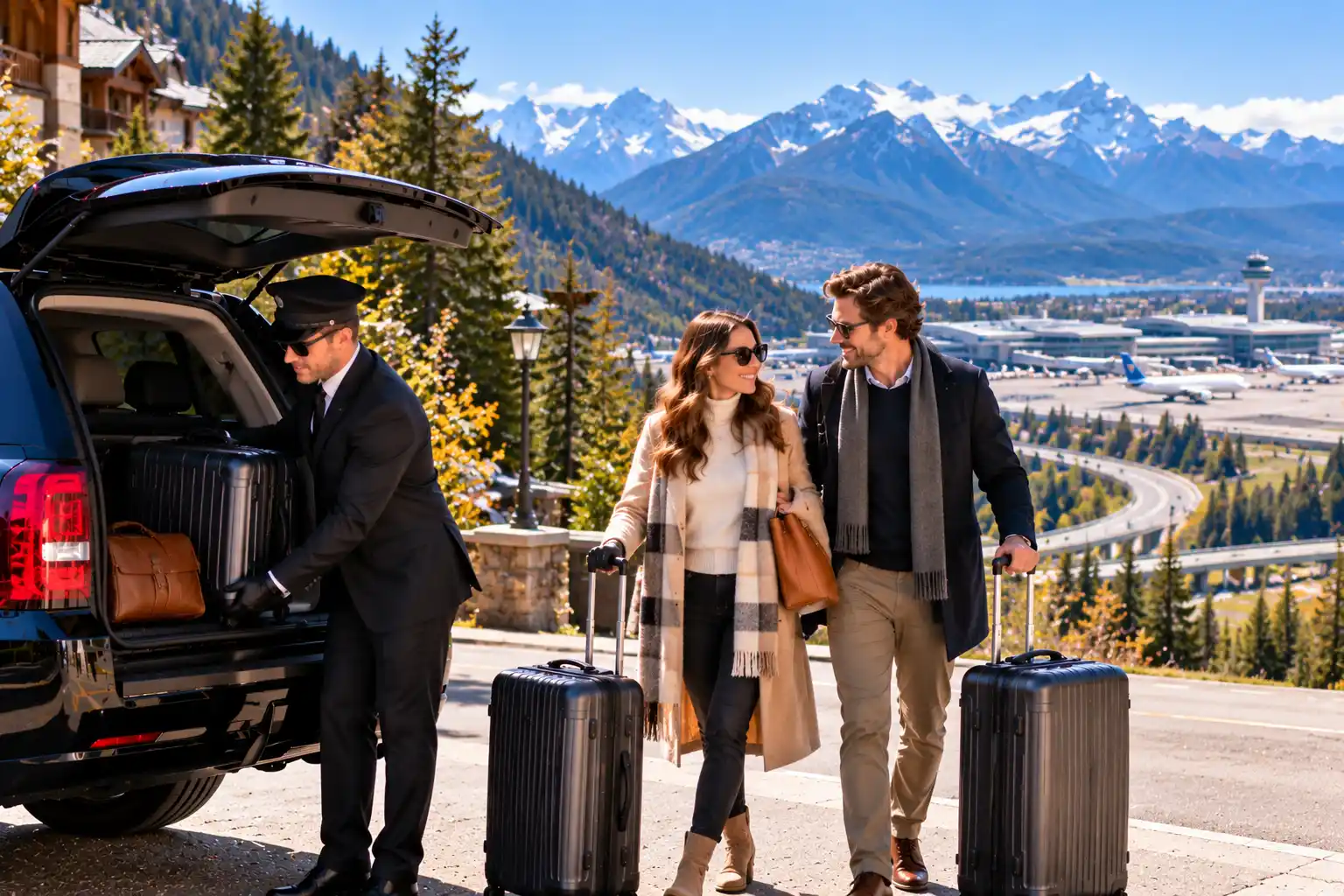
Vancouver International
Vancouver International (YVR) is the closest major airport and the default for most Whistler visitors. The drive typically takes around two to two and a half hours, longer in snow or heavy traffic. There is no border crossing on the way, which makes timing more predictable. YVR also has a wide range of international flights, and travelers heading back to the US can often clear US preclearance at the airport before boarding, depending on the flight.
Flying Home From SeaTac
Some travelers return through Seattle, either because their flights are cheaper or more convenient there or because the trip began in Seattle. The drive from Whistler to SeaTac is much longer, often around four and a half to five hours or more, and it includes the border. It suits groups who would rather sit in one vehicle than make a connection, or travelers combining the ride home with a stop in Seattle. Our overview of private transfers between Seattle and Whistler covers the full route.
Bellingham International
Bellingham International sits just south of the border in Washington. It is closer to Whistler than SeaTac, though still involves the crossing. It can work well for travelers whose airline serves it, offering a shorter drive than Seattle with a smaller, quieter terminal. Flight choice is more limited than at either YVR or SeaTac.
Checkout Morning Logistics
The morning of departure goes more smoothly with a little preparation the evening before.
Pack ski and snowboard gear in bags the night before, and let boots dry overnight. Wet gear can travel in the vehicle, but a dedicated bag keeps the cabin and other luggage clean. Gather passports and travel documents in one place. Confirm the pickup location with your chauffeur, especially if you are staying in the pedestrian village core, where vehicles stop at designated areas rather than at hotel doors.
If checkout is early and your pickup is later, many lodgings will store luggage, or you can schedule the transfer to match checkout and plan a stop on the way, such as lunch in Squamish. For larger groups, assign one person to count bags at the curb before the vehicle leaves; forgotten skis are a common last-day mistake.
For vehicle choice, premium SUVs such as the Cadillac Escalade fit up to six passengers with room for skis and large bags. Bigger groups heading for the airport together usually move to an executive van. The fleet page shows the options.
Crossing South Into the United States
Travelers heading to SeaTac or Bellingham cross the border at one of the crossings south of Vancouver, typically the Peace Arch or Pacific Highway crossings. Every passenger needs a valid passport or other accepted travel document, and items bought in Canada should be declared. US Customs and Border Protection publishes entry requirements and current wait times on cbp.gov.
Wait times vary by day and hour, and holiday weekends are especially busy. Your chauffeur may choose a crossing on the day based on posted waits. How that decision plays out in a hired vehicle is explained in our tips for a faster border crossing by limo.
When you have your flight time and lodging address, reserve your Whistler departure transfer so the pickup time can be confirmed well before your last day.
FAQ
How early should I leave Whistler for a flight from Vancouver?
For a domestic or US-bound flight, many travelers leave four to five hours before departure, and earlier for long-haul international flights. That allows for the drive, airport procedures and a weather buffer. In heavy snow or on holiday weekends, add more time.
Is it worth driving to Seattle for a cheaper flight home?
It can be, especially for a group sharing one vehicle, because the savings on several tickets can outweigh the longer ride. Factor in the extra hours on the road, the border crossing and an earlier start on departure day. For a solo traveler on a tight schedule, YVR is usually the more practical choice.
Can wet ski gear go in the vehicle?
Yes. Skis, boards and boots can travel in the cargo area, and bagging them keeps moisture off other luggage. SUVs and vans have the most space for equipment.
What if the highway is closed on my departure day?
Closures on Highway 99 are uncommon but do happen. Check DriveBC before leaving and stay in touch with your chauffeur, who will be watching conditions. If a closure threatens your flight, contact your airline early about rebooking options.