








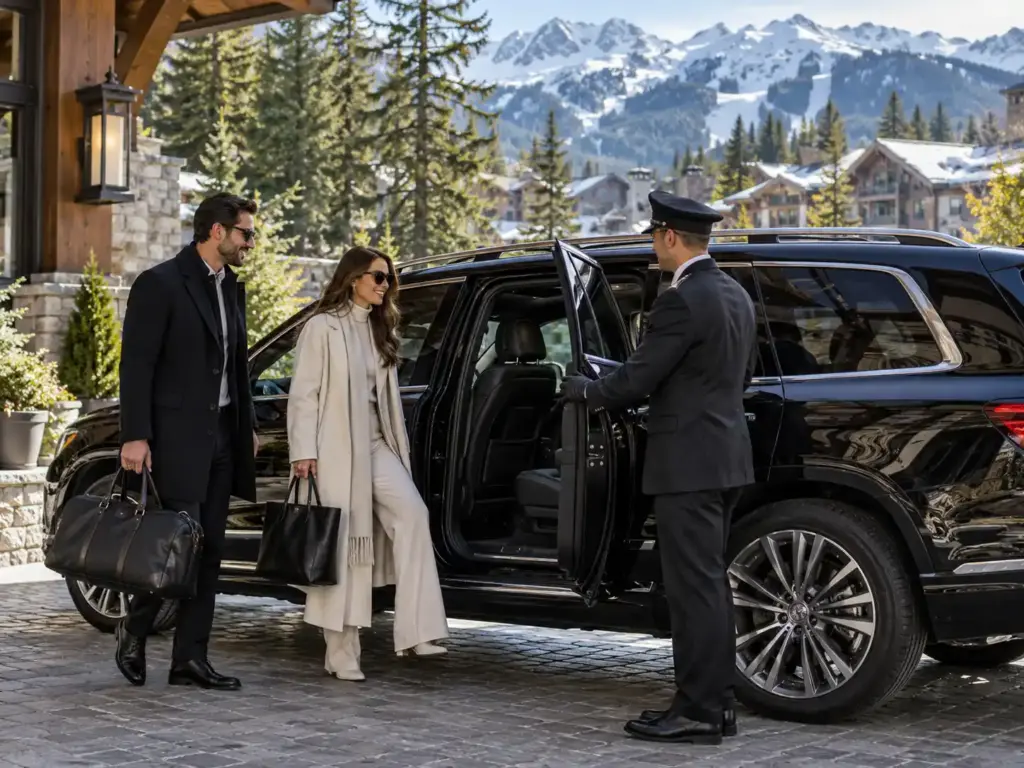
On a clear day, the drive to Whistler looks easy. The Sea-to-Sky Highway hugs Howe Sound, climbs past granite cliffs and waterfalls, and opens onto mountain views that make passengers reach for their phones. On a dark winter evening, with wet snow falling above Squamish and headlights coming around blind corners, the same road asks a great deal more of the person at the wheel.
That gap between a pleasant drive and a demanding one is where the word “professional” earns its place. Plenty of people can drive to Whistler. A professional chauffeur is someone who can do it smoothly in any season, deliver you to the right door in a resort that is not built for cars, and stay available when your plans change during the stay. This article looks at what that means in practice.
What “Professional” Means on the Sea-to-Sky Highway
The stretch of Highway 99 from Horseshoe Bay up to Whistler is well engineered, yet it remains a mountain road at heart. It winds along steep slopes, climbs and descends through several elevation changes, and passes through areas where the weather can differ sharply from the coast. Rockfall, wildlife and sudden fog are all part of the picture.
A professional on this road is defined less by speed than by consistency. Passengers should feel the same smooth, calm ride on the last bend as on the first, whatever the conditions. That comes from experience, preparation and a habit of planning ahead: knowing where the road narrows, where ice tends to form, and where to pull over safely if someone in the back feels unwell.
Professionalism also shows in how the trip is run before it starts. A good service confirms the pickup, shares the chauffeur’s contact details, checks conditions, and plans the route to the border and through Vancouver at sensible times.
Mountain Driving Skills You Cannot See From the Back Seat
Most of the skill in mountain driving is invisible. Passengers notice it only by its absence.
Smooth braking is one example. On a winding descent, an experienced driver slows before the curve rather than in it, using engine braking and gentle pressure so the car stays settled. Passengers in the second or third row of an SUV feel every abrupt input, and a few kilometers of jerky braking can turn a pleasant drive into a queasy one.
Reading the road is another. A chauffeur who knows the highway anticipates the shaded stretches where frost lingers, the sections where trucks slow on the climbs, and the passing lanes where traffic bunches up. Following distance grows automatically in rain or snow.
Then there is judgment. Sometimes the best decision is to wait twenty minutes at a café in Squamish while a snow squall passes, or to delay departure until a reported incident is cleared. A professional makes that call calmly and explains it, rather than pushing on to keep to schedule.
Winter Equipment and Preparation
In the colder months, British Columbia requires vehicles on many highways, including the Sea-to-Sky route, to use winter-rated tires, and conditions can call for chains as well. The official requirements and live road conditions are published on DriveBC.
A well-run service goes beyond the minimum:
– Winter-rated tires in good condition on every vehicle heading north in the colder months.
– Traction equipment carried in the vehicle and a chauffeur trained to fit it.
– Washer fluid rated for freezing temperatures, plus a scraper and brush.
– Blankets, water and basic supplies in case of a long closure.
– A fully charged phone and a plan for communicating with dispatch in poor coverage areas.
The vehicle matters too. A full-size SUV with all-wheel or four-wheel drive gives extra confidence and room for ski equipment. Which models actually do the mountain work, and how they differ, is the subject of our Escalade, Yukon and GLS comparison.
Local Knowledge of Whistler Drop-Off Points
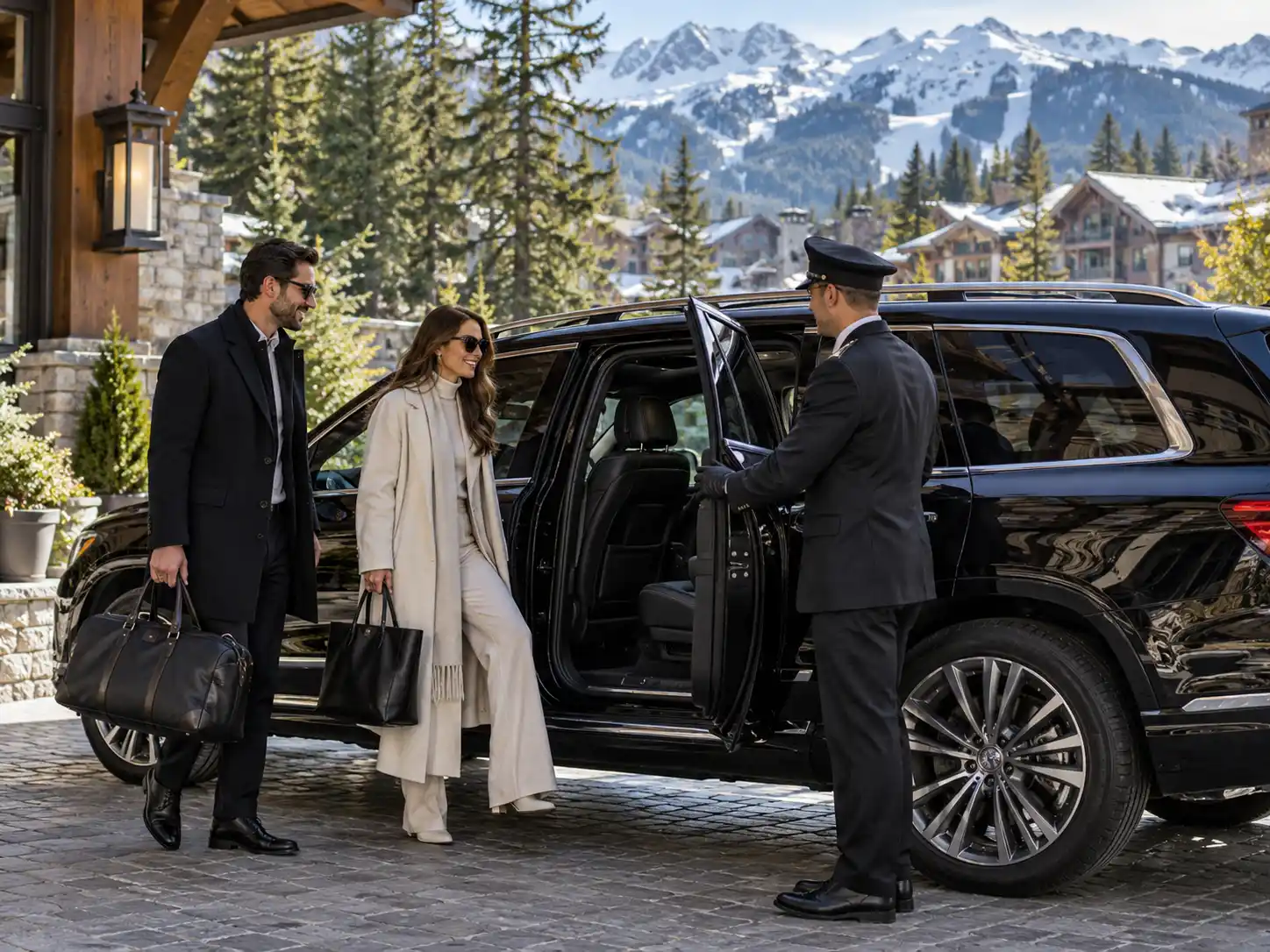
Whistler is designed around people on foot. The heart of the resort is a pedestrian village, and many hotels, condos and restaurants cannot be reached directly by car. Vehicles use access roads, loading zones, hotel entrances and underground parking, and knowing which one serves a particular building makes a real difference when you arrive with skis and suitcases.
A chauffeur who knows Whistler will stop as close to your door as the layout allows and carry bags the rest of the way where possible. That knowledge applies to restaurants and activity meeting points during your stay too: where to drop off for dinner without leaving guests to walk in the snow, and where to pick up after the last chairlift.
Keeping a Chauffeur During Your Whistler Stay
Many visitors use a chauffeur only for the trip up and the trip back. Others keep one for part or all of their stay, and the difference is noticeable.
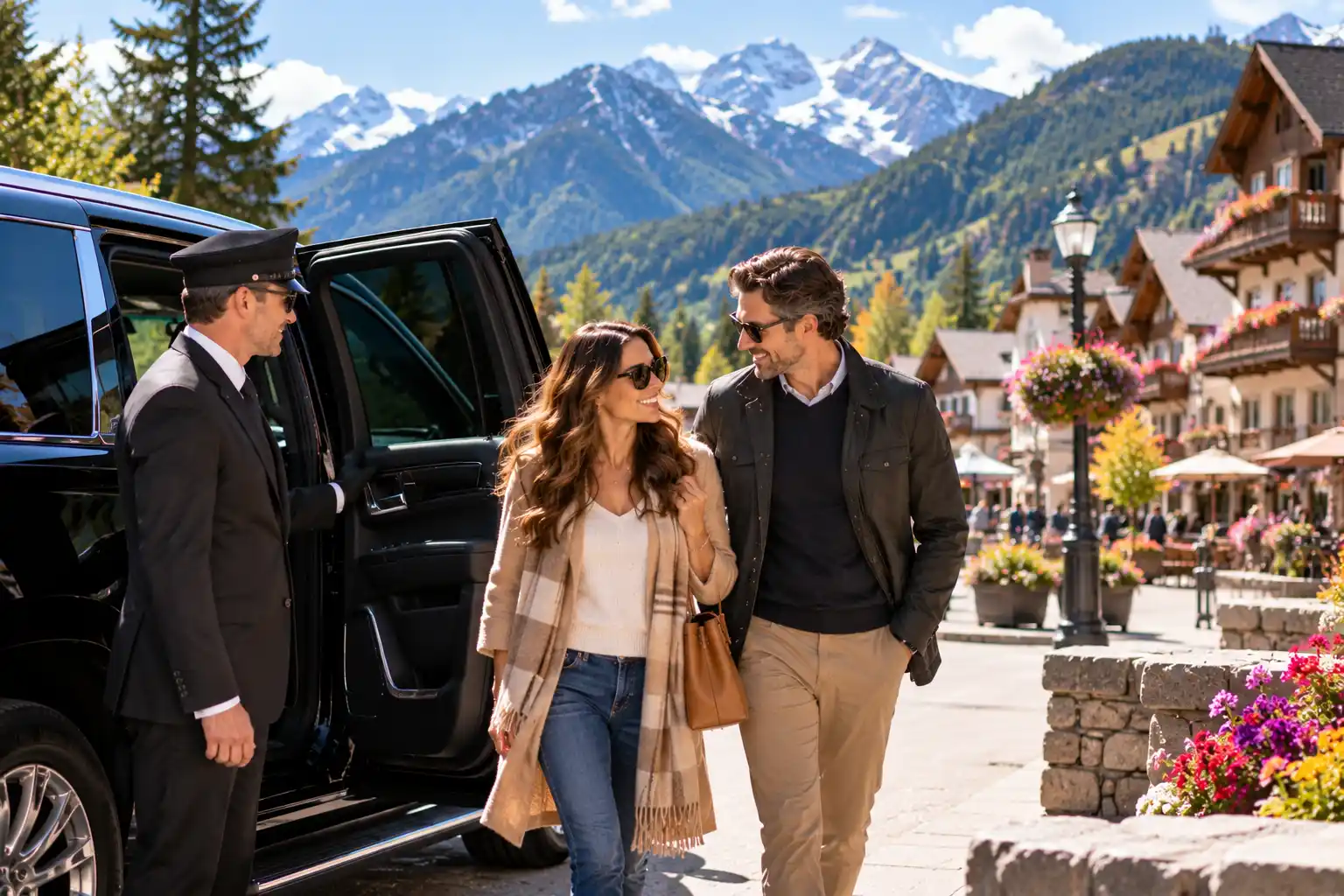
With a chauffeur on call, an evening dinner in a different part of the resort becomes a short, warm ride rather than a cold walk or a wait for a taxi. A day trip to Squamish, a visit to a spa outside the village, or an outing to a lake in summer is easy to arrange. Families can split up, with one group heading to the slopes and another to a lesson or an activity, without anyone needing to drive.
Multi-day bookings need some planning. The chauffeur stays locally, and the daily schedule should leave room for proper rest. Discuss the times you expect to need the vehicle each day, and confirm when booking how lodging for the chauffeur is arranged. The Whistler limos and private transfers page explains how trips from Seattle are set up.
How to Recognize a Well-Run Whistler Service
A few signs separate a professional operation from an improvised one. The company asks the right questions when you book: number of passengers, luggage, ski equipment, lodging address and flight details where relevant. You receive a clear confirmation and know who to contact on the day. The vehicle arrives clean, prepared for the season and the right size for your group.
Reviews add another layer. Our earlier article on reading Seattle to Whistler transfer reviews explains which comments actually predict a good trip. If you are starting from the airport, the guide on getting to Whistler from SeaTac covers that version of the trip.
When you are ready, send your Whistler trip details with your dates, lodging and whether you want a chauffeur during the stay.
FAQ
Can I keep a chauffeur in Whistler for several days?
Yes, multi-day bookings can be arranged so the chauffeur and vehicle remain available during your stay. You agree on the times you will need the car each day. Lodging for the chauffeur and the daily schedule are confirmed when booking.
Are winter tires required on the road to Whistler?
Yes. For much of the winter, the province expects vehicles on Highway 99 toward Whistler and on many other routes to carry tires rated for snow, and severe weather can also make chains necessary. Check DriveBC for the official rules and the latest road reports before you set out.
Can the chauffeur take us to dinner in a different part of Whistler?
Yes. If you have kept the chauffeur for your stay, evening rides to restaurants are a common use, especially between neighborhoods of the resort. Share the reservation time and address so the pickup and return can be planned.
Do chauffeurs help with ski equipment?
Chauffeurs load and unload skis, snowboards and boot bags as part of the service. Let the booking team know how much equipment you have so the right vehicle is assigned. A full-size SUV or van is usually the best fit for a group with gear.