









Most Seattle wine trips point east, toward Woodinville or across the Cascades. This one points south. Follow I-5 out of the city, pass through Portland and, a short drive later, you reach the Willamette Valley, Oregon’s best-known wine region and a very different landscape from the dry hills of eastern Washington.
A two-state wine trip takes a little more planning than a day in Woodinville, but it rewards the effort with cooler-climate wines, rolling farm country and the option of returning home through the Columbia River Gorge. This article covers the route south, how to spend the tasting days, the scenic return and the logistics of lodging and a chauffeur across a state line.
Heading South Instead of East
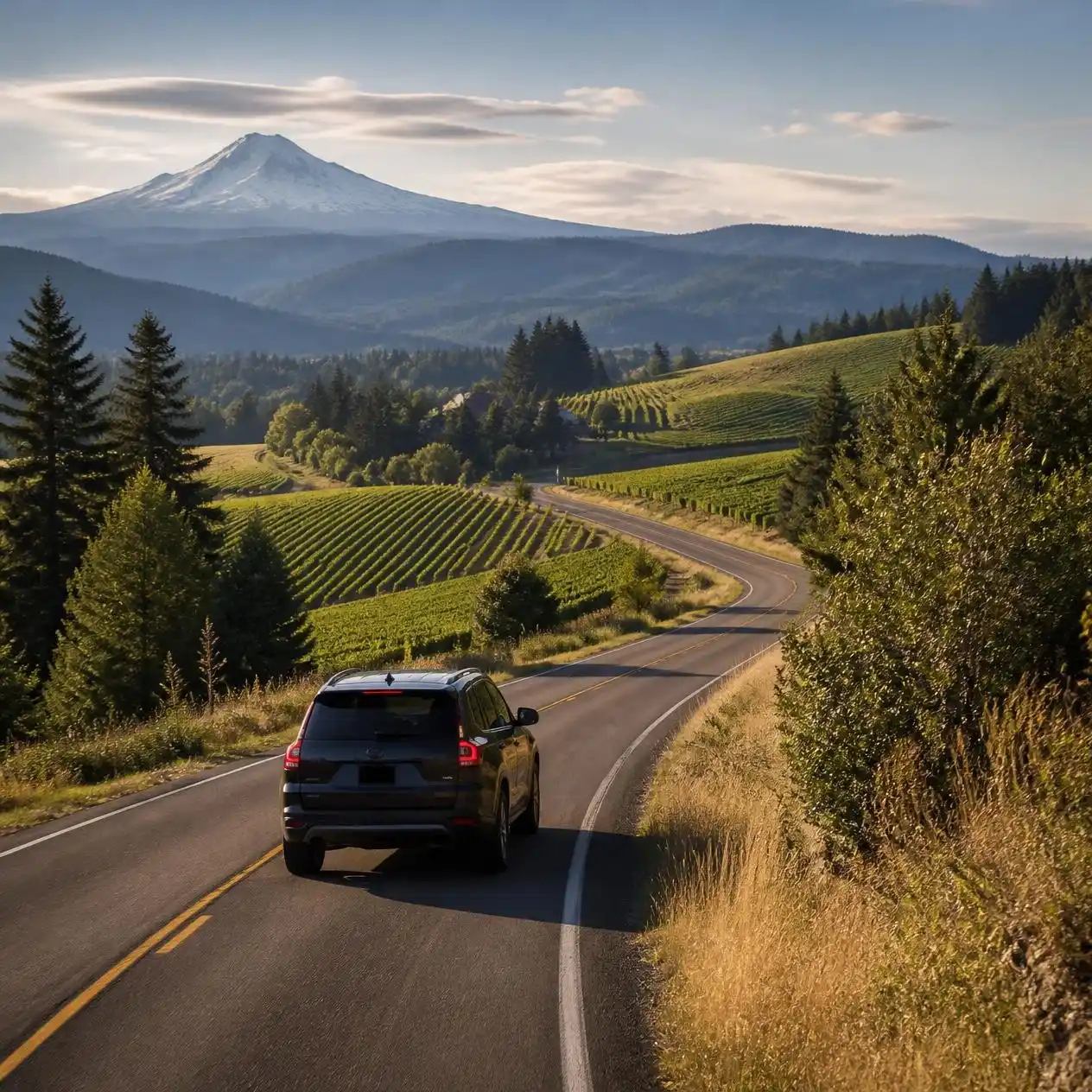
The southbound route is mostly interstate driving, with no mountain pass to cross. That makes it a reasonable choice in the colder months, when the passes to eastern Washington can be snowy. The drive from Seattle to the northern Willamette Valley typically takes around three and a half to four hours without stops, longer in traffic around Tacoma, Olympia or Portland.
The style of wine changes with the climate. The Willamette Valley’s cooler, wetter conditions suit Pinot Noir above all, along with Pinot Gris and Chardonnay. If your previous wine trips centered on bold eastern Washington reds, this route offers a genuine contrast. If you have been through Yakima Valley, Red Mountain and Walla Walla, our Washington wine loop itinerary covers that eastern route instead.
Seattle to Portland: Breaking the Drive
The first leg is the long one. Rather than treat it as dead time, many travelers break it into pieces.
A mid-morning departure avoids the worst of Seattle’s commute and reaches Portland around lunch. A meal in the city, a walk through one of its neighborhoods or a visit to a Portland urban winery turns the drive into part of the trip. From Portland, the northern edge of wine country is close enough to reach by mid-afternoon for a first tasting or a straight run to the hotel.
Travelers who prefer an early start can reach the valley by lunchtime and fit in two tastings on the first day. Either approach works; the point is to decide in advance so the chauffeur can plan the timing. Our page on premium vehicle travel to Portland describes the Seattle–Portland leg on its own.
Willamette Valley Tasting Days
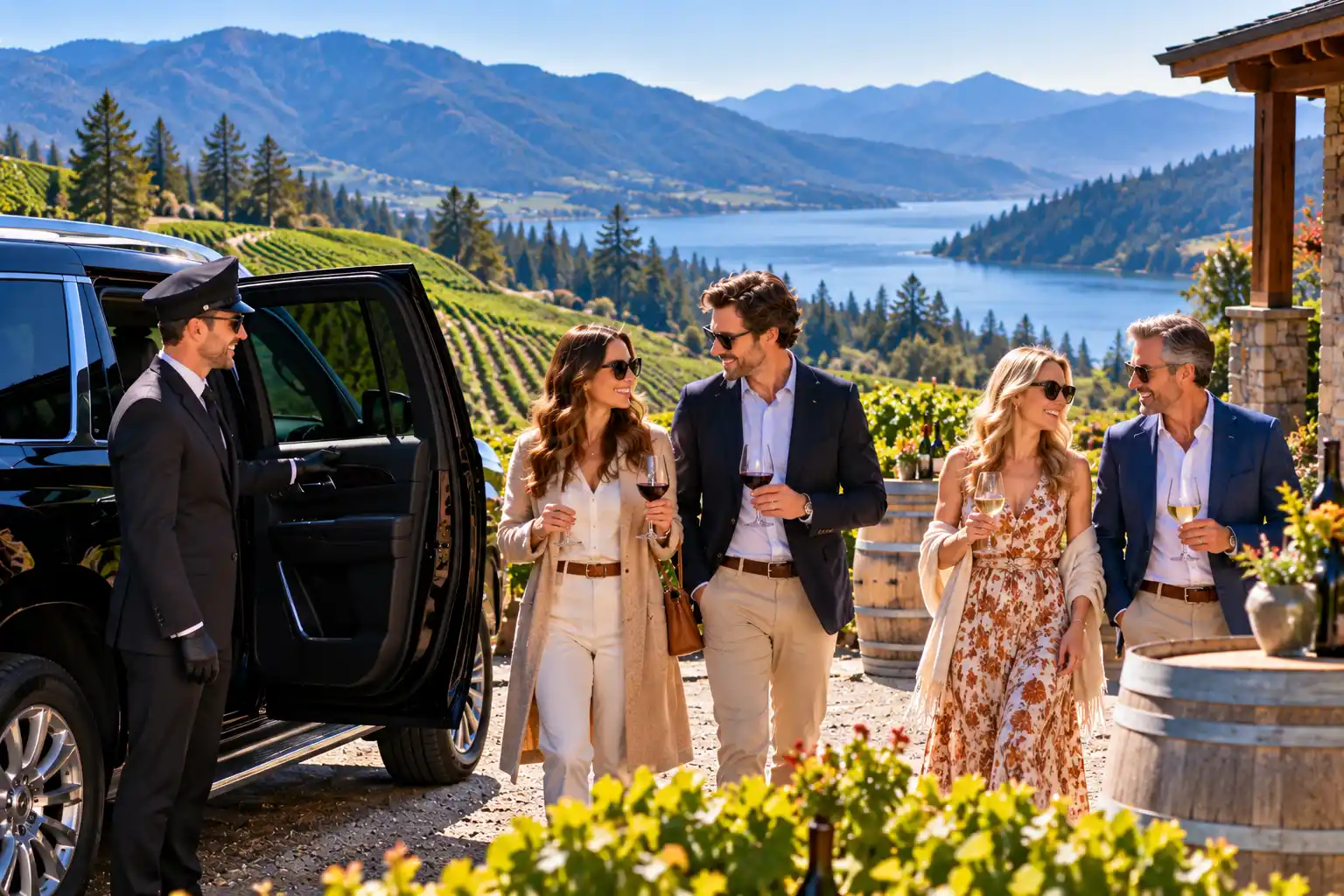
The valley stretches south from the Portland area, and much of the best-known tasting country sits in its northern part, around the Dundee Hills, Eola-Amity Hills, Chehalem Mountains and Yamhill-Carlton areas. Wineries often sit on hillsides with long views across vineyards and farmland, and many are reached by winding country roads.
Two full tasting days suit most visitors. Plan three or four wineries per day, with lunch in one of the small towns or a picnic at a winery that allows it. Many Willamette producers ask for reservations, especially for seated tastings, so book appointments before you travel and share the times with your chauffeur.
Distances between wineries are short but slow, because rural roads curve around hills and through towns. A chauffeur who handles the driving lets everyone in the group taste, and saves the hassle of finding unfamiliar driveways and parking.
Returning Along the Columbia River Gorge
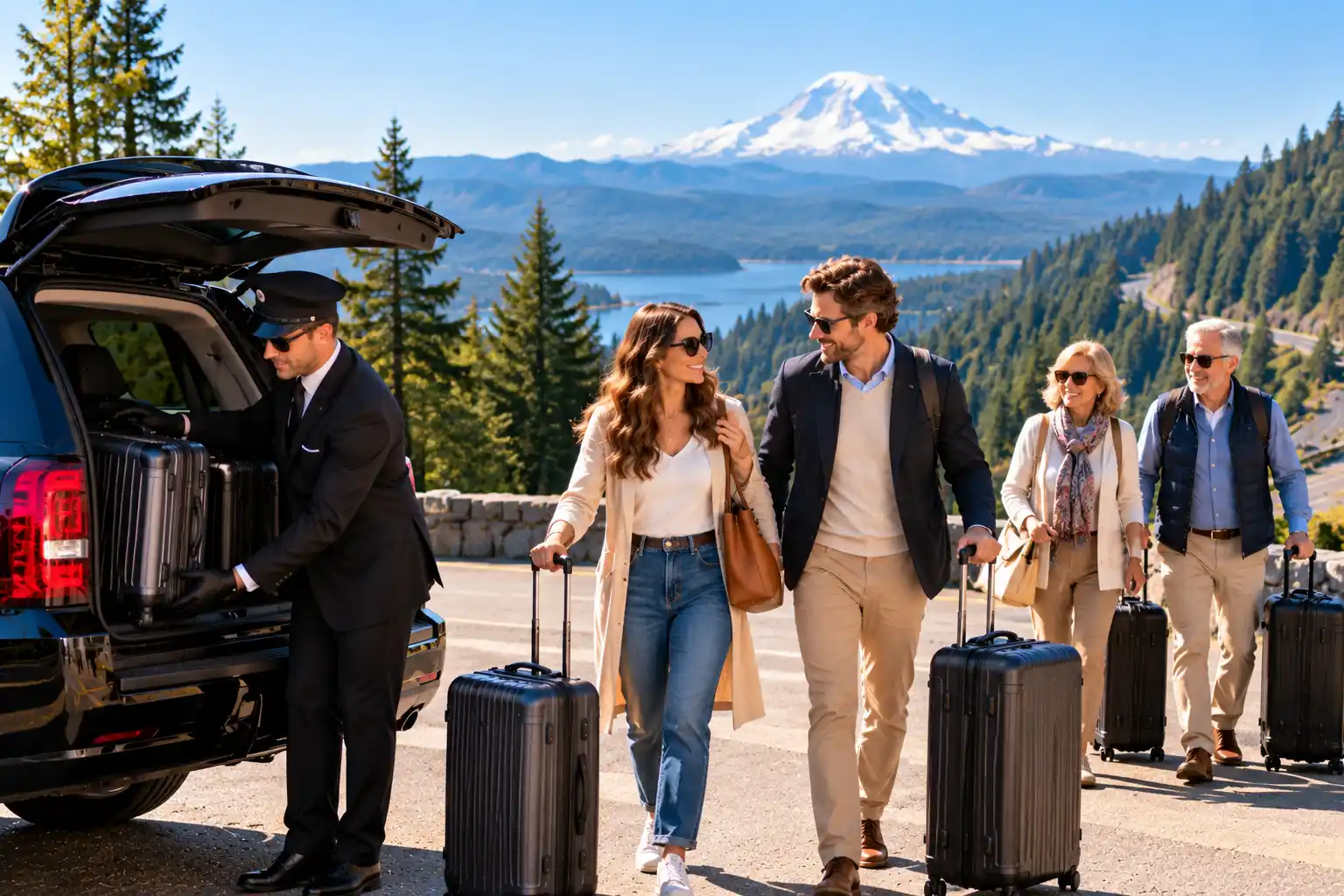
Instead of retracing I-5, you can return through the Columbia River Gorge. From Portland, the route heads east along the river, past waterfalls and cliffs, before crossing into Washington and turning north. The Gorge also has its own wine area, with tasting rooms on both sides of the river and a mix of cool- and warm-climate grapes over a short distance.
The Gorge return adds significant time compared with I-5, particularly if you continue east and come back to Seattle over a mountain pass. Some travelers do a scenic out-and-back along the river and then rejoin I-5 north; others turn it into an extra day with an overnight in the Gorge. If the return loops back over a Cascade pass, check road conditions with WSDOT before departure.
Lodging and Chauffeur Logistics Across Two States
A wine trip of this length is usually booked as a multi-day charter. The same chauffeur and vehicle stay with the group for the whole trip, including tasting days and the return. The chauffeur needs lodging near yours; this is normally arranged by the company and reflected in the quote, but confirm the details when booking.
Choose lodging that works as a base. A hotel or rental in the northern valley keeps daily driving short. For larger parties, check that the property has parking for an SUV or van.
On wine purchases, a vehicle with a large cargo area matters on a trip like this. Premium SUVs hold up to six passengers with room for cases, and executive vans carry larger groups with a separate luggage area. If you plan to buy heavily, shipping some purchases directly from the wineries keeps the cargo area free. The fleet page shows the vehicle options.
Is a Two-State Wine Trip Right for You?
This trip suits travelers who want variety: city time in Portland, a different wine style in the valley and a scenic return. It also suits groups who prefer to avoid mountain passes in the colder months, and anyone who has already explored Woodinville and wants a bigger trip.
It is less suited to a single free day. With at least three or four days, it becomes a rewarding route. With less, a day in Woodinville or a shorter trip closer to Seattle may be the better use of time.
If you are ready to map the route, send your dates and group size for a quote and we will help plan the days.
FAQ
How long is the drive from Seattle to Willamette Valley?
Plan on a little under half a day of driving to reach the valley’s northern wineries if you go straight through. Congestion near Tacoma, Olympia and Portland is what usually stretches the trip. Many travelers break it up with lunch in Portland.
Can a Seattle chauffeur drive us around Oregon wine country?
Yes. A multi-day charter keeps the same chauffeur and vehicle with your group throughout the trip, including tasting days in Oregon. Share winery appointments and lodging in advance so the days can be planned well.
What grape varieties is Willamette Valley known for?
Pinot Noir is the valley’s signature grape, thanks to its cool, damp climate. Pinot Gris and Chardonnay are also widely grown, along with sparkling wines made from those grapes. It is a strong contrast to the warmer-climate reds of eastern Washington.
Is the Gorge route much longer than I-5?
Yes. Returning through the Columbia River Gorge adds noticeable time, especially if you continue east before turning north. Many travelers treat it as an extra day or a half-day detour rather than the direct way home.