

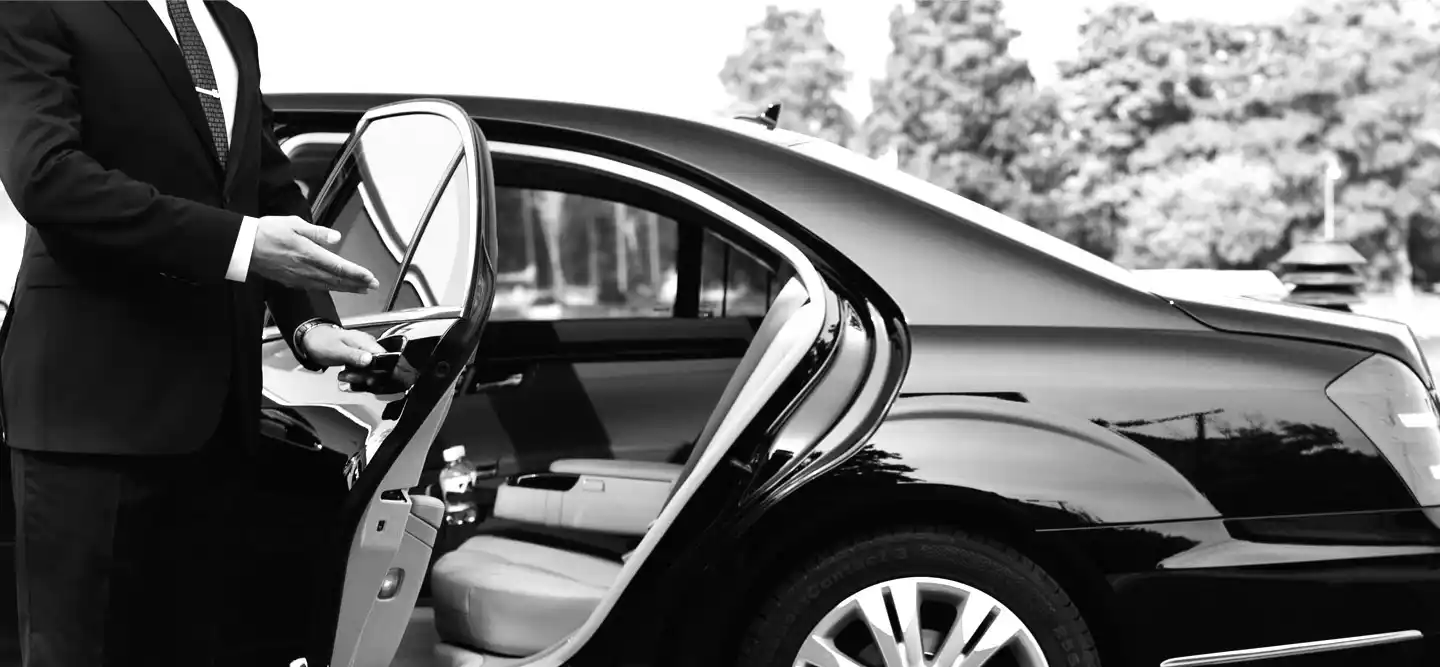







For a family traveling with young children, an executive moving between confidential meetings, or a public figure arriving under attention, transportation safety involves far more than an uneventful drive. Choosing safe private transportation Seattle travelers can trust means evaluating the vehicle, chauffeur, reservation process, pickup environment, route strategy, communication practices, and support available when plans change. Premium service should reduce uncertainty from the moment a trip is booked until every passenger and piece of luggage reaches the correct destination.
What safety means in premium transportation beyond just getting there
In premium transportation, safety is the coordinated management of driving risk, passenger care, privacy, timing, and operational reliability. A vehicle arriving without incident is only the final result. The underlying process includes chauffeur screening, vehicle inspections, dispatch oversight, accurate passenger information, secure payment handling, contingency planning, and clear communication.
For example, consider a family scheduled to leave Bellevue at 6:00 a.m. for an 8:30 a.m. departure from Seattle-Tacoma International Airport. A basic ride provider may simply assign the nearest available driver shortly before pickup. A professional operator may confirm the reservation the previous day, review the requested child seat, monitor the flight, assign an appropriately sized SUV, and schedule arrival 10 to 15 minutes early. That preparation addresses risks that begin well before the vehicle moves.
The major trade-off is between on-demand convenience and planned accountability. An app-based ride can be economical and quick for a routine solo trip. A prearranged chauffeur service generally costs more because it reserves specific capacity, provides dispatch support, and allows special requirements to be documented. The premium is not a guarantee that delays or emergencies can never occur; it pays for layers of preparation and a more controlled response when they do.
A common pitfall is assuming that a luxury badge automatically signifies a safe operation. A late-model Cadillac Escalade, Chevrolet Suburban, or Mercedes-Benz sedan may look impressive, but appearance does not reveal tire condition, commercial insurance, inspection records, chauffeur vetting, or dispatch practices. Travelers should assess the operator rather than judging only the vehicle photograph.
The obvious next question is: What evidence should a passenger look for? Useful indicators include a written reservation confirmation, identifiable business contact information, clear cancellation and wait-time terms, commercial operating credentials appropriate to the service, proof of insurance when requested, and a process for identifying the assigned chauffeur and vehicle. A provider’s explanation of Safe and Secure Travel practices should be specific enough to show how those safeguards work in real trips.
Reliable safe private transportation Seattle service also recognizes that safety includes dignity. A senior should not be rushed while entering a vehicle. A child should not be placed in an unsuitable restraint merely to preserve the schedule. A corporate guest’s name, hotel, telephone number, and itinerary should not be displayed or discussed unnecessarily. These details distinguish passenger care from simple point-to-point driving.
Why families, executives, and VIP travelers have different priorities
Passenger risk is not identical across traveler groups. Families usually prioritize restraint compatibility, space, predictable stops, and hands-on coordination. Executives value punctuality, a quiet environment, itinerary control, and the protection of business information. VIP and high-profile passengers may need discreet staging, limited exposure, controlled communications, and alternatives to prominent entrances.
Families traveling with children
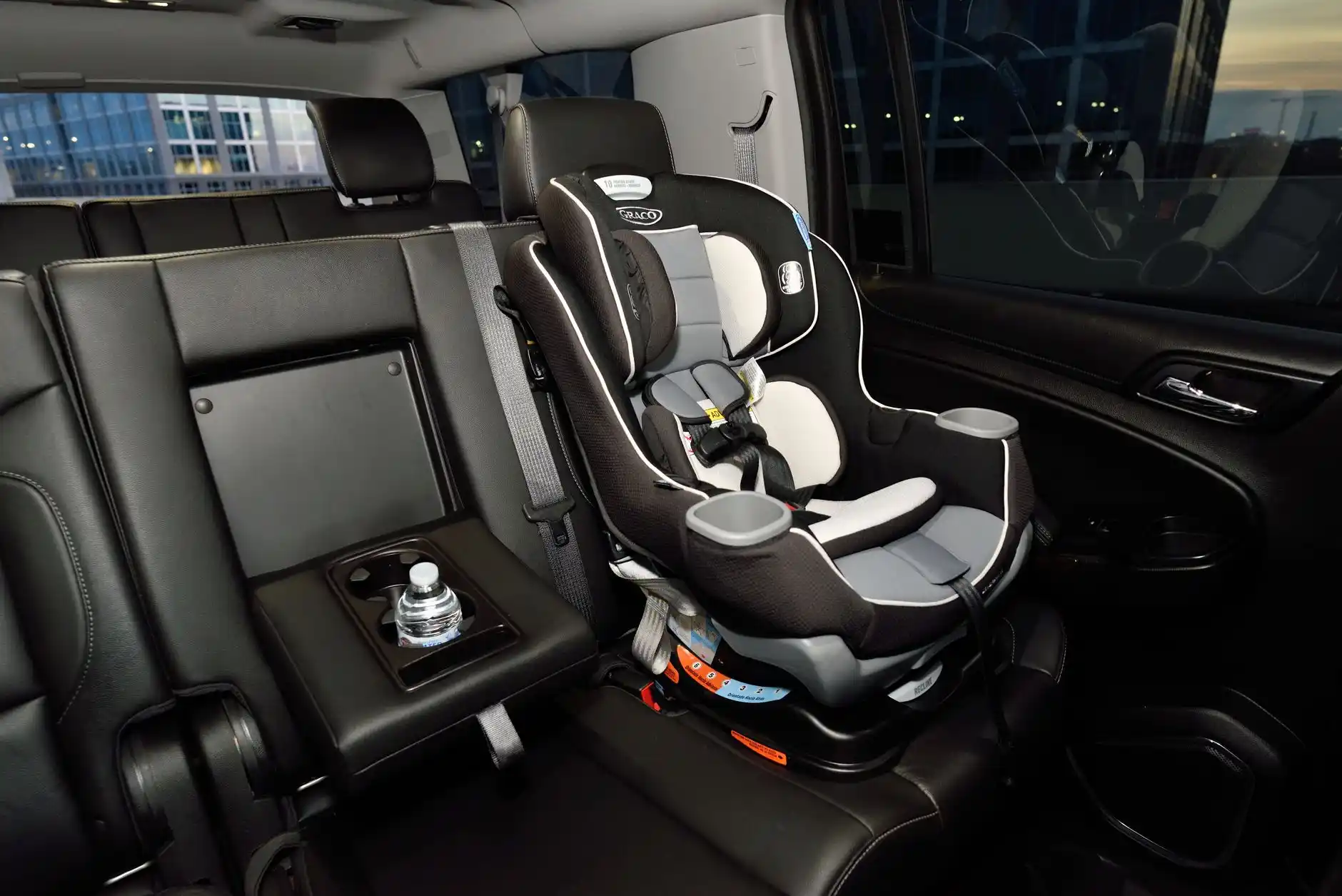
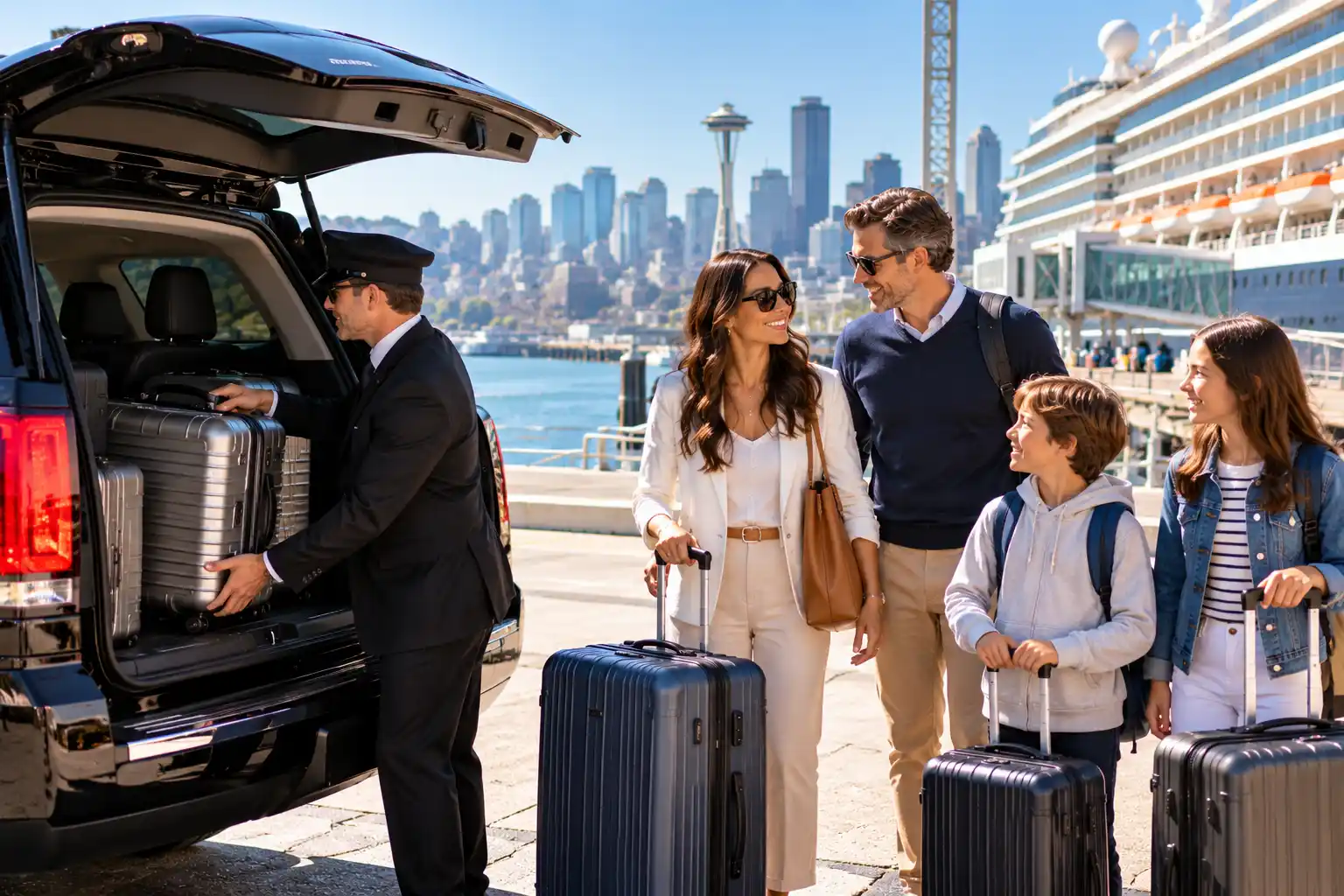
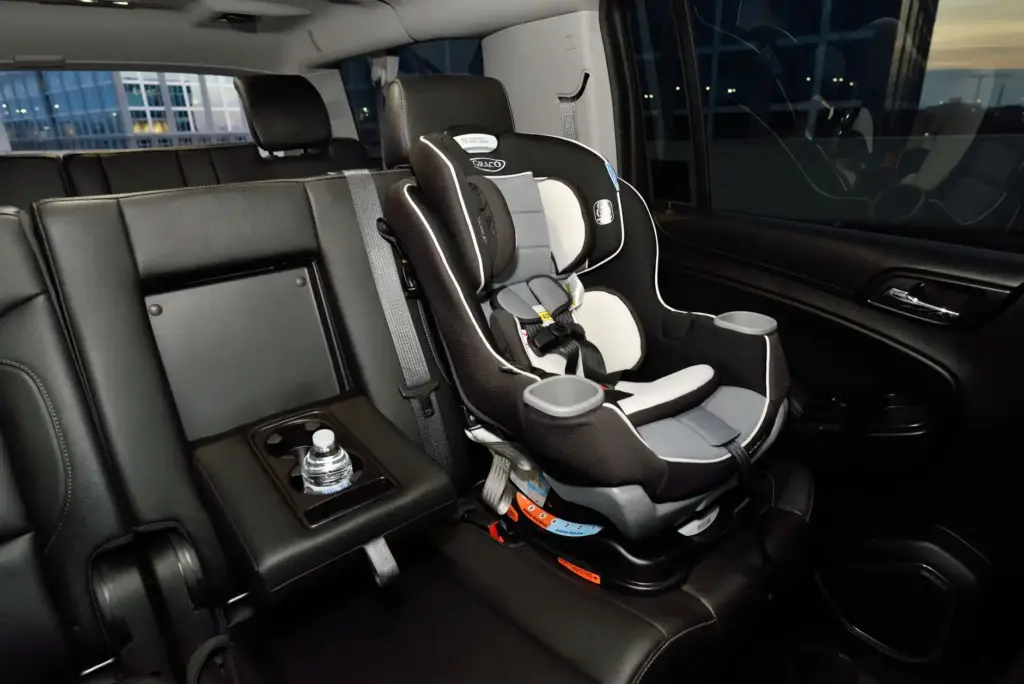
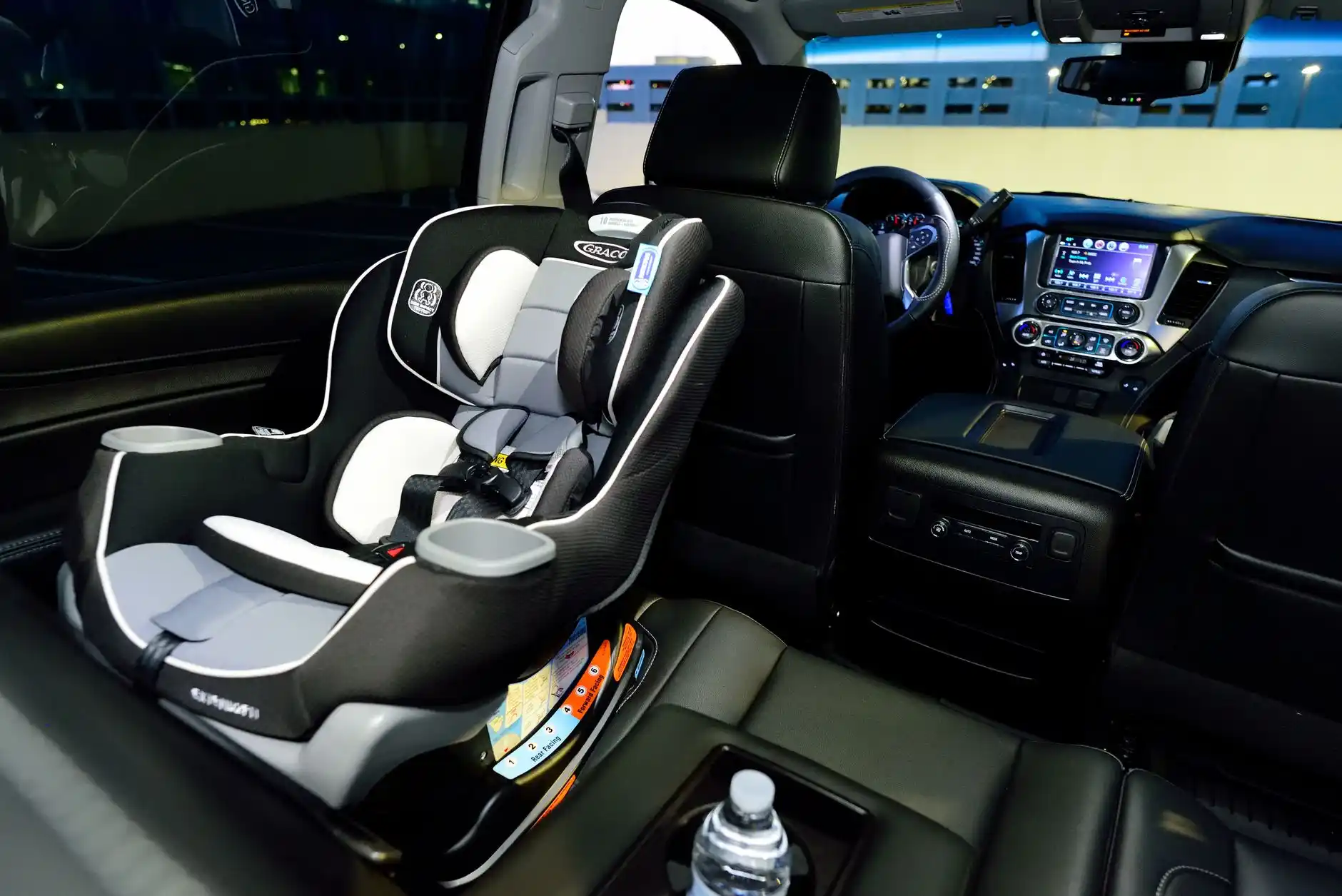
A family of five arriving at SEA with two adults, a rear-facing child seat, a booster, four checked bags, and a stroller may require a full-size SUV rather than a sedan. Passenger capacity alone is misleading: a nominal seven-seat SUV may not accommodate seven people once child restraints and luggage are included. Families should provide the number of passengers, children’s ages and approximate sizes, restraint needs, luggage count, and oversized items before dispatch assigns a vehicle.
Washington child-restraint rules depend on age, size, and seating position. Because regulations and exemptions can change, parents should confirm current requirements and ask whether the company supplies seats, permits customer-provided restraints, or expects the responsible adult to install them. Many chauffeurs will position a requested seat but will not certify or perform final installation because correct fit depends on the child and the seat manufacturer’s instructions.
Executives and corporate travelers
An executive may need three timed stops—downtown Seattle, South Lake Union, and Bellevue—with only 20 minutes between meetings. Here, safe service means realistic scheduling rather than aggressive driving. A professional dispatcher should warn that crossing Lake Washington during the afternoon peak can take substantially longer than an uncongested estimate and recommend a 20- to 30-minute buffer.
A Chauffeur Service Seattle business travelers use should also treat the passenger compartment as a private workspace. Chauffeurs should avoid commenting on calls, documents, destinations, or passenger identities. However, travelers should not mistake discretion for a certified secure communications environment. Highly sensitive conversations still belong on encrypted company systems, and confidential papers should leave the vehicle with the passenger.
VIPs and high-profile guests
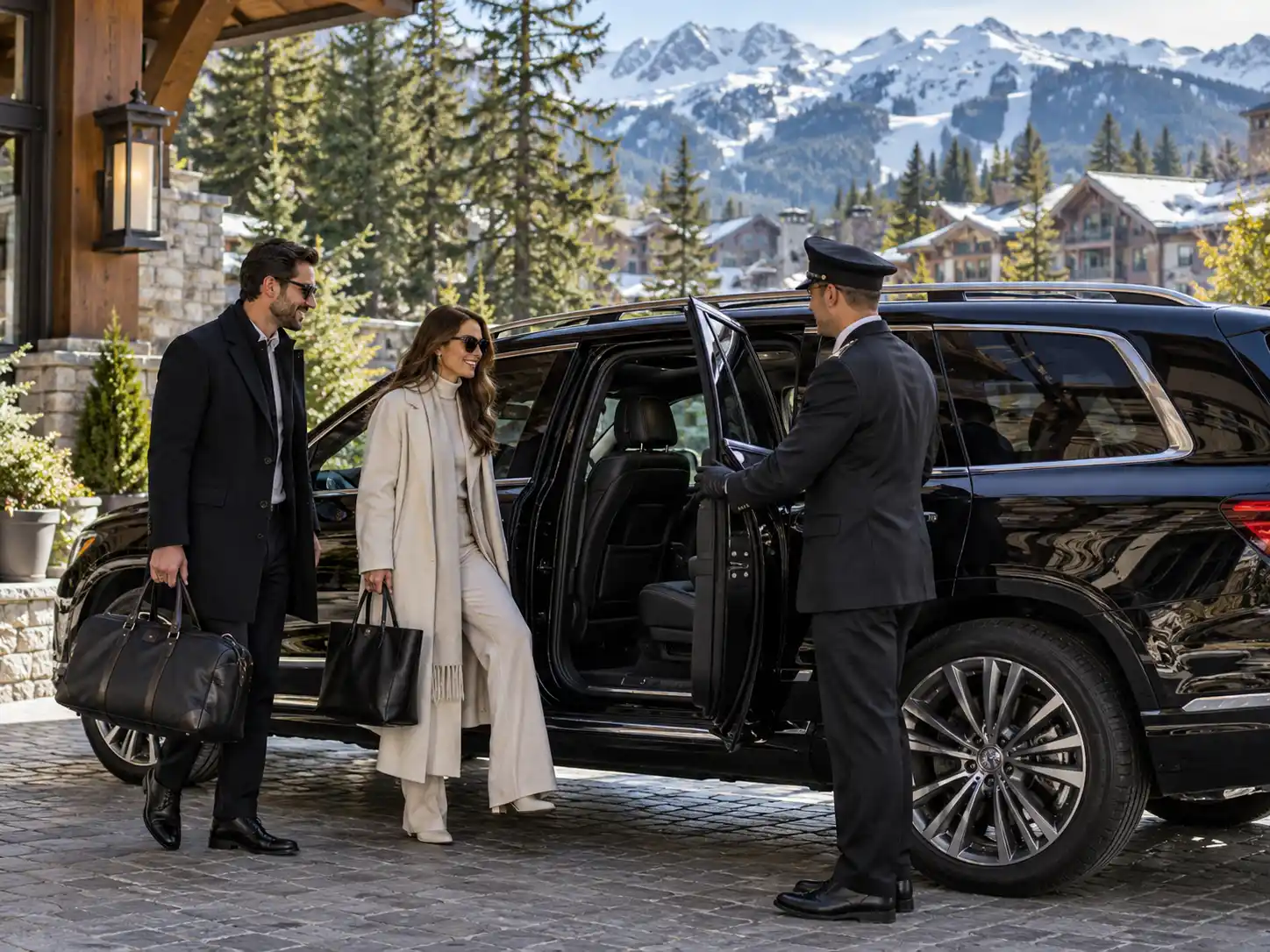
A touring artist, senior executive, diplomat, or recognizable athlete may attract attention at a hotel canopy or event entrance. Their priority may be exposure reduction rather than the shortest route. A side entrance coordinated with venue staff can be preferable to a public red-carpet entrance, even if it adds five minutes.
The trade-off is discretion versus logistical simplicity. A tightly controlled pickup may require advance calls, vehicle staging, and additional wait time. An anonymous-looking black SUV can reduce attention, but excessively dark glass, restricted curb access, or an unexpected loading location can create new complications. The plan should comply with local traffic rules and property procedures.
The common mistake across all three groups is using the same reservation template for everyone. The answer to the next question—Should travelers disclose every detail?—is no. Share information necessary for safe execution, such as mobility needs, child-seat requirements, flight number, pickup contact, and authorized itinerary changes. Avoid distributing unnecessary personal or security-sensitive information to multiple parties.
Effective safe private transportation Seattle planning therefore begins with a passenger-specific risk assessment, even if that assessment is simply a thoughtful five-minute booking conversation.
Vehicle cleanliness, maintenance, and chauffeur professionalism
Vehicle safety combines mechanical roadworthiness, sanitary preparation, appropriate capacity, and functioning passenger amenities. Chauffeur professionalism combines lawful driving, situational awareness, respectful conduct, appearance, communication, and readiness to assist without overstepping a passenger’s preferences.
Cleanliness as a health and operational issue
Between-trip preparation should address high-touch surfaces such as door handles, seat-belt buckles, armrests, climate controls, and child-seat contact areas. The cabin should be free of smoke odor, loose objects, trash, and heavily fragranced products that may affect passengers with asthma, migraines, or sensory sensitivities. Cleaning chemicals should be used according to manufacturer directions; spraying a surface immediately before boarding can leave irritating residue.
A visibly clean interior is important, but the trade-off is that fragrance and cosmetic shine can conceal poor underlying maintenance. Ask whether the operator has a documented cleaning process rather than relying on air freshener or a quick exterior wash. For immunocompromised travelers, request a recently cleaned vehicle and disclose fragrance sensitivity in advance, while understanding that no shared vehicle can promise a sterile environment.
Maintenance and inspection
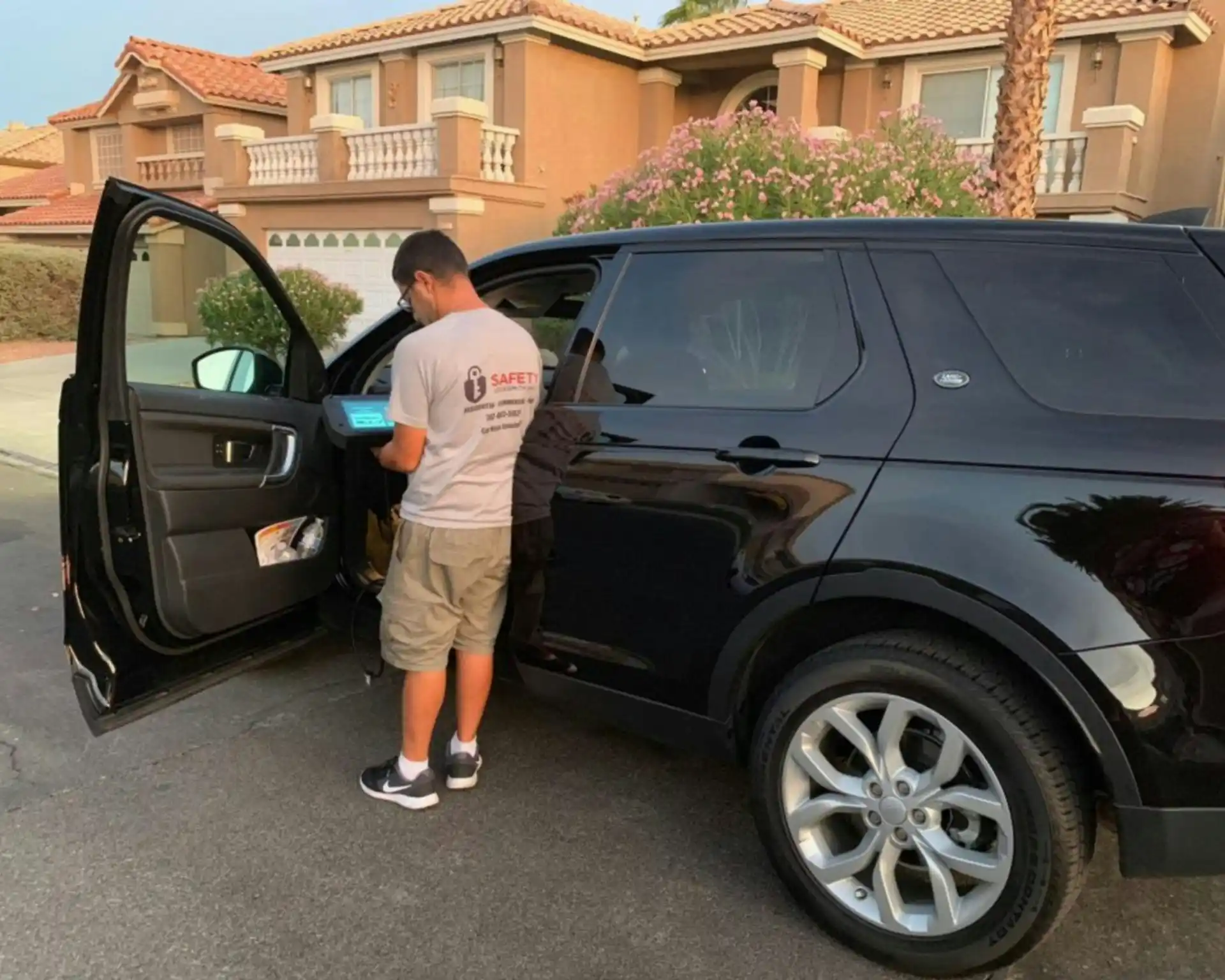
Professional operators should use preventive maintenance based on mileage, time, manufacturer guidance, and operating conditions. Common checks include tire pressure and tread, exterior lighting, brakes, fluid levels, windshield condition, wipers, seat belts, warning lights, and heating or air conditioning. Seattle’s rain makes tire condition, defogging, wipers, and visibility especially important.
A practical pre-trip walkaround may take only five to 10 minutes, while deeper servicing occurs at scheduled intervals. Exact oil-change or inspection intervals vary by model: one vehicle may require service around 5,000 miles, while another uses an onboard maintenance monitor and synthetic oil for a longer interval. The safest practice is to follow the manufacturer’s schedule and respond promptly to abnormal wear, rather than adopting one interval for an entire mixed fleet.
The pitfall is requesting a specific make and model but ignoring vehicle age, condition, and luggage fit. A well-maintained three-year-old SUV may be safer and more suitable than a newer sedan overloaded with bags. The next logical question is whether customers can inspect the vehicle. Passengers may not receive maintenance files containing proprietary information, but a reputable operator should be able to explain its inspection process and address obvious concerns. If a seat belt is damaged, a warning light is active, or a tire appears unsafe, boarding should pause until the issue is resolved or a replacement arrives.
Professional conduct behind the wheel
A professional chauffeur should obey speed limits, preserve following distance, avoid handheld phone use, and adapt to rain, darkness, construction, cyclists, and pedestrians. Smooth acceleration and braking matter for children, seniors, passengers with motion sensitivity, and anyone working in the rear seat.
Professionalism also means boundaries. A chauffeur may offer luggage assistance but should ask before touching mobility equipment, medical devices, or personal bags. Conversation should follow the passenger’s cues. Requests to speed, stop illegally, leave a child unattended, or exceed safe vehicle capacity should be declined.
When evaluating safe private transportation Seattle options, travelers can ask how chauffeurs are screened, trained, monitored, and supported after assignment. Background checks are one layer, not a complete safety system; driving-history review, onboarding, service standards, incident reporting, and continued supervision are equally significant.
How route planning and pickup coordination improve security
Route planning is the advance selection and ongoing adjustment of roads, timing, staging areas, and backup options. Pickup coordination establishes exactly who will meet whom, where, when, in which vehicle, and through what verified communication channel. Together, they limit confusion and reduce unnecessary passenger exposure.
Seattle presents distinctive planning variables: congestion on Interstate 5, bridge traffic across Lake Washington, ferry schedules, stadium events, downtown street restrictions, cruise activity at Pier 66 and Pier 91, weather, and heavy demand at SEA. A trip between downtown Seattle and SEA may take roughly 20 to 30 minutes in favorable traffic but 45 to 75 minutes or longer during congestion, collisions, construction, or major events. A responsible itinerary uses current conditions and a buffer rather than promising the best-case estimate.
Airport and cruise-terminal coordination
At SEA, the booking should specify whether the meeting occurs at a designated transportation area, baggage claim, or another permitted location. Airport rules determine where commercial vehicles may stand, and procedures can change. Flight monitoring allows dispatch to react to an early arrival or a two-hour delay, but it does not reveal how long customs, baggage, or mobility assistance will take.
International arrivals often need a larger buffer than domestic arrivals. The passenger should know when complimentary wait time starts, how overtime is billed, and whom to call after landing. A meet-and-greet adds cost compared with curbside pickup, but it may be worthwhile for an unaccompanied senior, first-time visitor, family managing several bags, or guest who does not speak English confidently.
Cruise passengers face a different timing challenge. Thousands of travelers may leave a terminal during a concentrated period, and curb space can become crowded. Numbered text instructions, a named contact, and a confirmed vehicle description are safer than wandering among black vehicles asking for a driver.
Identity verification and controlled changes
A sound pickup protocol may include the chauffeur’s name, vehicle make and color, license-plate information, dispatch telephone number, and a reservation reference. Passengers should verify at least two details before entering. Chauffeurs should also confirm the passenger’s identity discreetly rather than loudly announcing a VIP’s full name.
For corporate or high-profile trips, itinerary changes should come from an authorized contact. This helps prevent social engineering—for example, an unknown person claiming that the principal wants the vehicle redirected. A family can use the same principle by identifying which parent or guardian may change the child’s destination.
The trade-off is information versus privacy. More details can make identification easier, but a large sign displaying a prominent passenger’s name can attract attention. Initials, a company name, a discreet digital message, or a predetermined meeting phrase may be better.
The most frequent pitfall is vague language such as “meet outside the hotel.” Large properties can have a front drive, side entrance, conference lobby, garage, and rideshare zone. The obvious next step is to request a written pickup point with a landmark or door number and a backup location if curb access is blocked.
Providers of Private Black Car Service Seattle visitors book should combine navigation platforms, traffic reports, flight tracking, dispatch communication, and chauffeur judgment. Navigation software is useful, but blindly following an app can lead to closed streets, unsuitable alleys, or an insecure pickup area. Human review remains essential to safe private transportation Seattle operations.
Questions to ask before booking for children, seniors, or high-profile guests
A pre-booking review is a structured conversation used to match the passenger, vehicle, chauffeur, and itinerary. It should happen before payment or final confirmation whenever the trip involves child restraints, limited mobility, medical considerations, unusual luggage, multiple security contacts, or public visibility.
For children and family groups
- Which restraints are available? Ask for the brand, model, orientation, and supported height and weight range when the operator supplies a seat.
- Who performs final installation? Clarify whether the chauffeur positions the seat and whether the parent or guardian must inspect and secure it.
- Will everything fit? Give exact passenger, suitcase, stroller, wheelchair, and equipment counts. Photographs and exterior capacity labels are not enough.
- Can the itinerary include breaks? A two-hour regional trip may need a planned child-care or restroom stop rather than an improvised roadside stop.
- What happens if a flight is delayed? Confirm tracking, wait-time allowances, after-hours contacts, and replacement-seat availability.
For example, two adults, two children in separate restraints, three large suitcases, two carry-ons, and a folded double stroller will often fit more comfortably in a full-size SUV or van than in a midsize crossover. The trade-off is a higher vehicle rate versus reduced crowding and safer luggage storage.
The common mistake is booking by passenger count alone. The answer to “Can I hold my child for a short ride?” should be guided by applicable law and safety principles, not convenience. A sudden stop can create severe forces even at city speeds, so each passenger should use an appropriate seating position and restraint.
For seniors and passengers with mobility needs
- What is the step-in height? A large SUV offers space but may be difficult to enter. A sedan may have a lower seat but require more bending.
- Is the service wheelchair accessible? “Wheelchair friendly” does not necessarily mean the vehicle has a ramp, lift, tie-down system, or space for an occupied wheelchair.
- Can the chauffeur provide steadying assistance? Define assistance precisely. Chauffeurs may help with doors and luggage but may not be trained or insured to lift or medically transfer a passenger.
- Can extra boarding time be reserved? Scheduling an additional 10 to 20 minutes can prevent rushing.
- How are walkers, portable oxygen, and medical devices stored? Equipment should be secured without blocking exits or being crushed by luggage.
The trade-off is vehicle height versus cabin space. Do not assume the most luxurious or largest SUV is the easiest choice for limited mobility. The common pitfall is using general phrases such as “needs some help.” Instead, state whether the passenger can walk, climb one or two steps, transfer independently, and fold the mobility device.
If the passenger requires clinical supervision, lifting, an occupied-wheelchair vehicle, or medical monitoring, the next answer is important: a conventional black-car service may not be appropriate. Ask for an accessible transportation or non-emergency medical transportation provider with the necessary equipment and training.
For executives and high-profile guests
- Who can view the itinerary? Ask how trip details are stored, shared, and removed from routine communications.
- Who may authorize changes? Provide a short list of named contacts and a verification method.
- Can the vehicle stage at a controlled entrance? Coordinate with hotel, office, venue, or residential security personnel.
- Is continuous dispatch support available? Confirm the live contact process rather than relying solely on the chauffeur’s phone.
- What is the backup plan? Ask how quickly another vehicle or chauffeur could respond to a breakdown, illness, road closure, or schedule extension.
- Is dedicated protective security required? Chauffeur service and executive protection are different services. A chauffeur manages transportation; a licensed protection team performs threat assessment and protective operations.
A concrete example is a keynote speaker traveling from a downtown hotel to Seattle Convention Center. A normal curbside transfer may take only a few minutes, but a discreet plan could stage the vehicle 15 minutes early, use an approved service entrance, limit itinerary access to the event manager and dispatch, and designate a second pickup point if protest activity blocks the first.
The trade-off is flexibility versus control. Last-minute changes are sometimes unavoidable, but repeated unverified changes increase confusion. The pitfall is assuming that a black SUV and suited chauffeur constitute executive protection. If there is a credible threat, significant media attention, or a need for close protection, involve qualified security professionals and coordinate them with the transportation company.
A practical booking standard
- Describe every passenger’s seating, mobility, privacy, and assistance requirements.
- Confirm vehicle capacity using people, restraints, and luggage—not seats alone.
- Obtain the pickup location, wait-time policy, total pricing basis, and contact process in writing.
- Verify the chauffeur and vehicle before boarding.
- Keep dispatch details available and communicate material changes promptly.
- Speak up if the vehicle, restraint, driving behavior, or pickup situation appears unsafe.
Pricing should be evaluated in context. A lower quote may exclude airport fees, parking, meet-and-greet service, waiting, additional stops, child seats, tolls, or gratuity. Rather than focusing on a universal dollar range—which varies by vehicle, date, duration, demand, and itinerary—request an itemized estimate and ask which charges can change. A transparent reservation is generally more useful than a surprisingly low headline price.
Ultimately, safe private transportation Seattle families and VIP travelers can rely on is not defined by one feature. It is the result of suitable equipment, disciplined maintenance, professional chauffeurs, realistic scheduling, controlled communication, passenger-specific planning, and a clear backup process. Asking detailed questions before booking gives the provider the information needed to protect comfort, privacy, and safety throughout the journey.
FAQ
What safety standards should a private transportation provider in Seattle follow?
Providers should maintain appropriate commercial credentials and insurance, screen and supervise chauffeurs, follow preventive maintenance and inspection procedures, use secure reservation and payment practices, protect passenger information, and provide dispatch support and contingency planning.
How are chauffeurs screened and trained?
Chauffeurs should undergo background and driving-history reviews, onboarding, and ongoing supervision. Training should cover lawful defensive driving, passenger assistance, privacy, professional boundaries, incident reporting, and adapting to traffic, weather, pedestrians, and special passenger needs.
How often are private transportation vehicles inspected and cleaned?
Vehicles should receive a pre-trip safety check and cleaning between trips, with deeper inspections and maintenance performed according to mileage, time, manufacturer guidance, and operating conditions. Checks should include tires, brakes, lights, fluids, seat belts, warning lights, wipers, and climate systems.
Can families request child safety seats?
Yes, many providers allow families to request child seats or use their own, but policies vary. Provide each child’s age, approximate size, and restraint needs when booking, confirm current Washington requirements, and clarify who is responsible for final installation and fit.
How are secure pickups and route planning handled?
Secure pickups use a confirmed location, verified contact method, and clear chauffeur and vehicle identification. Dispatchers monitor traffic, weather, flights, events, bridge or ferry conditions, plan realistic buffers and backup routes, and can coordinate discreet staging with hotels or venues.
What accommodations are available for seniors or travelers with limited mobility?
Travelers can request extra boarding time, a suitable vehicle, luggage assistance, reduced walking, and careful handling of mobility equipment. Discuss specific needs before booking, ask whether an accessible vehicle is available, and clarify what assistance the chauffeur can safely provide.
How is privacy protected for executives and high-profile guests?
Privacy is protected by limiting itinerary and contact details to those needed for the trip, using controlled communications, avoiding unnecessary discussion of passengers or destinations, and arranging discreet entrances or staging when appropriate. Sensitive calls should still use secure company systems, and confidential documents should remain with the passenger.