








Seattle’s cruise season brings thousands of passengers through two main terminals, and if you’ve ever tried to navigate them during embarkation day, you know it’s not exactly straightforward. Between Pier 66 downtown and Pier 91 in Magnolia, each terminal handles things differently—and knowing which pier you’re using makes all the difference when you’re coordinating reliable event transportation Seattle passengers depend on throughout cruise season.
Here’s what actually works for drop-offs and pickups at both locations, based on years of running these routes for event transportation Seattle providers trust. No guesswork, just the practical stuff you need to know.
Venue overview: Seattle Cruise Terminals (Pier 66 & Pier 91)
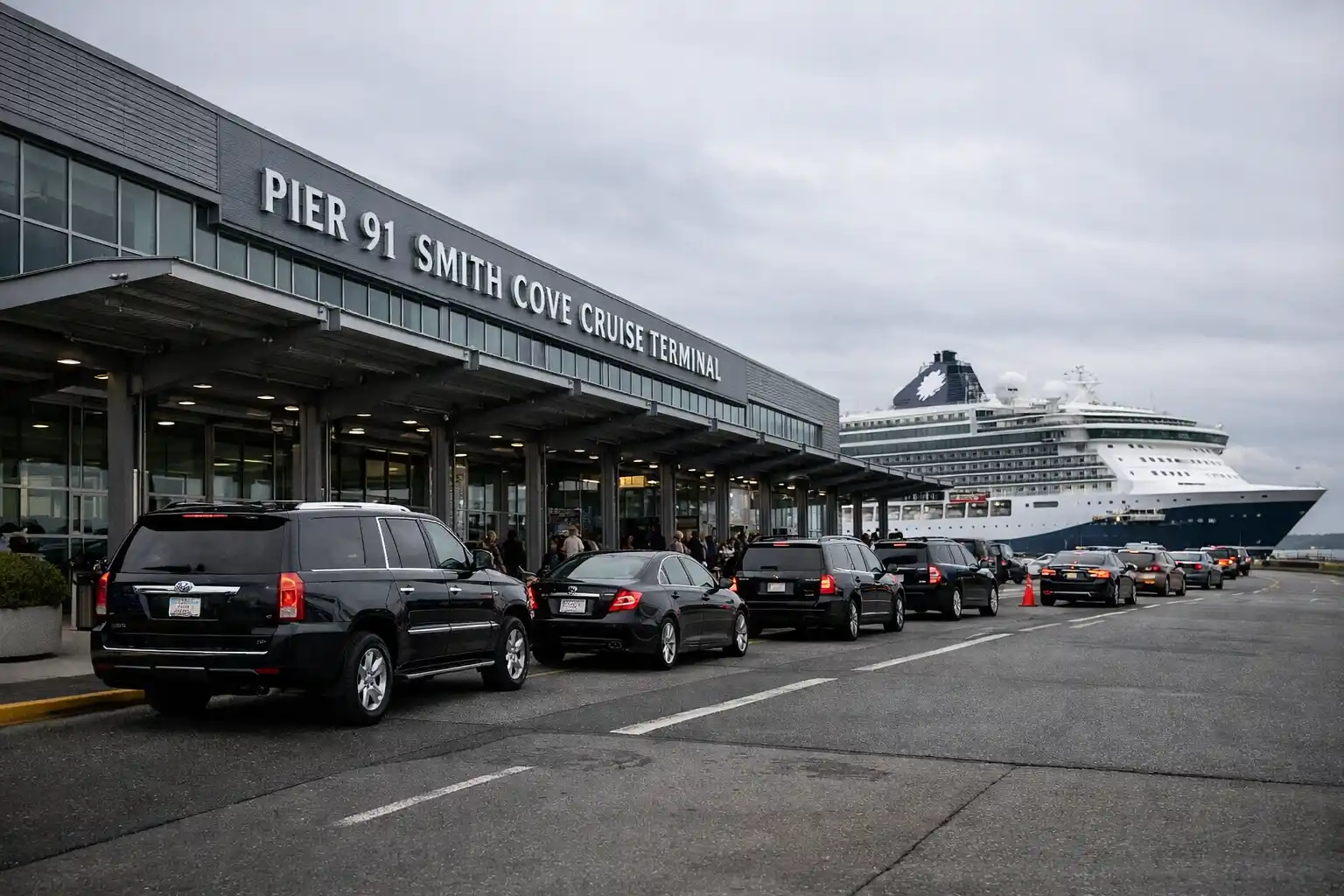
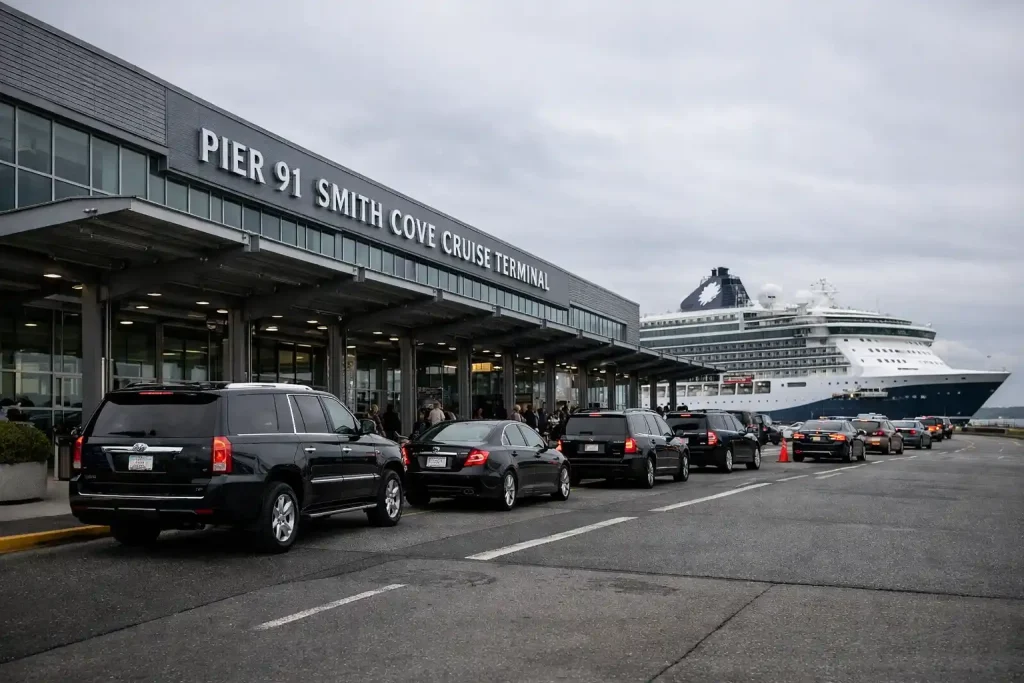
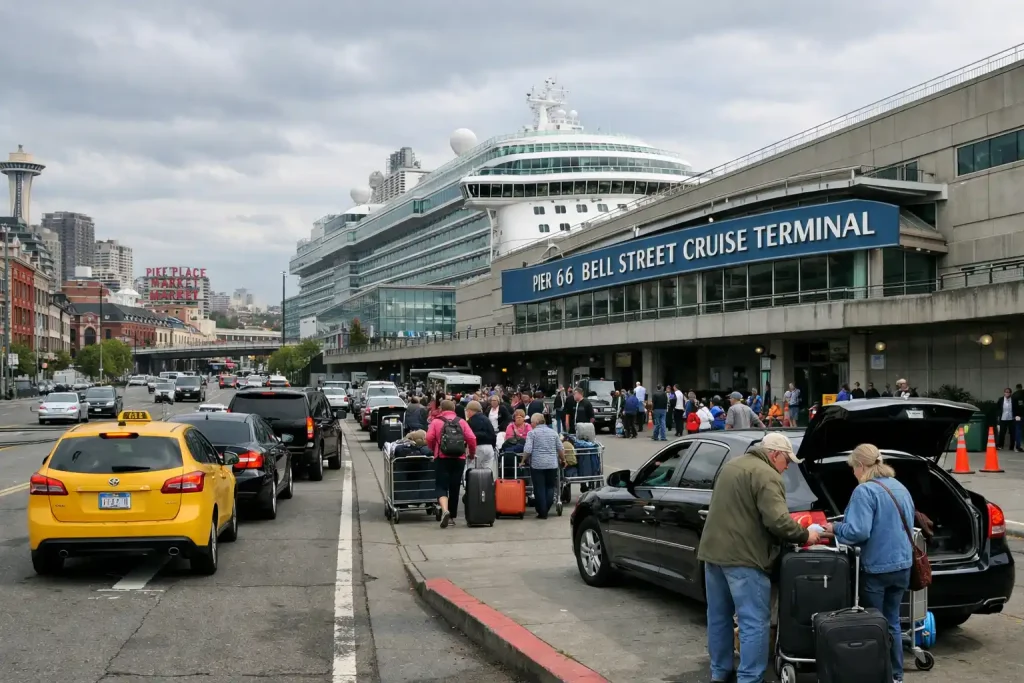
Seattle operates two cruise facilities, and they’re not remotely close to each other. Pier 66 (Bell Street Pier Cruise Terminal) sits right downtown at 2225 Alaskan Way, walkable from Pike Place Market. Pier 91 (Smith Cove Cruise Terminal) is up in Magnolia at 2001 W Garfield Street—about 15 minutes north of downtown when traffic cooperates.
Most Alaska-bound cruises depart from Pier 91 since it’s the larger facility with three berths. Pier 66 handles smaller ships and some repositioning cruises. Your cruise documents will specify which pier, but double-checking a week before departure isn’t a bad idea—ships occasionally switch.
Where congestion actually happens
Embarkation day (usually Saturdays) between 11 AM and 2 PM? That’s when both terminals turn into parking lot situations. Hundreds of passengers arrive within the same three-hour window, all trying to drop luggage and get through security. Add in regular Seattle traffic and you’ve got delays.
Pier 91 gets particularly jammed because there’s only one entrance road (W Garfield Street), and cruise lines stagger check-in times but everyone shows up anyway. The turnaround area fills up fast. Pier 66 has slightly better flow since it’s integrated into the downtown waterfront, but Alaskan Way can back up during peak times.
Disembarkation mornings (typically around 7-9 AM) see different congestion. Now it’s all pickup traffic—taxis, rideshares, shuttles, and private services all converging at once. Professional event transportation Seattle companies position drivers early to avoid the backup, because if your private black car service isn’t staged properly, you’re waiting in a line of vehicles just to get near the terminal.
Weather complicates things too. Seattle’s famous drizzle means passengers move slower with umbrellas and luggage, backup time stretches, and everything takes longer than the schedule suggests.
Drop-off plan: where to go and when
Drop-offs are more straightforward than pickups, but you still need the right approach for each pier.
Pier 66 (Bell Street) drop-off
Your driver will take Alaskan Way northbound and pull into the designated drop-off zone directly in front of the terminal entrance. There’s a covered area where porters wait with luggage carts—they’ll tag your bags right there. The whole process takes maybe 5 minutes if you’ve got your documents ready.
Timing matters here. Arrive before 11 AM if possible, ideally around 10-10:30 AM. That’s when porter service is fully staffed and the line at security hasn’t built up yet. After noon, expect delays just getting to the curb. Most event transportation Seattle services schedule morning departures specifically to avoid the midday crush.
Don’t have your driver circle if the drop-off lane is full. Tell them to pull into the passenger loading zone at the south end of the pier—it’s technically for taxis but works in a pinch during heavy congestion. Just keep the stop quick.
Pier 91 (Smith Cove) drop-off
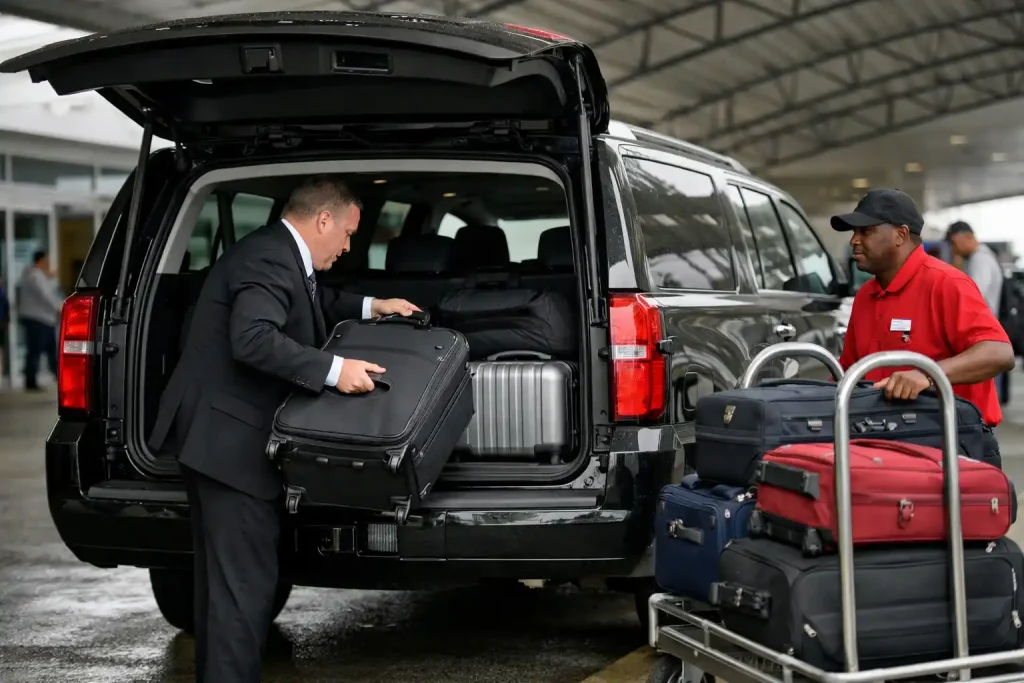
This one requires more navigation. Your driver will exit I-5 at Mercer Street, head west to 15th Ave W, then turn north and follow signs to the terminal. The actual drop-off is inside the terminal complex at the passenger drop-off lanes—there are multiple lanes depending on which berth your ship occupies.
Terminal staff direct traffic, so follow their signals. Porters are stationed at each lane, and they’ll handle bags immediately. The covered lanes keep you dry, which is nice during typical Seattle weather.
Timing is even more critical at Pier 91. The single access road creates a bottleneck during peak hours. Target arrival before 11:30 AM—preferably by 10:30 AM if you want smooth drop-off. After noon on embarkation day, vehicles sometimes wait 20-30 minutes just to reach the drop-off lanes. Experienced event transportation Seattle drivers know to build extra buffer time for Pier 91 specifically.
If you’re coming from the airport or south Sound areas, factor in rush hour if your cruise departs on a weekday. Adding a buffer for I-5 traffic isn’t paranoid—it’s just realistic planning.
Pickup plan: simplest meet-point strategy
Pickups require more coordination than drop-offs since you’re dealing with ship disembarkation timing, customs, and luggage claim. Here’s what actually works without adding stress.
The communication piece
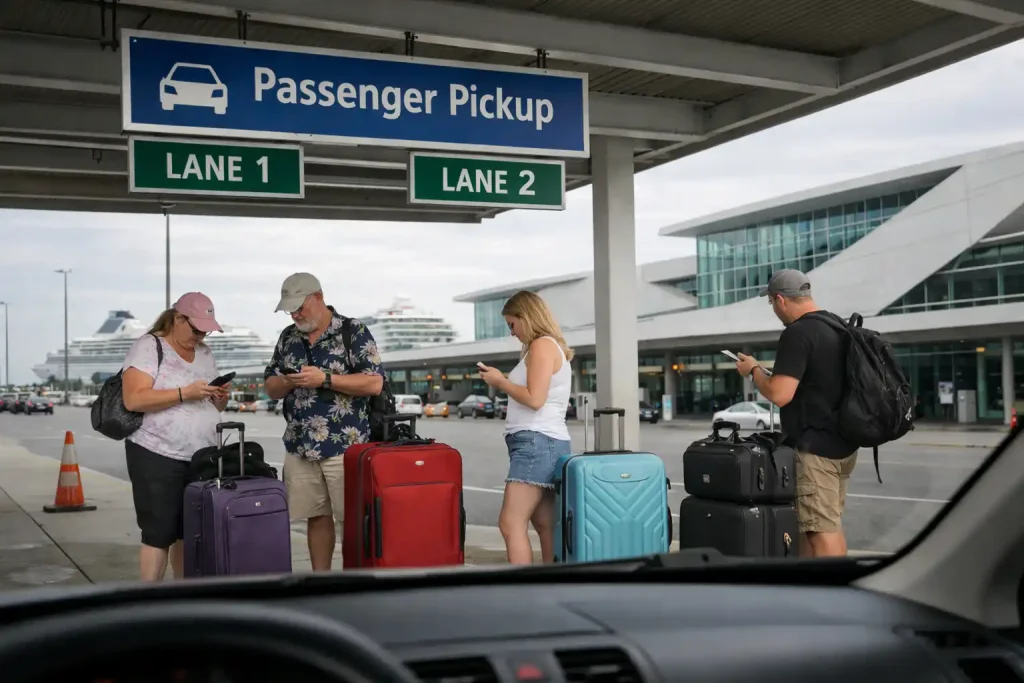
Once you clear customs and have your luggage, text your driver with your location and be ready to walk to the pickup area. Don’t wait inside hoping they’ll find you—terminal buildings are large and cell service can be spotty. Get outside where you can see vehicles approaching.
Pier 66 pickup strategy
The pickup zone is along Alaskan Way, same side as drop-off. After you exit the terminal building with your luggage, walk toward the south end of the building—that’s where professional car services typically stage. Your driver will have your name/phone number and can spot you easier than you trying to identify a specific vehicle in a line of black sedans.
If the pickup lane is packed (common on disembarkation mornings), have your driver wait at the Pier 66 parking lot just south of the terminal. It’s a 2-minute walk and eliminates sitting in traffic. Works particularly well if you’re using event transportation Seattle providers arrange for groups—vans can’t always get right to the curb anyway. This strategy keeps your pickup on schedule even during the busiest mornings.
Pier 91 pickup strategy
Terminal staff funnel all pickup traffic through designated lanes inside the complex. After customs, exit through the main doors and look for the passenger pickup signage—it directs you to covered waiting areas organized by vehicle type (taxi, rideshare, private car, etc.).
Tell your driver you’ll meet them in the private vehicle pickup lane (usually Lane 3 or 4, but signage updates). These lanes move faster than the taxi queue. If the lanes are completely jammed—which happens during peak disembarkation—have your driver wait in the cell phone lot just outside the terminal entrance. Text when you’re ready, and they’ll pull in. Takes about 3-4 minutes from text to pickup.
Don’t assume your driver can just “figure it out.” Both terminals have traffic control staff who enforce rules strictly during cruise operations. A clear meet-point eliminates confusion and saves everyone time.
Group pickups
If you’re coordinating transportation for multiple people (family reunion, Leavenworth town car service for a post-cruise trip, whatever), designate one person as the communication point. Having six people texting the driver different updates creates chaos. One person collects everyone, gets luggage sorted, then makes one call when the group is ready at the pickup point. This coordination approach is why event transportation Seattle companies recommend for larger groups—everyone travels together without the confusion of multiple vehicles.
Timing buffers: timing buffers that prevent stress
Cruise schedules look precise on paper, but actual disembarkation varies by up to an hour depending on customs processing and ship size. Here’s how to buffer properly without wasting hours waiting around.
Embarkation day timing
Standard advice is arrive at the terminal 2-3 hours before departure. That’s accurate. What matters for ground transportation is when you leave your origin point.
From SeaTac Airport to either pier: allow 90 minutes minimum during morning/midday hours. Airport traffic, I-5 congestion, and terminal approach all add time. If your flight lands at 9 AM, you’re looking at 10:30-11 AM terminal arrival—right in the sweet spot before peak congestion. Professional event transportation Seattle operators factor these variables into pickup scheduling automatically.
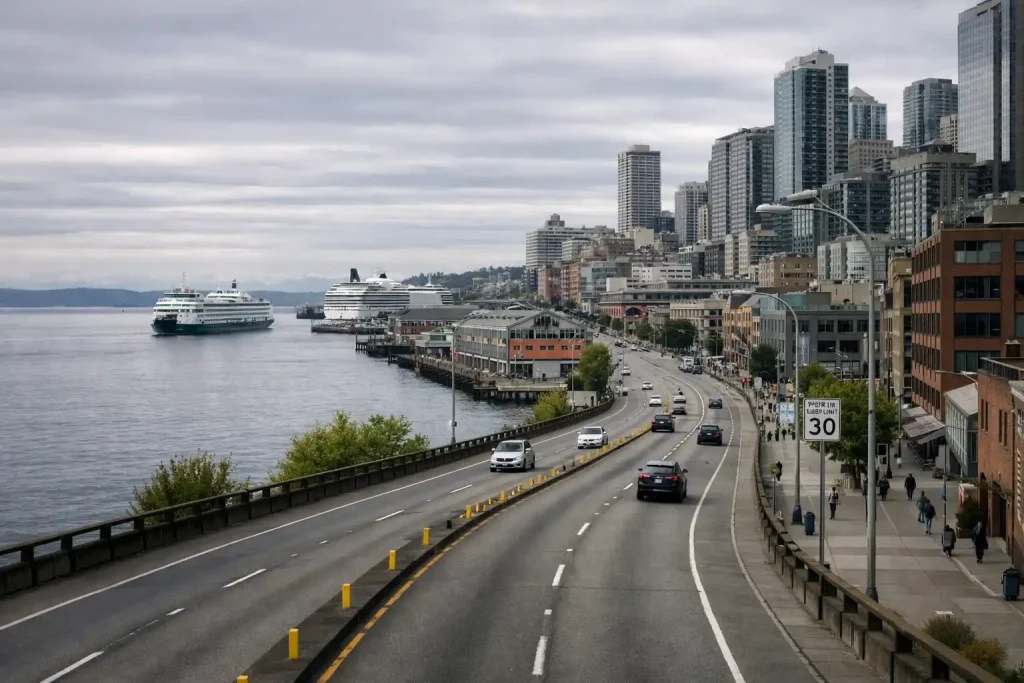
From Seattle hotels or suburbs: allow 60-75 minutes for Pier 91, 45-60 minutes for Pier 66. Yes, Google Maps might say 30 minutes, but that’s without traffic or terminal slowdowns. Reliable event transportation Seattle companies build these buffers automatically because they know actual conditions differ from GPS estimates, especially during peak cruise season.
Disembarkation timing
Ships announce the night before what time guests can disembark. Usually it’s “by 9 AM” but that’s optimistic. Passengers with early shore excursions or flights get priority—everyone else waits for their group number to be called.
Most passengers clear customs and collect luggage between 8:30-10:30 AM. Schedule your pickup for the middle of that window (around 9:15-9:30 AM) and have your driver prepared to adjust. If you clear early, you wait 15 minutes. If customs is slow, your driver waits 15 minutes. Either scenario is manageable—scheduling for 8 AM sharp when your group won’t be called until 9 just wastes everyone’s time. Experienced event transportation Seattle drivers monitor ship arrival times and adjust positioning accordingly.
If you’re catching a flight, absolutely add buffer time. We generally recommend flights no earlier than 1 PM on disembarkation day. That gives you margin for slow customs, pickup coordination, and the drive to SeaTac without running through the airport.
Real-world delays you can’t control
Sometimes customs processing just takes longer—maybe they’re short-staffed, maybe the system is running slow. Terminal congestion during peak season can add 20-30 minutes to what should be quick pickup. Weather delays ships occasionally.
You can’t prevent these situations, but you can avoid making them worse by cutting timing too tight. An extra 30-minute buffer in your schedule means the difference between relaxed departure and stressed scrambling.
Vehicle choice: sedan vs SUV vs van
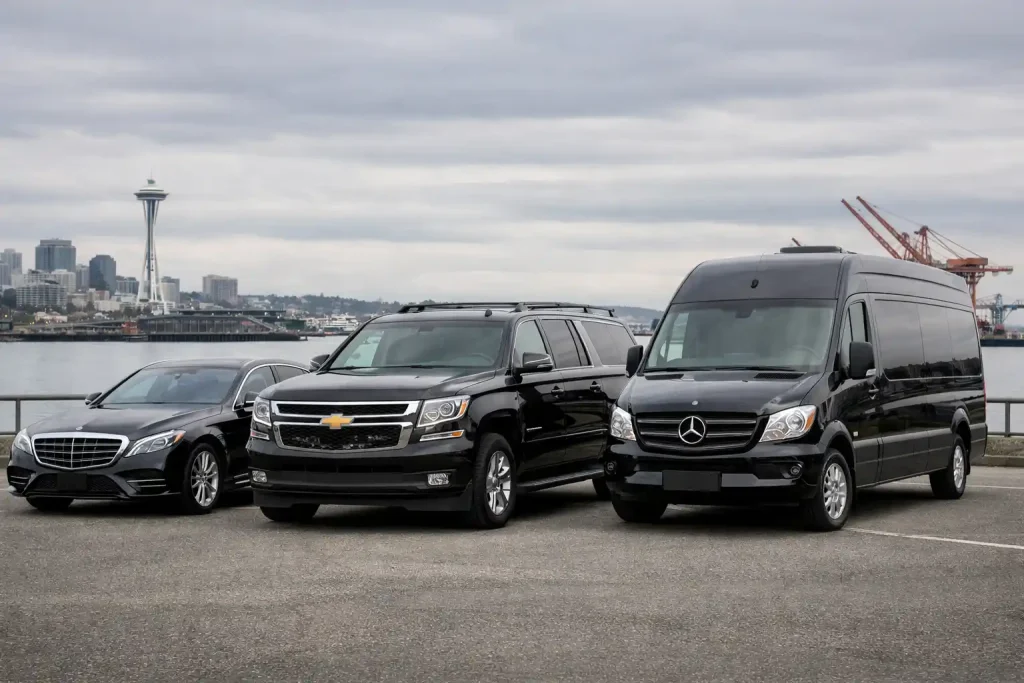
Cruise luggage is no joke—people pack more for a week in Alaska than most bring for a month-long trip. Picking the right vehicle size matters more here than for typical airport runs.
Sedan works for:
Two passengers with standard luggage (2 large suitcases, 2 carry-ons). Maybe you can squeeze three people if one has minimal luggage, but it’ll be tight. Sedans handle cruise terminal traffic efficiently and cost less, but trunk space is the limiting factor.
If you’ve packed light or shipped some items directly to the ship, a sedan is perfectly adequate. But if you’re bringing everything with you—winter gear, camera equipment, gifts to distribute—you’ll probably need more room.
SUV handles:
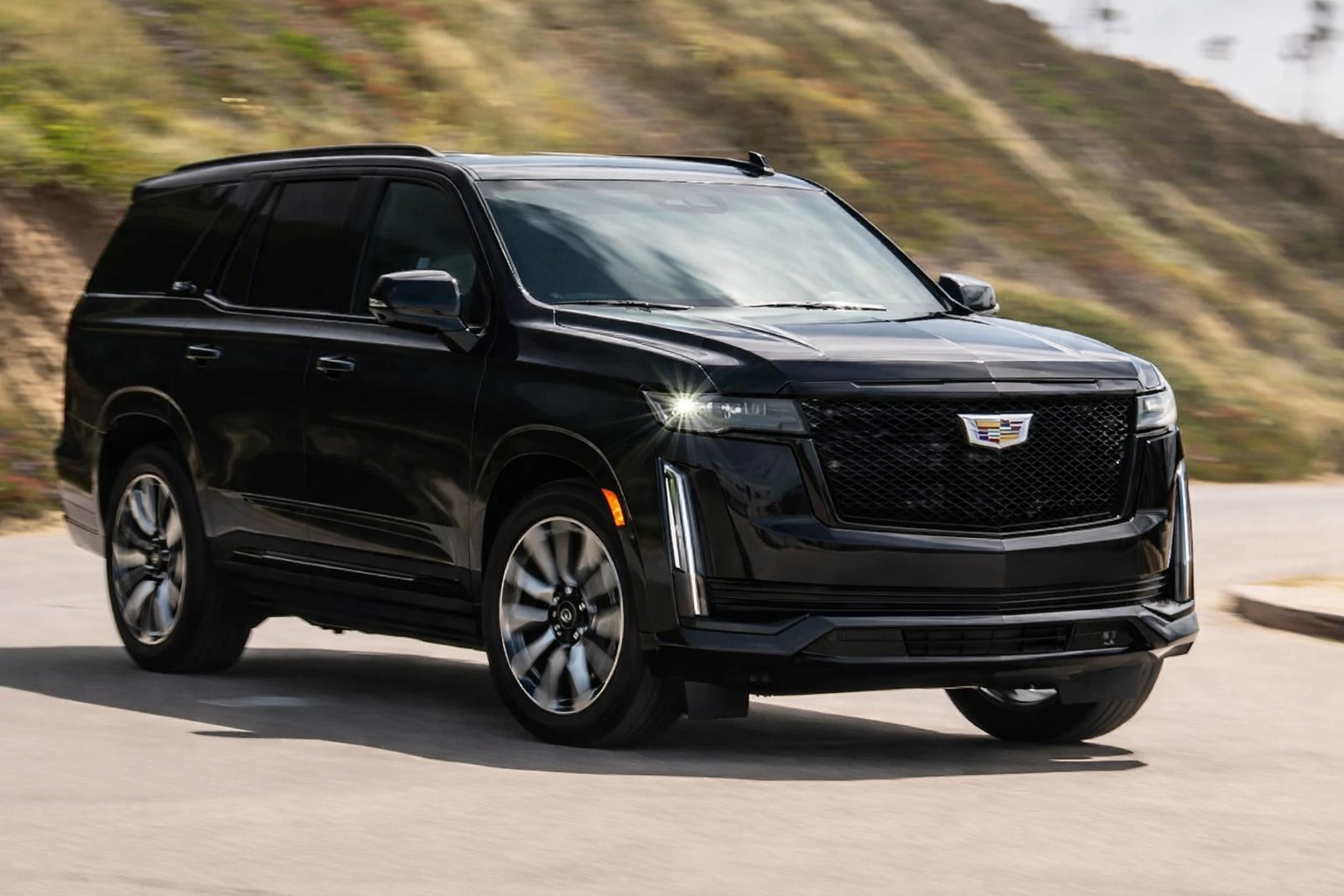
3-4 passengers with full cruise luggage or 2 passengers with excessive amounts of gear. The cargo area in something like a Suburban or Yukon XL can handle 4-5 large suitcases plus carry-ons comfortably. Back seats fold if you need even more luggage space and fewer passengers.
This is the sweet spot for most cruise groups—what event transportation Seattle providers recommend most frequently for cruise terminal runs. Not as expensive as a van, way more space than a sedan, and still easy to maneuver through terminal pickup areas.
Van is for:
Groups of 5-7 passengers or extended families traveling together. If you’re coordinating transportation for multiple couples or a family reunion cruise, a van makes sense. Everyone travels together, luggage fits, and you’re not paying for two vehicles. This is common with event transportation Seattle providers handle for cruise groups arriving from different cities who want to travel together.
Vans work especially well for longer trips—like if you’re doing event transportation Seattle to Vancouver before or after your cruise, or heading out to Leavenworth for a few days post-cruise. The extra space means comfortable seating even on a 3-hour drive.
Be honest about your luggage situation
When booking, don’t underestimate what you’re bringing. “We’ll make it fit” usually means someone’s uncomfortable or luggage ends up on laps. Better to have extra space than discover at pickup that bags won’t fit properly.
Most professional services ask about luggage quantity for this exact reason—they’re trying to send the right vehicle, not upsell you. If you’re genuinely unsure, describe what you’re bringing: “Two couples, 4 large suitcases, 4 carry-ons, plus a cooler with stuff we bought in Seattle.” That gives your provider enough information to recommend appropriately.
FAQ
How do I know if my cruise departs from Pier 66 or Pier 91?
Your cruise documents will specify the pier—usually listed on your boarding pass and in the pre-cruise email from the cruise line. Pier 91 handles most Alaska-bound cruises (Norwegian, Princess, Celebrity, Royal Caribbean), while Pier 66 typically hosts smaller ships and repositioning cruises. If you’re unsure, call the cruise line directly with your booking number—they can confirm which terminal about a week before departure. Ships occasionally switch piers due to schedule changes or maintenance.
What’s the earliest we can arrive for embarkation at each pier?
Most cruise lines start boarding around 11 AM-noon, though exact times vary by ship and itinerary. Check-in typically opens 2-3 hours before departure. Arriving before 10:30 AM means you’ll likely wait in your vehicle since the terminal isn’t ready yet. Both Pier 66 and Pier 91 don’t allow extended parking in drop-off lanes, so plan arrival within the boarding window your cruise line specifies—usually printed on your documents or accessible through their app.
Can our driver wait at the terminal if we’re early or if there’s a delay clearing customs?
Short waits (10-15 minutes) work for pickups when drivers stage in the designated lanes. For longer delays—like if customs processing backs up or your luggage is slow to arrive—drivers typically move to the cell phone lot or nearby staging area and return when you text that you’re ready. Neither terminal allows vehicles to idle in pickup lanes beyond about 15 minutes due to congestion. Communication is key: text updates keep your driver positioned properly without blocking traffic flow.
What happens if we have way more luggage than typical cruise passengers?
Cruise passengers often travel with more luggage than airport travelers—two large suitcases per person isn’t unusual, plus carry-ons, shopping from Seattle, maybe a cooler with items you bought. When booking transportation, be specific: “4 passengers, 6 large suitcases, 4 carry-ons, 1 cooler” gives providers real information to send the right vehicle. Underestimating luggage volume is the main reason vehicles end up too small at pickup. SUVs handle most cruise loads, but groups with 5+ large bags per person need a van.
Do both terminals have porter service, or do we need to handle our own luggage?
Both Pier 66 and Pier 91 have porters at the drop-off areas who’ll take your luggage from the curb and tag it for the ship—standard cruise terminal service. You keep carry-ons with you. At pickup after the cruise, you collect your own luggage from the terminal’s baggage claim area (organized by colored tags), then bring it to the pickup zone where your driver helps load it into the vehicle. The ship-to-shore porter service ends once you’re through customs.
If our cruise is on a weekend, does that affect traffic getting to the terminals?
Most Alaska cruises depart Saturdays, which actually helps traffic since it’s lighter than weekday rush hours. However, embarkation Saturdays between 11 AM-2 PM see concentrated terminal congestion as hundreds of passengers arrive simultaneously. The drive from downtown hotels or SeaTac Airport flows better on weekends, but the final approach to Pier 91 specifically still backs up during peak embarkation regardless of what day it is. Sunday returns (disembarkation) see similar patterns—light general traffic but heavy terminal-area congestion during the 8-10 AM pickup window.
What if we’re doing a back-to-back cruise and need transportation between ships?
Back-to-back passengers usually stay on the ship, but if you’re switching ships (different cruise lines or doing maintenance between sailings), timing gets tight. You’ll disembark in the morning (usually 8-9 AM), then need to check in for the next cruise by around noon. If both cruises use the same pier, some passengers walk between terminals with luggage carts. If switching between Pier 66 and Pier 91, ground transportation is necessary—it’s a 15-minute drive between terminals. Book a vehicle that can handle all your luggage since you won’t have hotel storage between cruises.