










Table of Contents
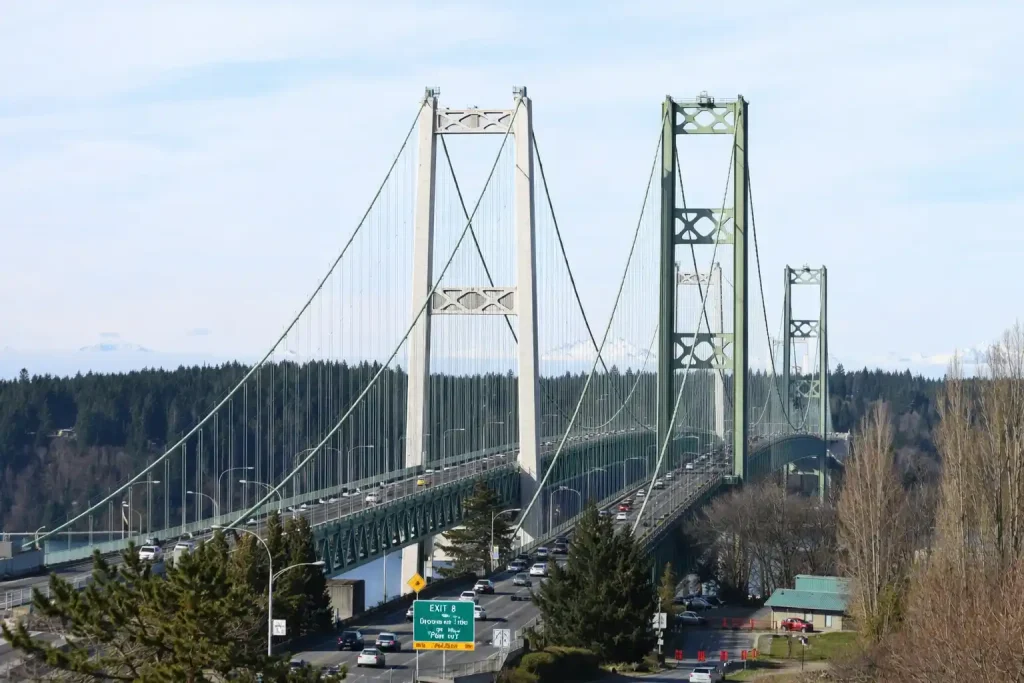
Last month a biotech VP flew into SeaTac for a critical investor meeting in downtown Gig Harbor. His assistant booked a ride share. The driver got lost navigating the Narrows Bridge approach, couldn’t differentiate Harborview Drive from Harbor Hill Drive, and the VP walked into his presentation fifteen minutes late and flustered.
The meeting didn’t go well.
Corporate transportation in Gig Harbor isn’t about luxury—it’s about eliminating variables. When you’re coordinating client visits, executive travel, or team offsites in a waterfront town where GPS confidence doesn’t match GPS accuracy, you need systems that actually work.
I’ve run ground transportation in the Puget Sound region since 2003. Gig Harbor’s evolved from sleepy maritime town to legitimate business destination—marine tech companies, medical practices, financial advisors, regional headquarters. But most businesses treat transportation as an afterthought instead of a logistics component.
So here’s exactly how to set up corporate transportation that works. No fluff about “10 reasons why executive transportation matters.” Just the playbook: itinerary planning, backup protocols, what your accounting department needs.
Use Cases in Gig Harbor: When It Pays Off
Not every business trip needs a dedicated car service. If you’re grabbing supplies from Harbor Greens, drive yourself.
But there are scenarios where professional transportation stops being nice-to-have and becomes genuine business advantage.
Airport transfers for visiting executives or clients. SeaTac to Gig Harbor is 45-50 minutes depending on route (Tacoma Narrows vs I-5 to 16). Virtually no useful public transit. Your visitor either rents a car—unfamiliar roads, parking logistics in a waterfront town with limited spots—or relies on ride shares that may or may not know the area.
When Harbor Pediatrics brings in a visiting physician for three days of consultations, that doctor needs to focus on patients, not navigation. Same whether you’re hosting a software consultant from California or a marine engineer from Norway.
Multi-stop itineraries. This is where it gets interesting.
Prospective partner flying in to tour your facilities. Their day: airport pickup 9 AM, office tour 10:30, lunch meeting at Devoted Kiss Café noon, afternoon facility inspection at warehouse on Olympic Drive, 5 PM dropoff back at SeaTac.
Four distinct locations with specific timing. They’re either driving themselves (stress, parking chaos) or hopping between ride shares (coordination overhead). Or you’ve got a chauffeur service Seattle provider handling the entire day—your guest takes calls between stops, reviews materials, arrives at each location prepared instead of wrestling with parking.
Maritime law firm I worked with last year brought in expert witnesses for depositions. Specialists from Houston and Boston who didn’t know the area. SeaTac to office for prep, then opposing counsel’s office in Tacoma for deposition, back to SeaTac for evening flights. Missing any leg meant rescheduling depositions that took months to coordinate.
Team transportation for offsites. Gig Harbor’s popular for company retreats—waterfront venues, proximity to Seattle without being in Seattle. When you’re bringing 8-12 people to planning session at Franciscan Conference Center or celebration dinner at Tides Tavern, everyone driving separately creates parking chaos.
One tech company does quarterly exec planning sessions at a rented waterfront property near Kopachuck State Park. They coordinate arrivals so their C-suite can work during the ride, hold preliminary discussions in the vehicle, arrive as cohesive unit. Nobody worries about designated drivers or making it back to Seattle before midnight.
Discretion for sensitive situations. Executive searches, merger discussions, sensitive HR situations, medical consultations. Corporate vehicles with signage or having the VP’s assistant pick people up creates visibility. Professional car service provides anonymity.
The math: if transportation failure creates more than $500 in business disruption (missed meetings, rescheduling costs, lost opportunities), spending $150-300 on reliable Gig Harbor town car service is just risk management.
Template: Itinerary Planning in 10 Minutes
Most people overcomplicate this or leave out critical details.
Copy-paste template covering everything your transportation provider needs:
Passenger: Full name (as on ID if airport), mobile number, flight details (airline, flight number, origin city)
Itinerary: Date and first pickup time, pickup location with specifics (SeaTac Terminal 1, not just “airport”), all destination addresses with times, final dropoff
Requirements: Vehicle type, accessibility needs, preferences (water, temperature)
Billing: Payment method, where receipts go, invoice format requirements
Real example—client from San Francisco:
“Need transportation for Mark Chen, Thursday March 14th. Alaska 712 from SFO, lands 10:35 AM SeaTac Terminal 1. Pickup from airport to 3211 Harborview Drive Gig Harbor for 11:30 AM meeting. Then The Inn at Gig Harbor (3211 56th St NW) around 4 PM check-in. Friday pickup from inn 8:30 AM, back to office for 9 AM meeting, SeaTac dropoff by 1 PM for 3:15 departure. Sedan fine.”
Notice: specific flight info (not “morning arrival”), actual street addresses (not “the office”), mobile contact, clear billing.
What’s NOT included: assumptions. Don’t assume your driver knows which building entrance, or that “the inn” obviously means Inn at Gig Harbor versus waterfront B&Bs.
Three minutes being specific prevents thirty-minute confusion.
One thing I’ve learned: “around 4 PM” usually means 3:45 to 4:30, making next pickup scheduling complicated. Real flexibility? Say “between 4-4:30 PM.” Need 4 PM sharp? Say “4 PM departure, arrive by 3:55.”
Also—double-check dates. “Next Thursday” is ambiguous if booking on Wednesday.
Professional Details: Arrival, Signage, Discretion
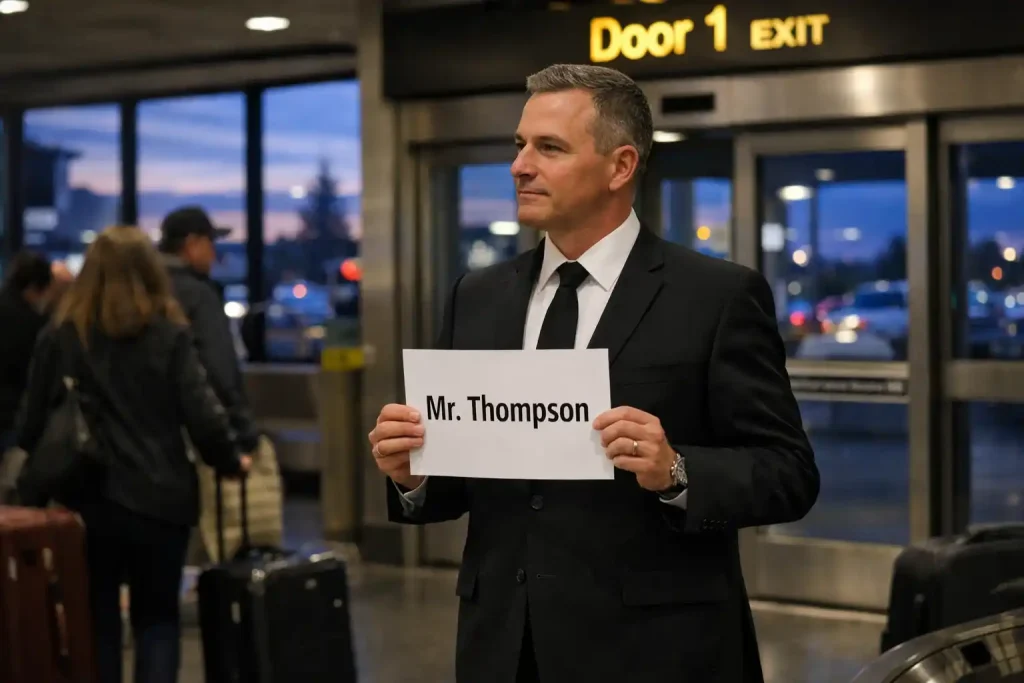
Your client lands at SeaTac on evening flight. Exits baggage claim into crowd of drivers holding signs. Scans names, can’t find theirs, phone comes out (cell reception sucks in baggage claim), eventually spots driver with sign saying “Jhon Smyth” instead of “John Smith.”
Or.
Client exits baggage claim, phone buzzes: “Door 1, black sedan ABC123, I’ve got your sign.” Two minutes later they’re on the road.
Difference isn’t the car. It’s whether your driver’s guessing or tracking.
Flight tracking. Driver monitors actual landing time, not scheduled. Bay Area flights often arrive 15-20 minutes early on weekday mornings. Denver flights can run an hour late in winter. If driver’s working off “3:30 PM arrival” but plane landed at 3:05, your client’s standing around wondering if they’ve been forgotten.
Good companies automatically track flights, adjust positioning real-time. Drivers at door within 5-10 minutes of baggage claim clearance. SeaTac’s cell phone lot is 10 minutes from terminals during peak traffic—difference between your client waiting 3 minutes versus 25 shapes their entire impression.
Signage. Handwritten cardboard works for personal pickups. Corporate clients get printed signage, correct spelling, visible but not comically oversized.
Some situations call for no signage. CEO who’d prefer not to broadcast travel? Driver has their photo and mobile for discreet identification. Quick text: “Tall guy in dark suit near Door 2, I’ll approach when I see you.”
Communication. Driver texts when in position. Not “I’m at the airport”—which door, vehicle description, license plate?
And confirms itinerary without assumptions. “Good afternoon, Ms. Johnson. I have you going to 3211 Harborview Drive, correct?” Takes five seconds, prevents heading to wrong location because plans changed.
In-vehicle discretion. Some passengers want conversation. Others want to work silently. Professional drivers read the room.
Client opens laptop thirty seconds into ride? Clear signal they don’t want weather small talk.
Critical for sensitive situations. Transporting executives for merger discussions, driver shouldn’t ask “What brings you to Gig Harbor?” Neutral professionalism is default. Conversation happens if passenger initiates.
Actually, here’s something separating pros from amateurs: corporate passengers often need calls during transport. Driver maintains near-silence during calls (not even quiet radio), pulls over if passenger needs focus on difficult conversation, understands that “Can we stop somewhere for ten minutes?” isn’t about coffee—it’s about needing privacy for something urgent.
Billing + Receipts: What Accounting Needs
Your accounting department hates you.
Not you specifically—anyone submitting receipts that say “Car service: $247.50” with zero breakdown. Why did Tuesday cost $175 and Thursday $315 for identical trips?
Receipt needs: Date, pickup/dropoff addresses (not “airport to office”), actual times, base fare + extras itemized, payment method.
Gratuity: Show it separately. “Base $200 + tip $40 = $240” not “$240 (tip included maybe?)”. Your finance team shouldn’t need forensic accounting.
Wait time: Receipt saying “$235 total” gets rejected. Receipt saying “Base transport $175 + 45min wait @ $80/hr = $60 | Total $235” gets approved. Itemize.
Monthly billing: Running 10+ trips/month? Stop doing per-trip invoices. Set up direct corporate billing, get one monthly statement. Provider asks for corporate account number during booking, sends consolidated invoice to finance. Done.
Actually, here’s what nobody tells you: most corporate transportation companies will set this up in 20 minutes if you ask. They want direct billing because it’s less administrative overhead for them too. But people assume it’s complicated so they never ask.
One law firm I work with requires matter numbers on every expense. Their bookings always include “Matter #2024-1847 – Deposition transport for expert witness.” Flows through to receipt, gets billed to correct client matter, everybody’s happy.
Backup Plans: Flight Delays and Last-Minute Changes
6:45 PM Tuesday. Your client’s Denver flight just delayed from 7:30 PM to 10:15 PM. What happens to the car booked for 8:00 PM pickup?
Ride share: reservation doesn’t exist. Request new ride at 10:15, hope one’s available. Client might wait 20 minutes.
Professional transportation: driver’s monitoring flight, updated schedule, will be in position when client lands. Client gets text: “Flight delayed to 10:15 PM. I’ll adjust pickup. No action needed.”
Flight delays and cancellations. Professional providers offer automatic tracking. You book pickup for Alaska 712 arriving 7:30 PM, they’re monitoring actual arrival and adjusting real-time.
Verify during booking: policies for significant delays? Flight delayed four hours—provider adjusts automatically or need to rebook? Most accommodate delays up to 2-3 hours without additional charges.
Cancellations: flight canceled, rebooked on tomorrow’s flight—what’s the policy? Good providers offer free cancellation with reasonable notice (2-4 hours). You shouldn’t pay full fare for ride that never happened.
Itinerary changes during service. Client en route airport to office, gets call—plans changed, needs Tacoma office instead of Gig Harbor. Can driver adjust mid-route?
Professional drivers modify destinations real-time with authorization. Question is billing. Change significantly extends trip (Gig Harbor to Tacoma is 30+ minutes versus original 45-minute run), there’ll be additional charges. Driver provides updated estimate before making change.
I’ve seen this save deals. Sales exec heading to meet Gig Harbor prospect, prospect called: “I’m in Bellevue today, meet me here?” Driver rerouted, meeting happened, deal closed.

Emergency contacts. Passenger misses connection, won’t arrive until tomorrow, but you can’t reach them because they’re on plane with no wifi?
Booking should include passenger’s mobile, your office contact (if coordinating on their behalf), flight details so provider can monitor independently.
Flows both ways. You need driver’s direct mobile (not just dispatch), so if client texts “running late, still in security,” you can immediately text driver instead of playing telephone through dispatch.
Real scenario last month: exec’s phone died during flight. Landed at SeaTac with no way to contact anyone. Driver had been monitoring flight, was in position at correct door with signage. Pickup happened seamlessly. Exec’s assistant got text from driver: “Passenger picked up, en route to Gig Harbor.”
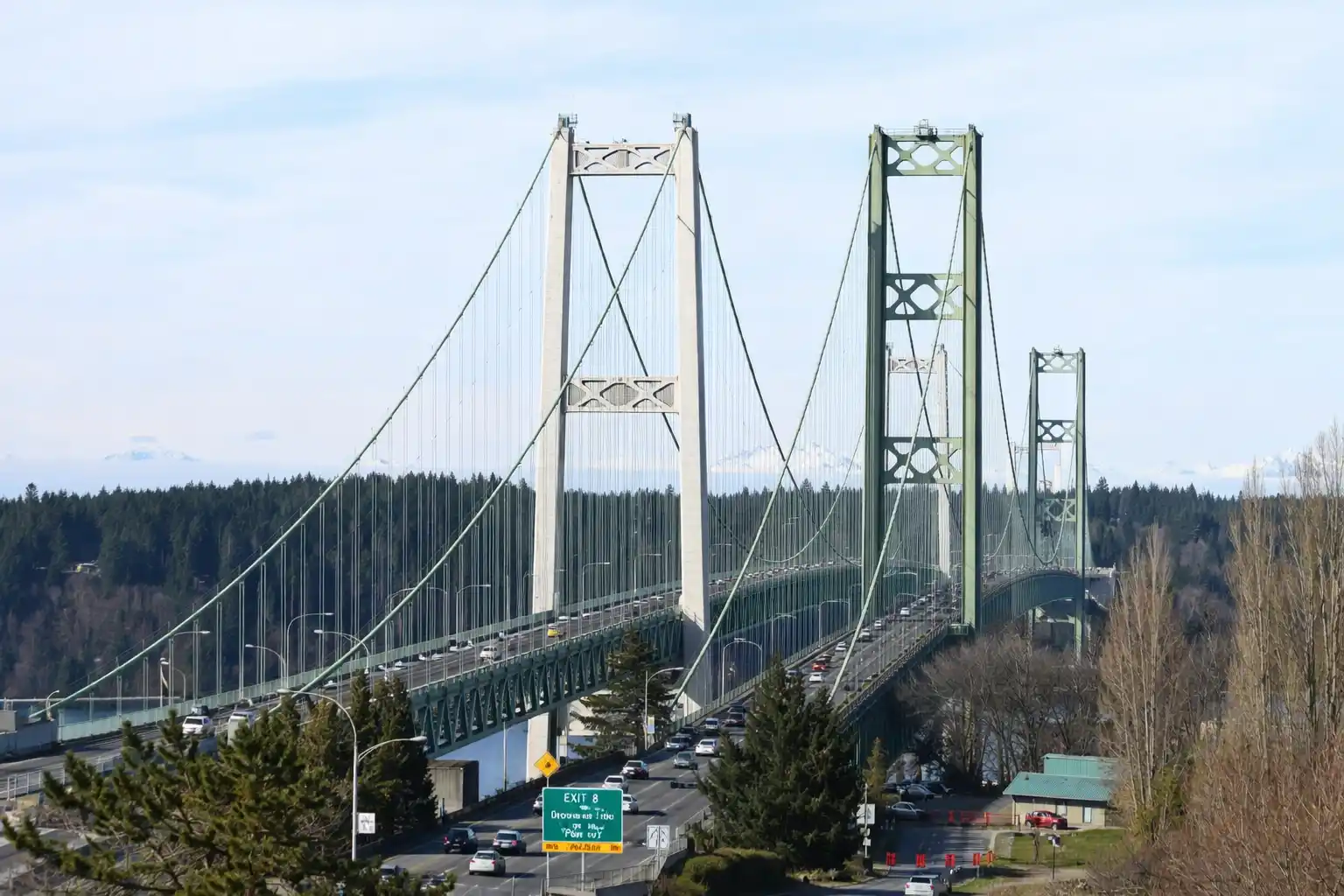
Weather and road conditions. Western Washington weather doesn’t usually disrupt ground transportation, but when it does—that one snowstorm per year shutting down I-5, occasional flooding making Narrows Bridge approach dicey.
Provider should monitor conditions and reach out proactively if there’s disruption risk. Major accident on Narrows Bridge, scheduled pickup means arriving 90 minutes late to important meeting—you need to know before client gets in car.
Some disruptions require route changes (I-5 through Tacoma instead of Narrows, adds 15-20 minutes but avoids backup). Others require rescheduling entirely. Key is driver who knows region well enough to make smart decisions and communicate clearly.
Mechanical failures. Cars break down. Rare with maintained fleets, but happens.
Professional companies maintain backup vehicles and driver pools for this. Assigned vehicle has issue, replacement dispatched immediately. You shouldn’t scramble to find alternative transportation.
This is where established company versus individual operator makes difference. Individual might be excellent 99% of time, but if their vehicle breaks down, backup plan is “call a friend.” Company with multiple vehicles swaps replacement within 20-30 minutes.
Real test of provider isn’t normal operations—it’s the day when three things go wrong simultaneously.
FAQ
Which route should my driver take from SeaTac—Narrows Bridge or through Tacoma?
Narrows is faster (45 min vs 60) but zero alternate routes if there’s an accident. Through Tacoma adds 15 minutes but gives escape options. For morning pickups or speed priority, Narrows. For afternoon when your client can’t miss their flight, Tacoma route is safer. Your driver should know current conditions and make the call.
My client’s staying at The Inn at Gig Harbor but meeting’s at our Olympic Drive warehouse—is that complicated?
Not complicated, just give actual street address. Gig Harbor has downtown waterfront and Olympic Drive industrial zone 10 minutes apart. GPS gets confused. If your facility lacks clear signage, text driver a photo: “blue metal building between AutoZone and boat repair shop.”
We’re doing client dinner at Tides Tavern—can the driver wait or do we need to book separate pickup?
Driver waits, usually cheaper than two bookings. Book total duration: “6 PM pickup, transport to Tides, wait during dinner, return by 10 PM.” You’re paying hourly ($80-100) versus two point-to-point trips. Gives flexibility if dinner runs long. Driver parks at municipal lot across street, not the tiny restaurant lot.
What happens if my executive needs to catch the Vashon ferry after the Gig Harbor meeting?
Tell driver when booking. Point Defiance ferry runs every 30-60 minutes, missing one means waiting. It’s 25-30 minutes from Gig Harbor to terminal. Driver needs target ferry time and whether there’s vehicle reservation. If meeting runs over, driver might re-route to Fauntleroy (more frequent ferries) but needs authorization to make that call.
Our office is on the water but the entrance is on the back side—how do I make sure driver finds it?
Half of Gig Harbor waterfront businesses have addresses on Harborview Drive but vehicle access from different street. When booking: street address + “entrance actually on [street name]” + landmark. Or drop Google Maps pin at exact entrance. Two extra sentences prevents 20 minutes of confusion.
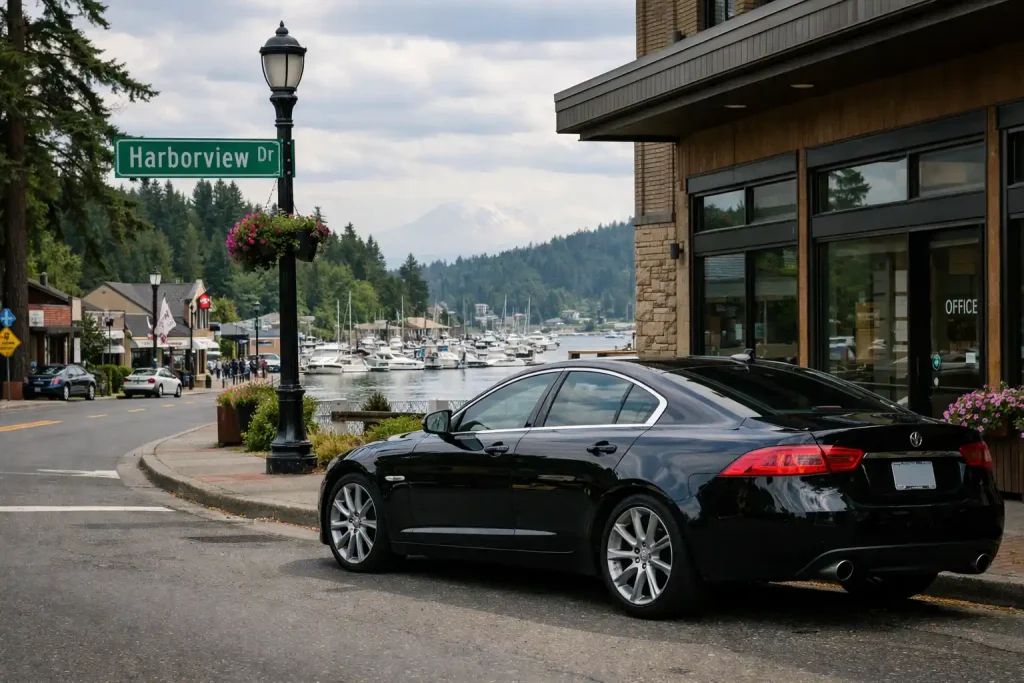
Look, corporate transportation sounds expensive until your VP misses the investor meeting because their Uber driver thought Harbor Hill Drive and Harborview Drive were the same place.
You’re not paying for leather seats. You’re paying to eliminate the variable where your client’s day goes sideways because of navigation.
Set it up once—billing, backup contacts, preferred providers. First time it saves a meeting, it’s paid for itself.
Your visitor’s impression of your company starts at SeaTac baggage claim. Seamless transportation or scavenger hunt—choose one.