








Boeing Field might be Seattle’s smallest commercial airport, but pickup logistics still trip people up. I’ve watched clients waste 15 minutes trying to find each other because nobody bothered to specify which entrance they meant. Whether you’re arranging corporate transportation or meeting a private flight, knowing where to actually meet your ride matters more than you’d think.
Most travelers assume all airports work the same way. BFI operates differently than SeaTac – simpler infrastructure, yes, but also less obvious signage and fewer bailout options when coordination breaks down. This guide covers the pickup options that actually work, timing that prevents delays, and the details most people miss until it costs them money or creates hassle.
Boeing Field (BFI) in 60 seconds: what to do first
Boeing Field sits about 5 miles south of downtown Seattle in Georgetown. Primarily a general aviation and cargo facility, though some commercial charter operations run through here.
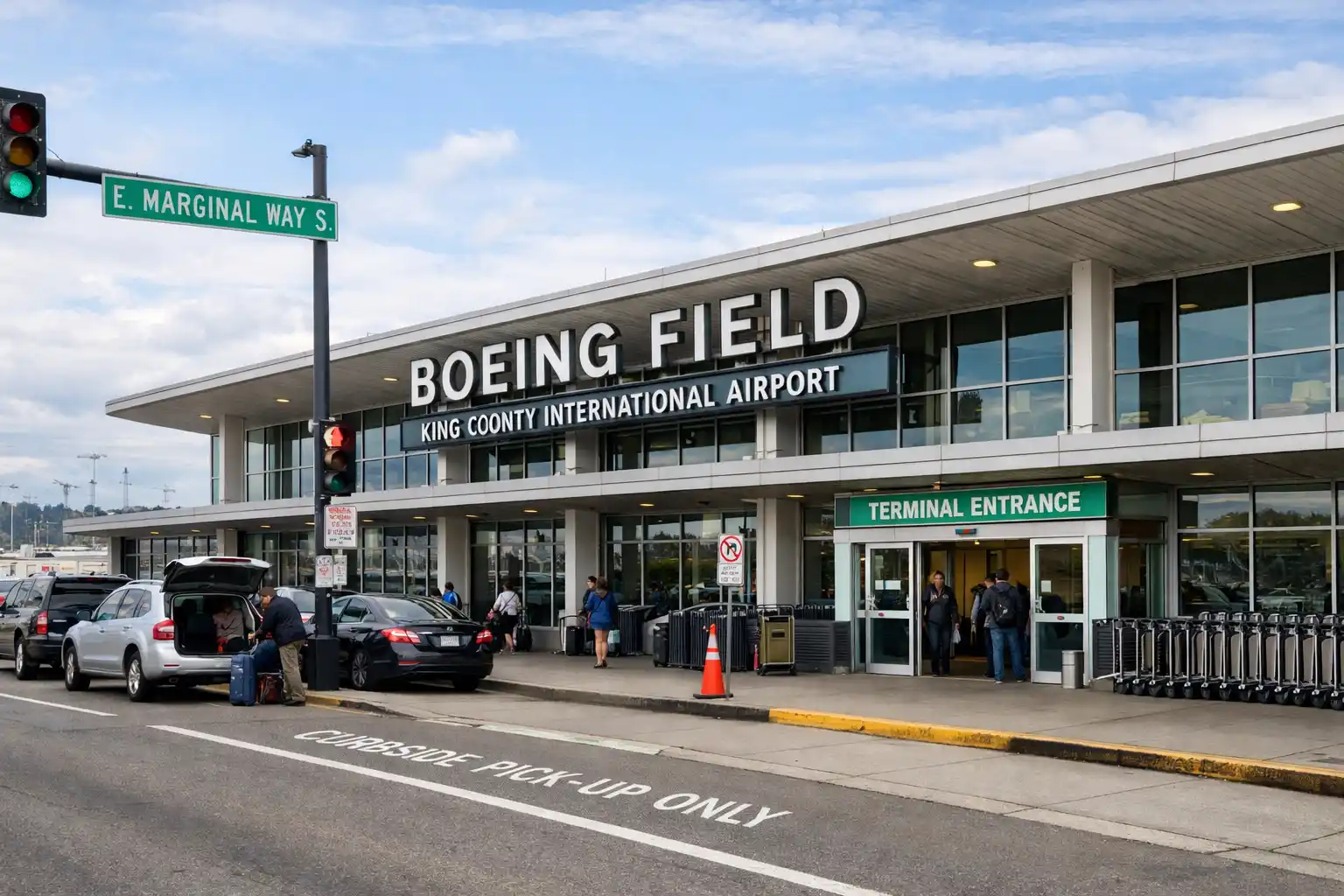
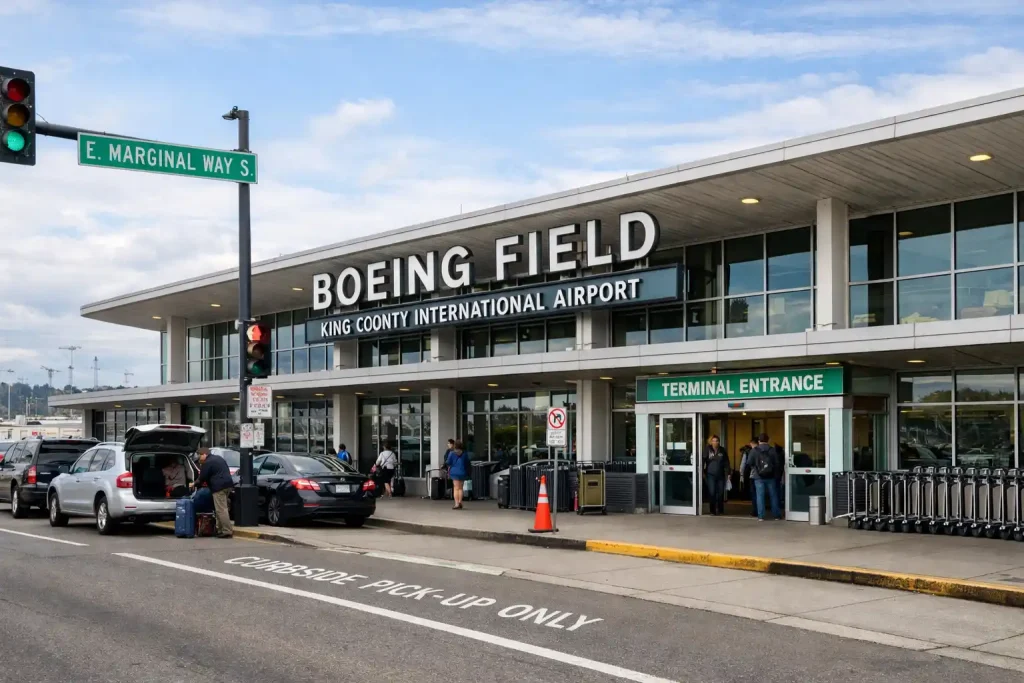
Here’s what you need to know immediately: BFI has one main terminal building. The commercial aviation entrance faces East Marginal Way South on the west side. Flying private? Your FBO will give you specific instructions – usually Landmark Aviation or Clay Lacy.
First step when you land: confirm your exact pickup location with your driver. “Boeing Field” doesn’t cut it. I had a client last month whose driver sat at the commercial terminal for 20 minutes while he waited at Landmark Aviation. Both parties thought they were in the right place. Tell your driver which FBO you’re using or whether you’re at the commercial terminal. Professional seattle towncar services know these distinctions, but clarity prevents stupid delays.
The terminal is small. Once you grab luggage, you’re outside in under 5 minutes. No long walks, no tram systems.
Pickup/drop-off options (curbside, garage, meet & greet)
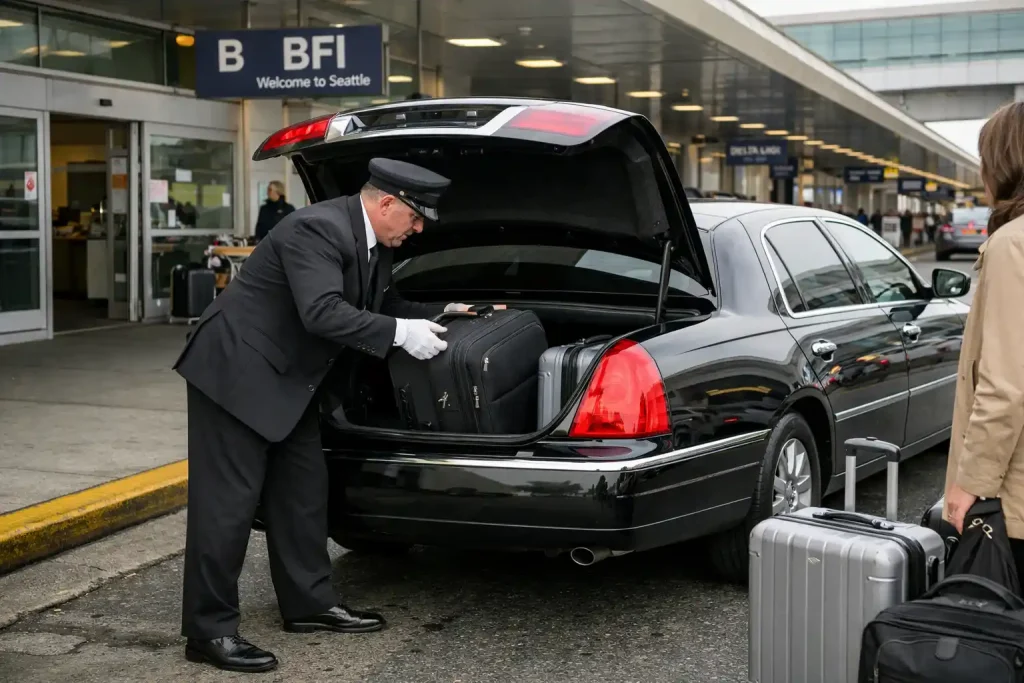
BFI keeps things straightforward, though the setup differs from larger airports.
Curbside pickup is standard. The commercial terminal has a passenger loading zone directly in front on East Marginal Way South. Driver pulls up, you load bags, you leave. Works fine if timing is coordinated and you don’t need help with luggage.
There’s no traditional parking garage structure. Instead, BFI offers a small parking lot next to the terminal. If your driver needs to wait more than a few minutes, they park here rather than circling. Free for first 30 minutes, then $1 per half hour. Most professional car services factor this into wait-time policies.
Meet and greet service is available but works differently. Your driver can’t come inside to baggage claim – BFI’s security doesn’t allow that terminal access. “Meet and greet” means your driver is parked and waiting at the curb with a name sign when you exit. They help with bags immediately.
For FBO pickups, your driver meets you directly at the FBO entrance. Landmark and Clay Lacy both have parking areas where ground transportation can wait without the commercial terminal restrictions.
The garage vs curb question matters less at Boeing Field than at SeaTac. BFI doesn’t have a multi-level structure with different zones. You’re meeting at the terminal curb, at an FBO, or your driver waits in the small adjacent lot. That’s it.
Timing: buffers that work (weekday vs weekend)
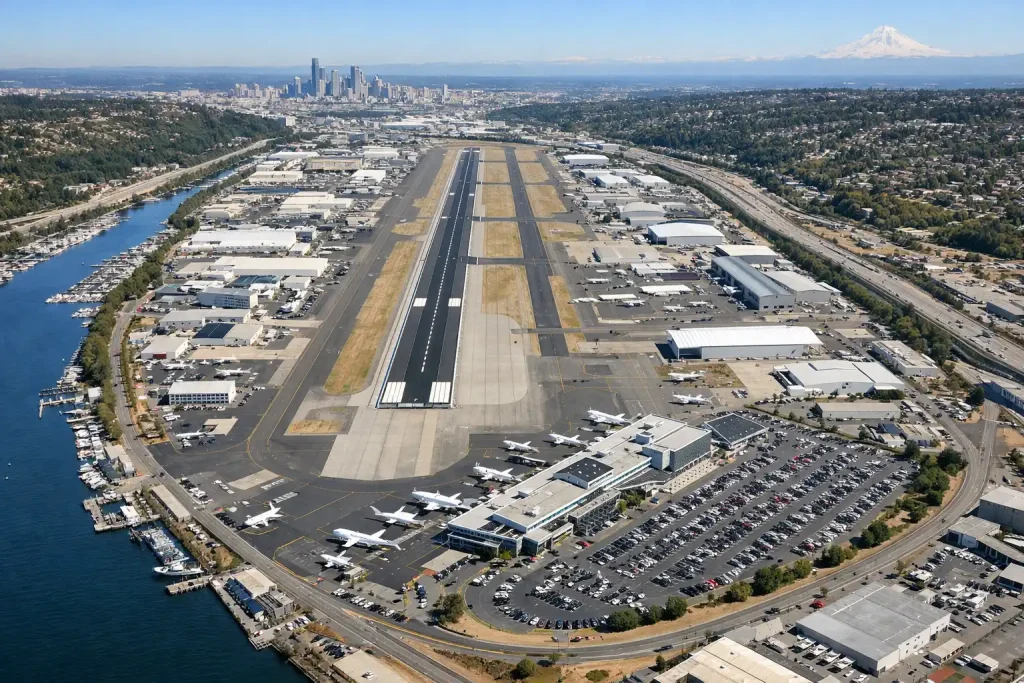
Boeing Field traffic is lighter than SeaTac, but pickup timing still matters. Main variable is where your driver is coming from.
From downtown Seattle: 15-20 minutes light traffic, 25-35 minutes rush hour. Georgetown’s industrial character means less residential congestion, but I-5 and surface streets still back up weekdays (7-9 AM, 4-7 PM).
Auburn town car service picking you up? Add another 15-20 minutes depending on route through south Seattle.
Flight tracking makes the difference. Professional companies monitor your arrival real time. Even at a small airport, flights land 20-30 minutes early or late. You don’t want to stand around, and you don’t want your driver burning time circling.
For weekday pickups, text or call when you’re about to land. Gives your driver time to position. Georgetown doesn’t have much nearby staging parking, so advance notice helps.
Weekend and evening – simpler. Less traffic, more predictable. Driver can usually get from central Seattle to BFI in under 20 minutes.
One thing people miss: coordinating same-day SeaTac to Boeing Field connections needs at least 90 minutes. Airports are only 10 miles apart, but SeaTac’s size means deplaning and ground transportation takes longer than expected.
Price factors: fixed rates, wait time, tips
Boeing field car service typically runs fixed rates rather than meters. You get a set price based on pickup location and destination, regardless of traffic.
Standard sedans from downtown Seattle to BFI: $60-80. From south King County: $70-100 depending on distance. SUVs and luxury vehicles start around $90-120.
Wait time is where pricing gets specific. Most services include 15-30 minutes complimentary wait time. After that, $30-50 per hour additional. This is why arrival coordination matters – sitting in the lot 45 minutes adds cost.
Extra charges come from: last-minute changes (under 24 hours), multiple stops, special requests like car seats. Early morning (before 5 AM) or late night (after 10 PM) sometimes carry surcharges. Ask when booking.
Tipping runs 15-20% for good service. Tips aren’t included in fixed rates unless stated. Your driver handles bags, navigates traffic, tracks flights, manages logistics. Factor gratuity into total cost.
Credit card processing occasionally adds 3-4%. Cash avoids this. Most services take cards, just verify payment policies.
Common mistakes (and how to avoid them)
Biggest mistake is treating Boeing Field like SeaTac. They’re fundamentally different. BFI has less infrastructure, fewer services, requires more precise coordination. “Pick me up at the airport” doesn’t work when your driver needs the specific FBO or terminal entrance.
Wrong pickup location causes most delays. Flying private through Landmark but driver goes to commercial terminal? You’re now 10 minutes apart coordinating via phone. Confirm specific location before landing.
Poor timing coordination runs second. Driver can’t sit at curb indefinitely. Flight running late and you don’t communicate? Driver parks and waits – works fine but costs time and potentially money. Simple text when landing solves this.
Assuming instant pickup creates frustration. Even small airports need 5-10 minutes to deplane and grab bags. Driver needs similar time to position.
Booking random services without vetting – when you’re dealing with business travel or tight schedules, you want a company that tracks flights and knows BFI’s layout. Cheapest option often lacks logistics capability. Established Seattle airport transportation providers have real-time coordination systems.
Not clarifying luggage capacity. Private flights sometimes mean more bags than commercial. Golf clubs, ski equipment, multiple large bags – verify your vehicle handles it.
FAQ
Can my driver meet me inside the Boeing Field terminal?
No. BFI’s commercial terminal doesn’t allow ground transportation access beyond the curb. Meet-and-greet means your driver waits outside with a sign.
How early should my driver arrive for pickup?
15-20 minutes before scheduled landing. Accounts for early arrivals, gives positioning time. They track your flight real time, so timing adjusts based on actual landing.
Is there a cell phone lot where drivers wait for free?
Not officially. BFI has limited free parking compared to SeaTac’s designated cell phone area. Professional drivers use the short-term lot (free first 30 minutes) or stage nearby and coordinate based on your text.
What’s the difference between commercial terminal and FBO pickup?
Commercial terminal serves scheduled charters, located on main building’s west side. FBOs like Landmark and Clay Lacy serve private aircraft with separate facilities and entrances. Make sure your driver knows which one.
Do I pay for parking if my driver waits?
Driver handles parking costs. Terminal lot offers 30 minutes free, then $1 per half hour. Most services include reasonable wait time in base rate, with additional charges for extended delays beyond 30-45 minutes.