









For most passengers, a chauffeur holding a name sign at baggage claim is all the airport help they need. For some, it is not nearly enough. A grandmother flying alone for the first time in years, a traveler recovering from surgery, a parent juggling twins and a car seat: these passengers need a person who stays with them through the awkward parts of the airport, not just someone waiting at the exit.
That extra layer is what meet and assist means. This article explains how it differs from a standard greeting, what help looks like on departure and arrival days, how it fits alongside the airline’s own assistance services, and where the line falls at the security checkpoint.

How Meet and Assist Differs From Meet and Greet
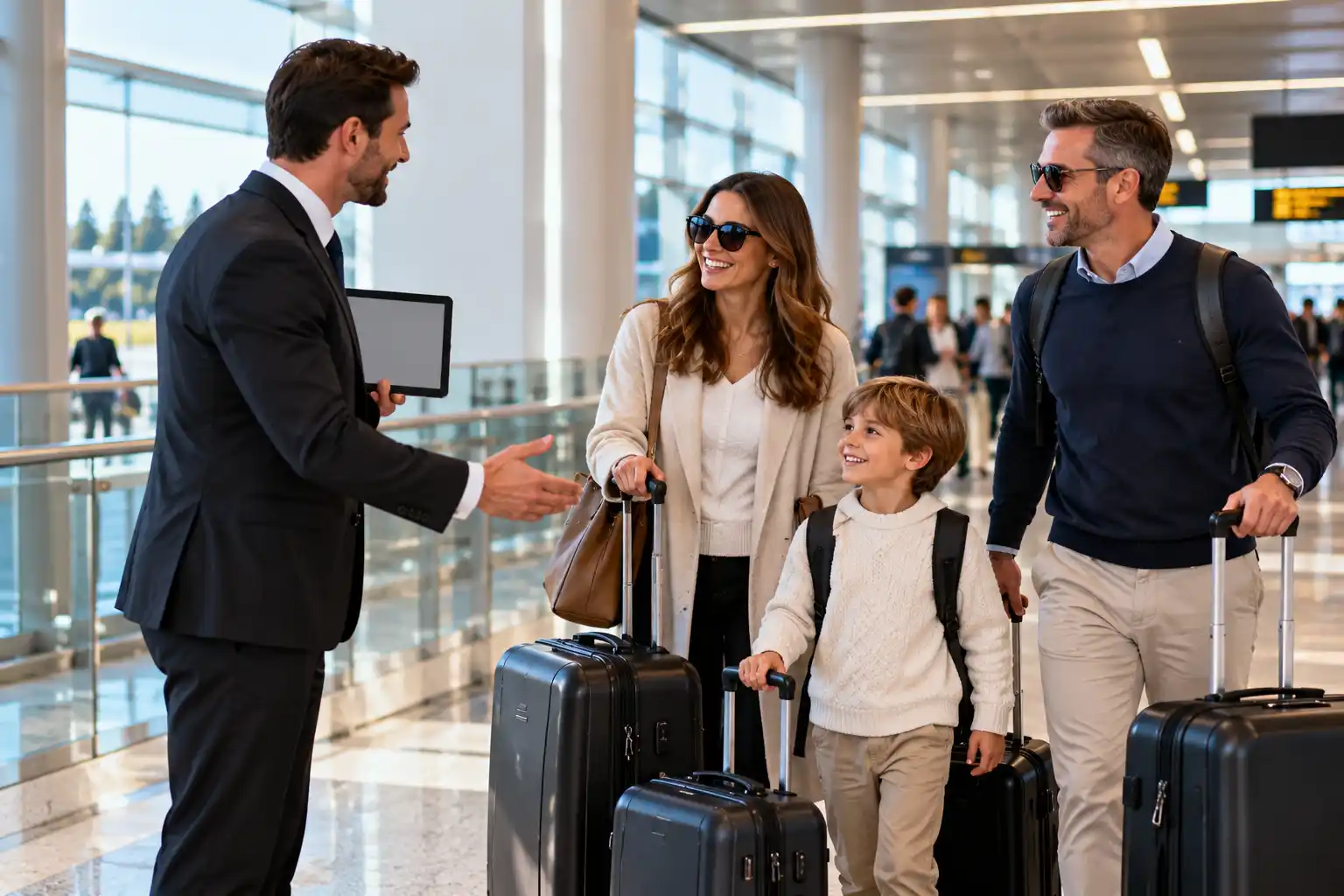
A standard meet and greet focuses on finding you. The chauffeur waits in the arrivals area, identifies you, helps collect bags and leads you to the car. It solves the question of where to go after landing. Our explainer on what meet and greet service includes covers it in detail.
Meet and assist widens the scope. Instead of a quick handover, the chauffeur plans for a slower pace, stays close through each step on the public side of the terminal, and coordinates with the airline’s own staff where needed. It works in both directions, which matters because departures are often harder for a traveler needing support than arrivals are.
Assistance on Departure Days
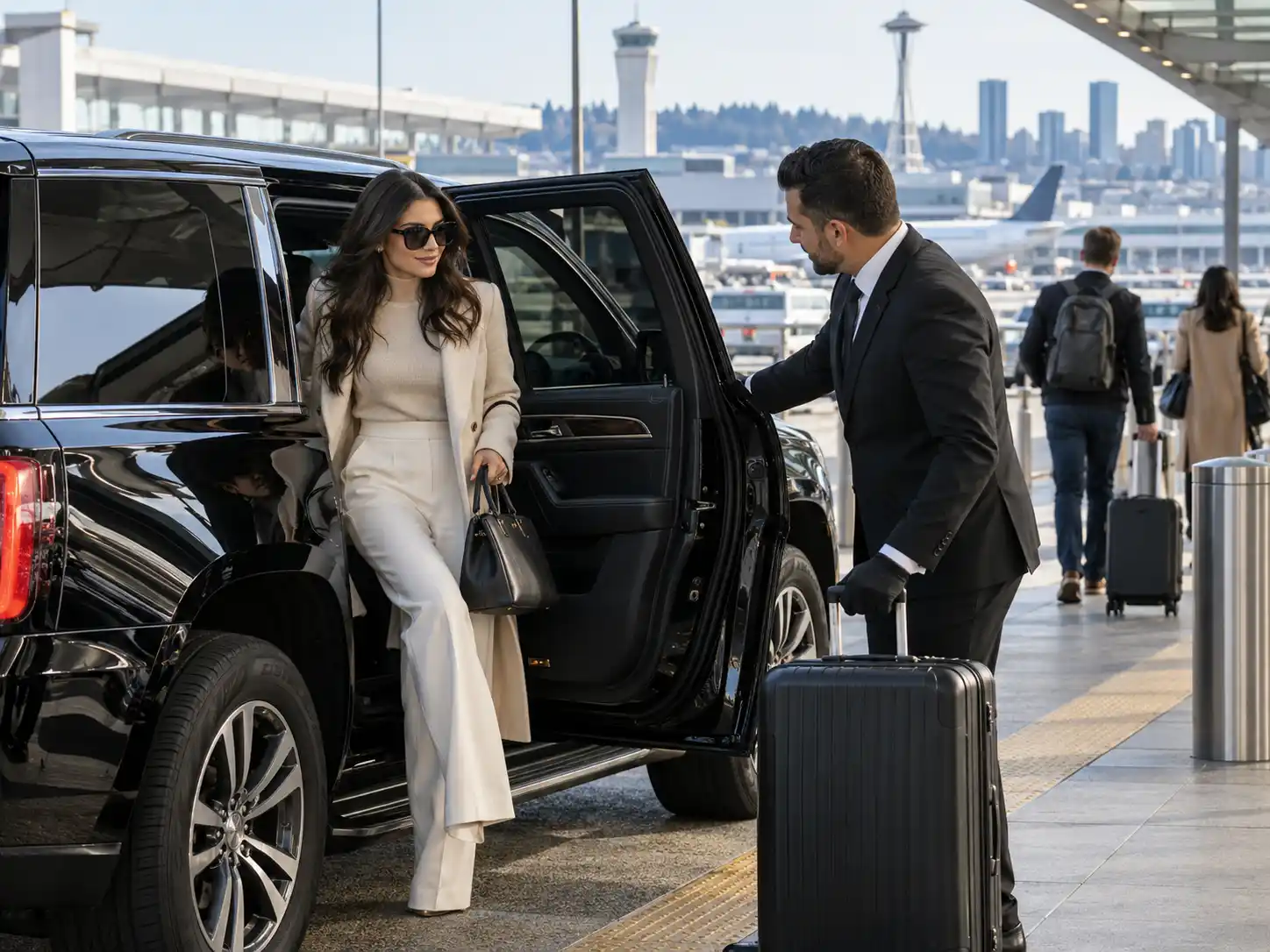
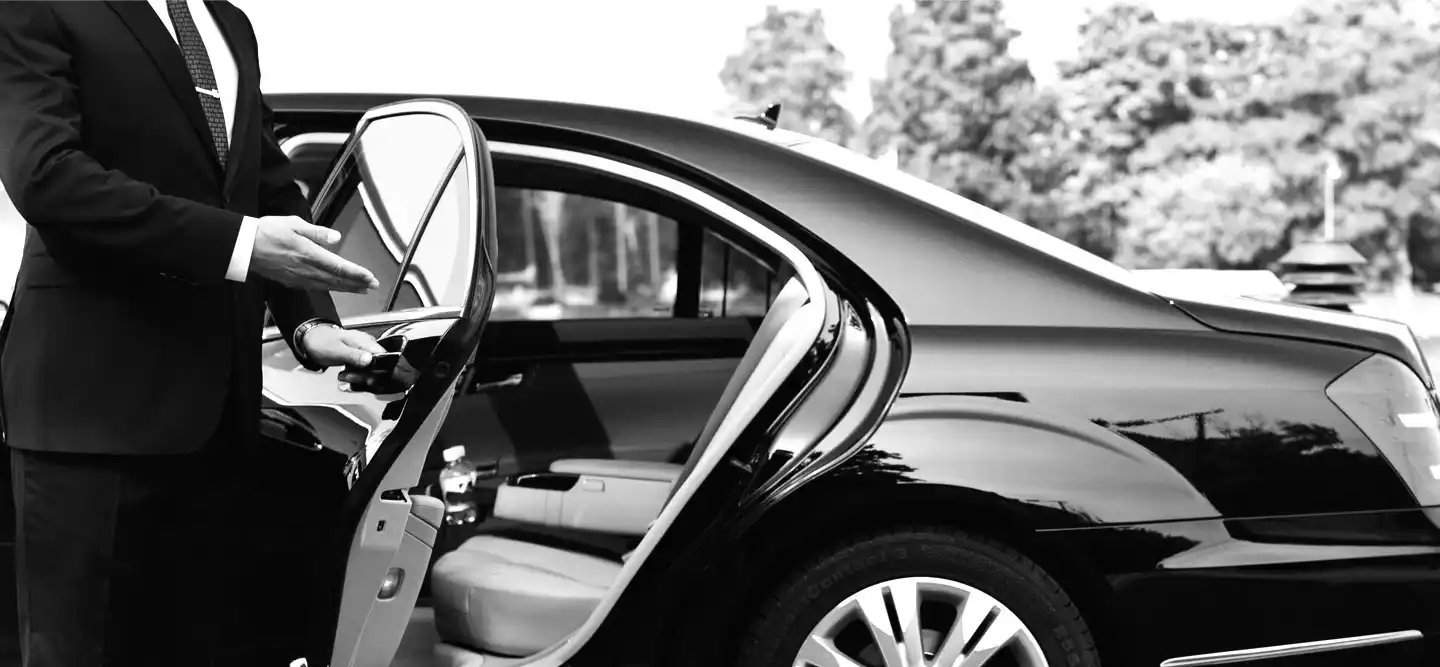
On a departure day, assistance begins at the front door rather than the airport. The chauffeur allows extra time to help the traveler into the vehicle, secures any mobility aid in the trunk, and confirms the airline and terminal entrance before leaving.
At SeaTac, the car pulls up at the departures drive at the door closest to the airline’s check-in area. Rather than simply unloading bags at the curb, the chauffeur can park as directed and walk the traveler inside, carry or wheel luggage, and help them find the correct counter or kiosk. If the airline is providing a wheelchair, the chauffeur waits until the airline’s attendant has taken over, so the passenger is never left alone in the lobby.
For families sending off an older relative, this is often the deciding factor. Knowing that someone stayed until the airline took responsibility removes a great deal of worry.
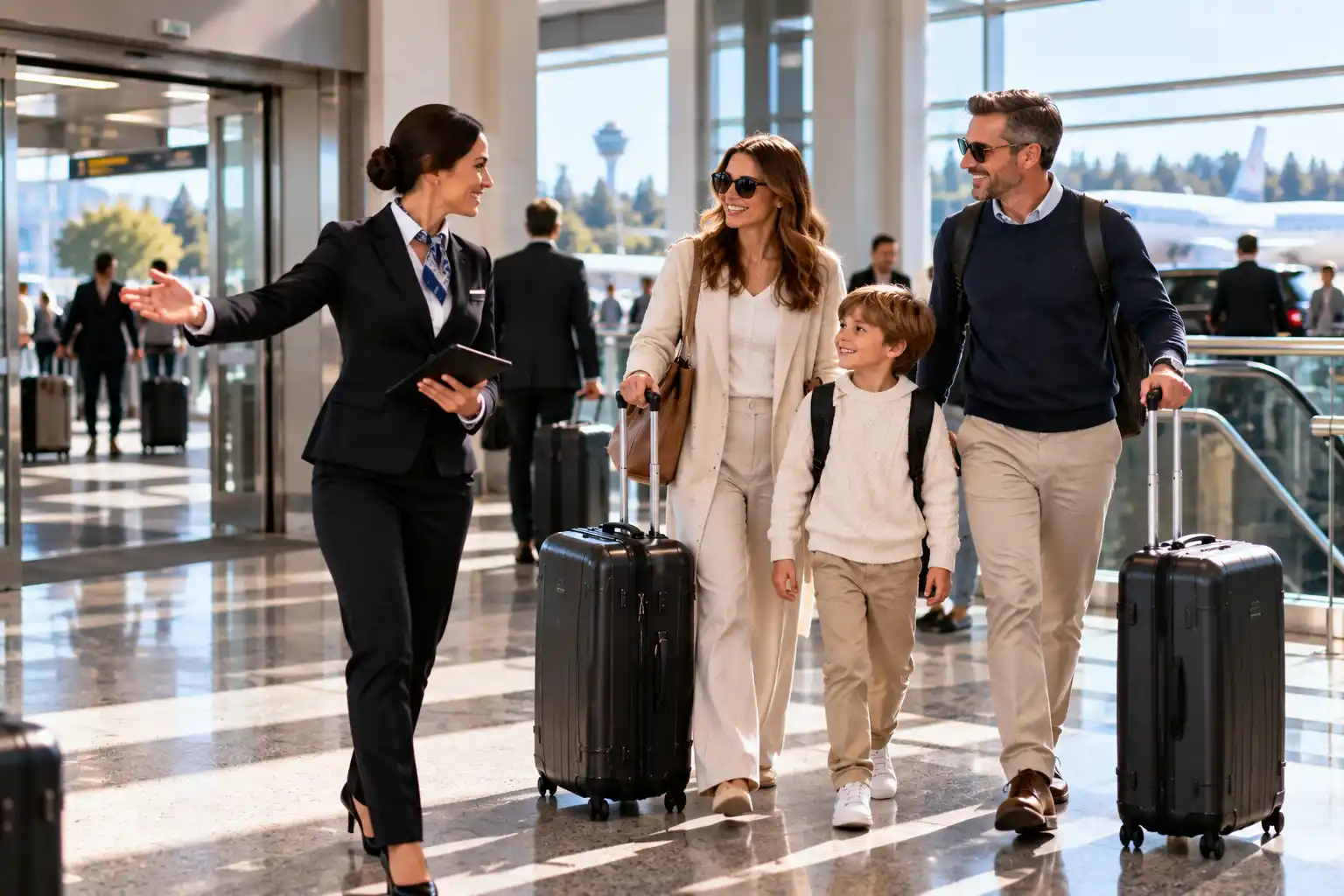
Assistance on Arrival Days
Arrival assistance mirrors departure help in reverse. Because flights are tracked, the chauffeur is in place before the traveler reaches the public side of the terminal. If the airline is providing wheelchair assistance from the aircraft, the airline attendant brings the passenger out, and the handover happens there; if the passenger is walking, the chauffeur meets them at the agreed point in the baggage claim area.
From there, the chauffeur takes the pace from the traveler. Collecting bags, finding a restroom, sitting for a moment before the walk to the vehicle: none of it is rushed. The chauffeur then brings the vehicle as close as the airport allows or walks alongside to where it is parked. For international arrivals, our post on meeting passengers arriving on international flights describes where travelers emerge after customs.
Travelers Who Benefit Most
Meet and assist is not only about mobility. The people who gain most from it tend to fall into a few groups:
– Older travelers flying alone, especially on their first trip in a long while.
– Passengers recovering from an injury or operation, or using a cane, walker or wheelchair.
– Parents traveling solo with young children and the gear that comes with them.
– Visitors who do not speak English comfortably and find airport signage stressful.
– Unaccompanied adults with a cognitive or sensory condition who travel more easily with a steady guide.
When booking for someone else, tell us who will be traveling, any assistance they use and the best phone number to reach them on the day. That information shapes everything the chauffeur does.
Working Alongside Airline Assistance Services
Airlines run their own assistance programs, and those are the services that operate inside the secure area and on the aircraft. Wheelchair transport from the gate, help through the checkpoint and boarding support all belong to the airline. They are requested through the airline, ideally when the ticket is booked or well before the flight.
A chauffeur’s role is to fit neatly around that service: delivering the traveler to the airline’s staff on departure and receiving them from the airline’s staff on arrival. Sharing the airline booking reference and the type of assistance requested helps the chauffeur know where the handover will take place. The TSA’s guidance for travelers with disabilities and medical conditions is also useful reading for anyone preparing for the checkpoint.
What Cannot Be Done Past Security
The security checkpoint is the boundary. A chauffeur does not hold a boarding pass and cannot pass through screening or escort a traveler to the gate. Inside the secure area, the airline and airport staff take over. Some airports offer escort passes to family members in specific circumstances, but these are issued by the airline, not by a car service.
Being clear about this limit is part of doing the job well. It means the airline’s assistance has to be booked, the handover point has to be agreed, and the traveler knows exactly who will be with them at each stage. For the full range of SeaTac services, visit our SeaTac airport transportation page, and when you are ready, contact our team to describe the help your traveler needs.
FAQ
Can my chauffeur walk me to the check-in counter?
Yes. If you request meet and assist, the chauffeur leaves the car in an approved spot and walks with you into the terminal to the counter for your flight. Ask for it at the time of booking so the schedule includes the extra minutes.
Can a chauffeur go through security with me?
No. Only ticketed passengers and authorized staff can pass through screening. Your chauffeur will stay with you up to the checkpoint or until the airline’s assistance staff take over.
How do I arrange wheelchair assistance at the airport?
Request it directly from your airline, ideally at the time of booking or by calling them before the trip. Then let your chauffeur know it has been arranged so the handover can happen at the right place.
Is meet and assist available for elderly parents traveling alone?
Yes, and it is one of the most common reasons families book it. Give us the traveler’s flight details, their mobile number and a family contact, and the chauffeur will stay in touch with both until the trip is complete.