












A cruise from Seattle begins long before the ship pulls away from the waterfront. There is a flight to land, a hotel to reach or leave, a terminal to find, luggage to hand over and, a week or so later, the whole sequence in reverse with a flight deadline attached. Each piece is simple on its own. Put together, they reward a little planning.
This guide is the overview. It walks through the two terminals, the logic of sailing day and return day, what to do about luggage, how groups and travelers with mobility needs can plan, and what changes when a voyage begins or ends in Vancouver instead. Where a topic has its own detailed article, you will find a link to it.
Seattle’s Two Cruise Terminals in Brief
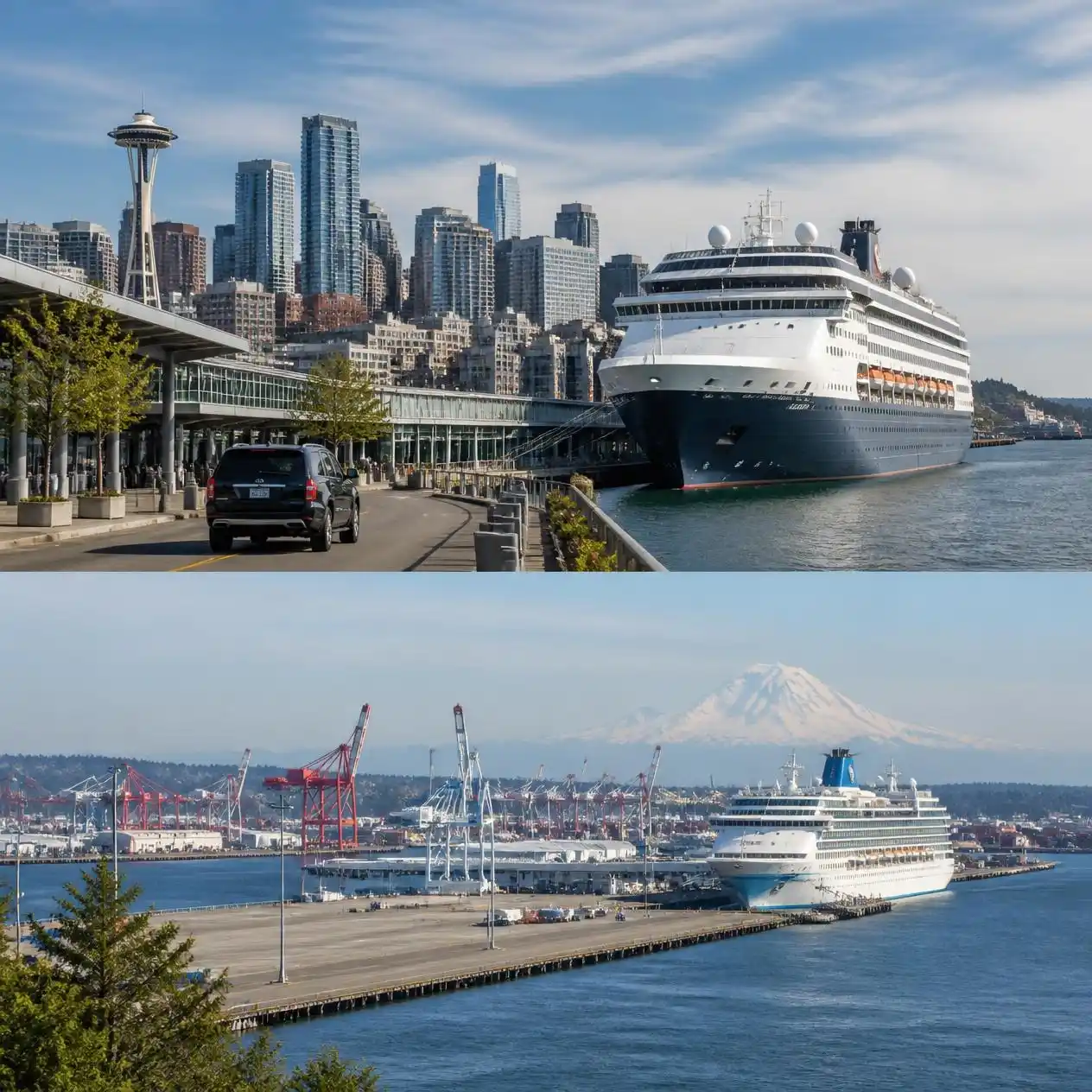
Seattle’s cruise ships use two terminals operated by the Port of Seattle.
Pier 66, the Bell Street Cruise Terminal, sits on the downtown waterfront along Alaskan Way, within reach of downtown hotels, Pike Place Market and the central business district. Traffic around it is city traffic: busy streets, waterfront congestion and limited curb space.
North of downtown, tucked between Magnolia and Interbay, you will find Pier 91, the Smith Cove Cruise Terminal. It is a larger, more industrial site with its own approach road, and it is not within walking distance of downtown.
The terminal is assigned by the cruise line, not chosen by passengers, so confirm yours in your booking documents. For a detailed curb-level picture of both, our Pier 66 and Pier 91 drop-off and pickup plan covers what happens at each.
Embarkation Day From Start to Finish
On sailing day, the cruise line gives each passenger a check-in window. Arriving at the start of that window is better than arriving at the end of it, and arriving long before it usually means waiting outside.
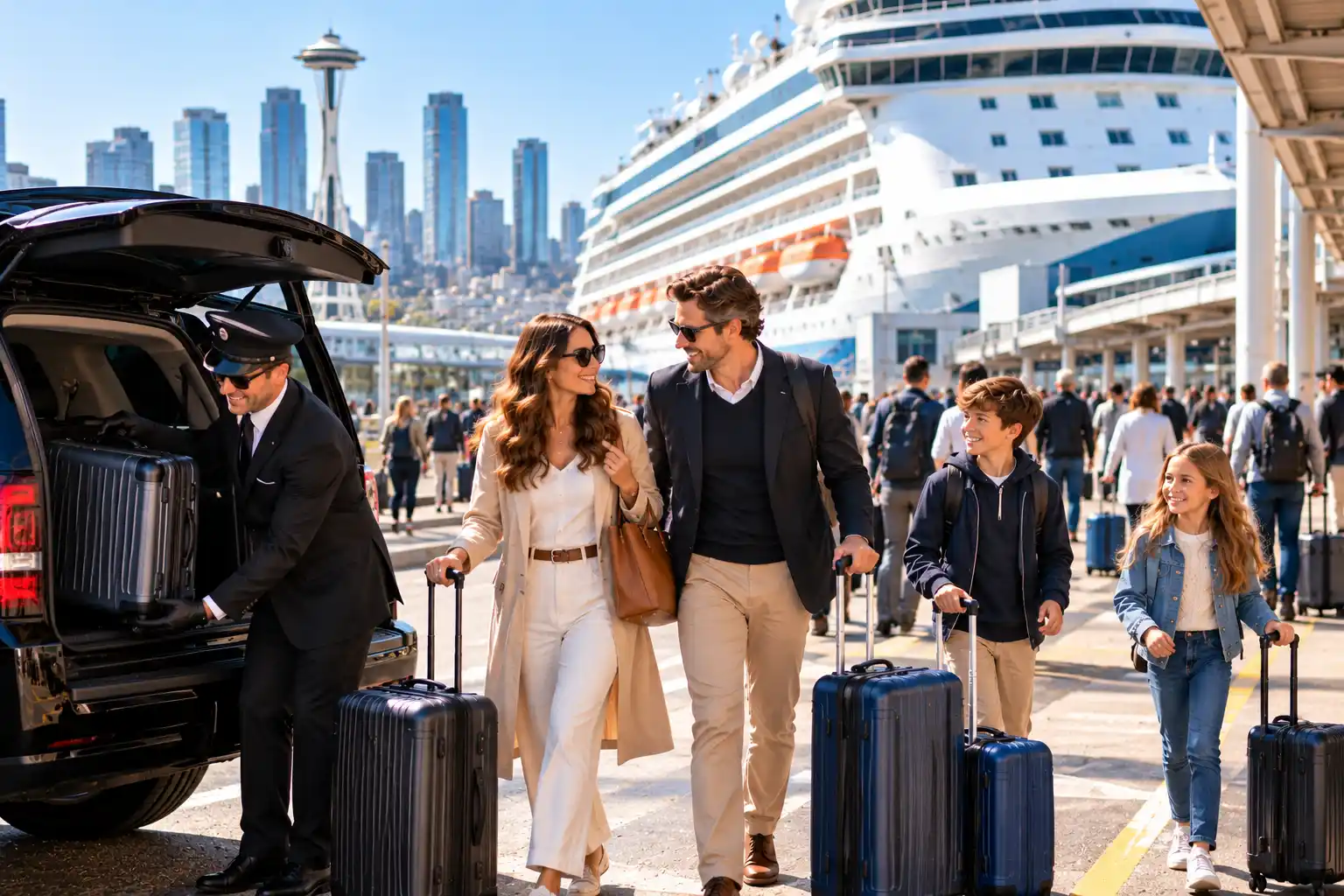
A typical sailing-day sequence looks like this. You leave your hotel or the airport with enough time for traffic. At the terminal, the vehicle pulls into the drop-off area, porters take checked luggage tagged with your cabin number, and you walk into the terminal with carry-on bags only. Security screening and check-in follow, then boarding.
Travelers arriving by air on sailing day face the tightest timeline. Flights can be delayed, and baggage claim takes as long as it takes. Many cruisers prefer to arrive the day before; our guide to airport, hotel and pier transfers explains how that three-leg plan works. If you do fly in the same day, our comparison of five ways from SeaTac to the cruise piers sets out the options.
Disembarkation Day and the Rush for Flights
Return day runs on the ship’s timetable. Passengers leave in stages, usually in groups by assigned time or luggage tag color, starting a while after the ship docks. Some travelers carry all their own bags off early; others wait for luggage to be unloaded and collected in the terminal.
The common mistake is booking a flight too early. After docking, disembarkation, customs processing for passengers on the ship, baggage collection and the drive to SeaTac all take time. A late-morning or afternoon flight leaves room for a slow exit. If an early flight is unavoidable, carrying your own luggage off may help, but confirm whether your line allows it.
Pre-booking a car for the return means a chauffeur is waiting rather than you joining a taxi line along with every other passenger leaving at the same time.
Luggage Logic for Cruise Travelers
Cruise luggage tends to be bulkier than ordinary travel luggage: formal clothing, layers for colder ports and souvenirs on the way home. A couple can easily fill a sedan’s trunk. A family of four often needs an SUV.
Size the vehicle to the bags, not just the passengers. Premium SUVs carry up to six passengers with room for four to six large suitcases. Executive vans have separate luggage areas and suit groups with full cruise wardrobes. If you plan to see the city between the hotel and the ship, luggage can stay in the vehicle while you visit.
Remember that checked bags leave your hands at the terminal curb. Anything you need before your cabin is ready, such as medications, documents and a change of clothes, belongs in your carry-on.
Groups, Families and Accessibility Needs
Groups sailing together often arrive on several flights and stay in different hotels. One van for the whole party works well if everyone is in one place; otherwise, separate vehicles timed to each arrival may be simpler. Name one contact person who knows every flight number and can update the plan.
Families with young children benefit from a direct ride with space for strollers and car seats. Car seat arrangements are something to confirm when booking.
For travelers who use a wheelchair or have limited mobility, mention it at the time of reservation so the right vehicle can be assigned, and let the cruise line know as well, since terminal assistance is arranged through the line and the port. The Port of Seattle publishes terminal information on portseattle.org.
Cruises That Start or End in Vancouver
Some Alaska itineraries sail from Vancouver’s Canada Place rather than Seattle, and some voyages run one way between the two cities. Travelers flying into Seattle for a Vancouver departure need a cross-border transfer, which adds the border crossing to the timeline and requires passports or other accepted travel documents for every passenger.
Allow for border wait times on the way north and plan to reach Canada Place well inside your check-in window. Our page on private transfers from Seattle to Vancouver covers the drive.
Your Cruise Transportation Checklist
Before you travel, run through these points:
– Confirm your terminal and check-in window with the cruise line.
– Decide whether to arrive the day before or on sailing day.
– Choose a vehicle that fits your luggage as well as your party.
– Book both the trip to the ship and the ride home from it.
– Pick a return flight that allows time for a slow disembarkation.
– Keep travel documents and essentials in your carry-on.
– Share mobility, child-seat or extra-stop requests when you book.
When the list is done, you can reserve your cruise transfer online with your ship name, sailing date and flight details.
FAQ
How do I find out which terminal my ship uses?
The cruise line lists the departure terminal in your booking confirmation and boarding documents. The Port of Seattle also publishes cruise schedules showing which ships berth at each pier. Double-check close to departure, since assignments occasionally change.
How long before sailing should I be at the terminal?
Follow the check-in window your cruise line assigns, which is usually set a few hours before departure. Arrive near the start of your window rather than at the end. Coming very early rarely speeds boarding, because terminals open to passengers in stages.
Can I book a morning flight on disembarkation day?
It is possible, but it leaves little margin. Disembarkation often takes a couple of hours from docking, and the drive to SeaTac adds more. A flight around midday or later is a safer choice for most travelers.
Is transportation available for wheelchair users?
Yes, but mention the specific needs when booking so a suitable vehicle can be assigned and the chauffeur knows to allow extra time. Let us know whether the passenger can transfer to a seat and whether a folding wheelchair needs to travel in the cargo area. Terminal assistance is arranged separately through the cruise line.