








Table of Contents
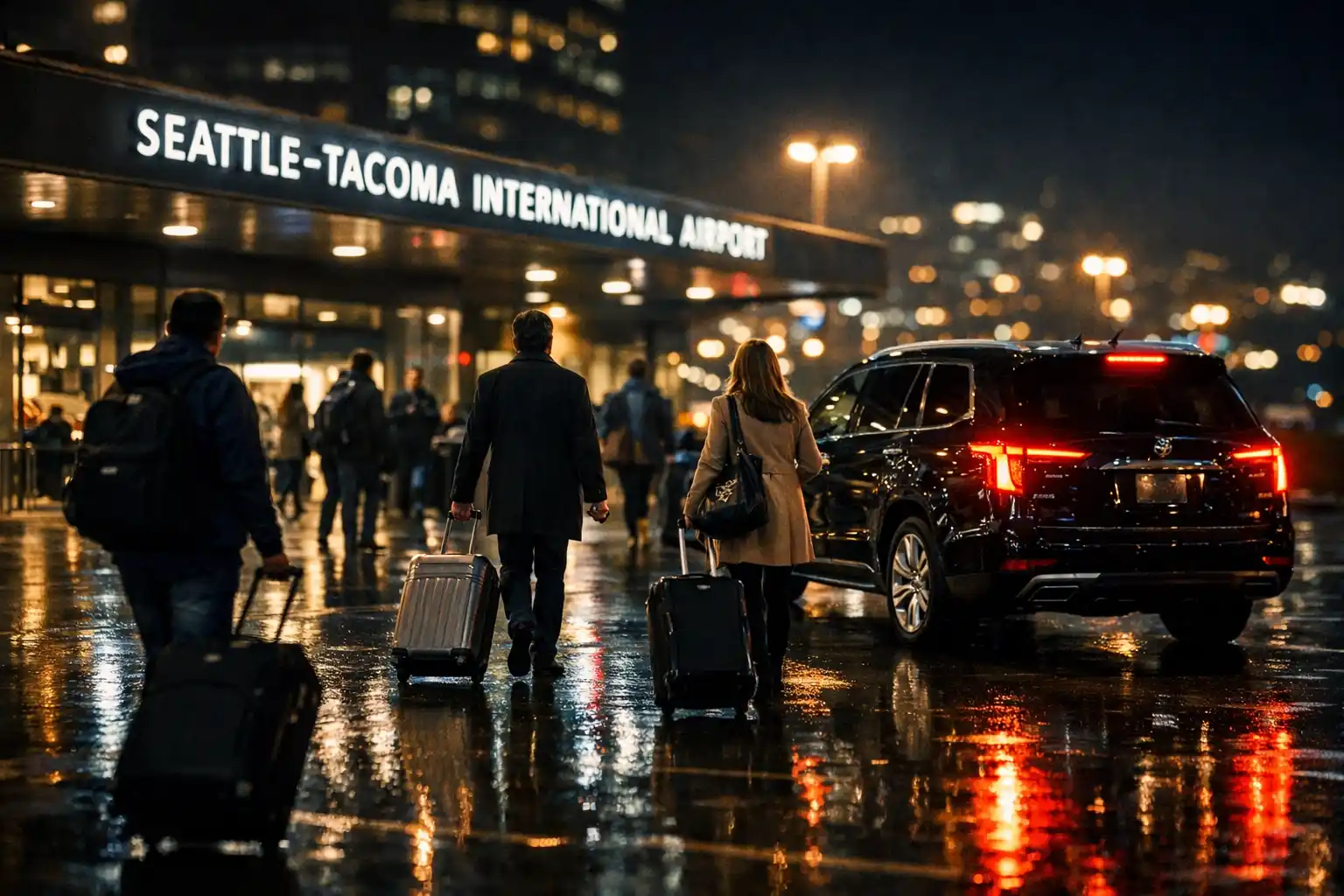
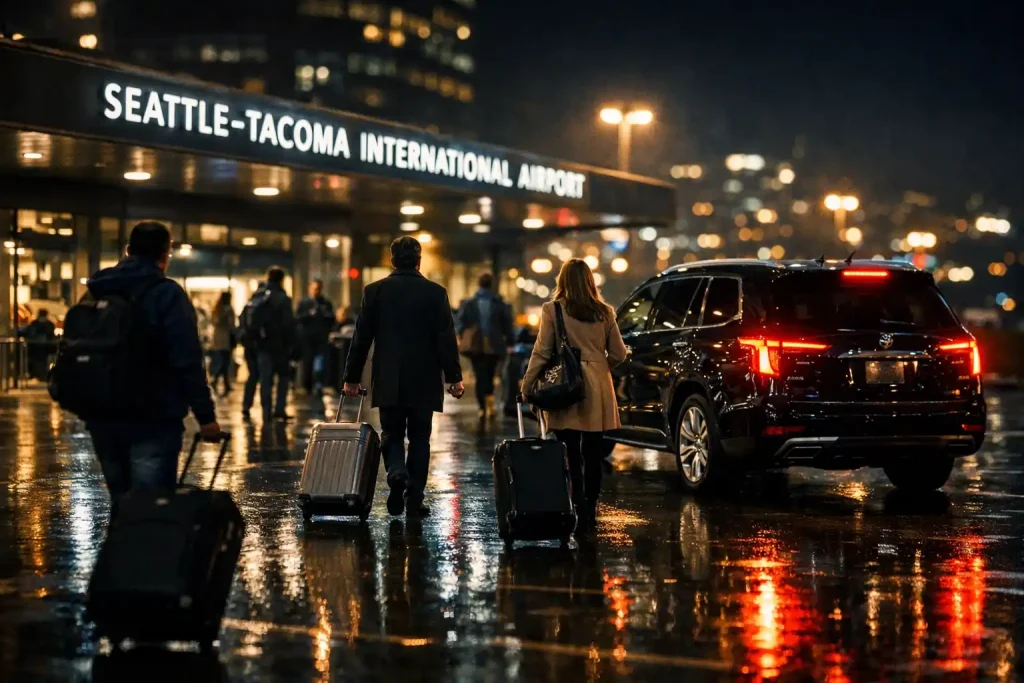
You land at SeaTac, turn your phone on, and suddenly your “quick transfer” becomes a small strategy game: baggage claim, pickup rules, curb chaos, and a hotel that swears it’s “downtown” (but might actually be a steep block away with two rolling suitcases).
This is the no-fluff playbook for Seattle airport transportation to downtown—built around one truth: most people don’t lose time on the highway; they lose it at the pickup.
⏱️ Quick snapshot: the 3-minute decision that saves 30 minutes
Ask yourself three things before you choose anything:
- How much stuff are you moving? (one backpack vs. two rollers + garment bag + stroller)
- How many humans are you coordinating? (solo vs. “we’re six but two phones are dead”)
- Do you need door-to-door or station-to-walk? (hotel lobby vs. “I can walk 8 minutes”)
If you want a fast answer:
- Travel light + OK to walk: take Link light rail (it’s promoted as ~38 minutes from downtown Seattle).
- Luggage + want simplest: pre-book a car (or taxi line) and avoid guessing games.
- Group + luggage: decide the vehicle first, then the pickup plan—otherwise you’ll “save money” and burn time.
For your site flow, this is a good moment to send readers to:
- Browse vehicle sizing in your fleet
- Or see airport workflow details on Private transportation from/to SeaTac Airport
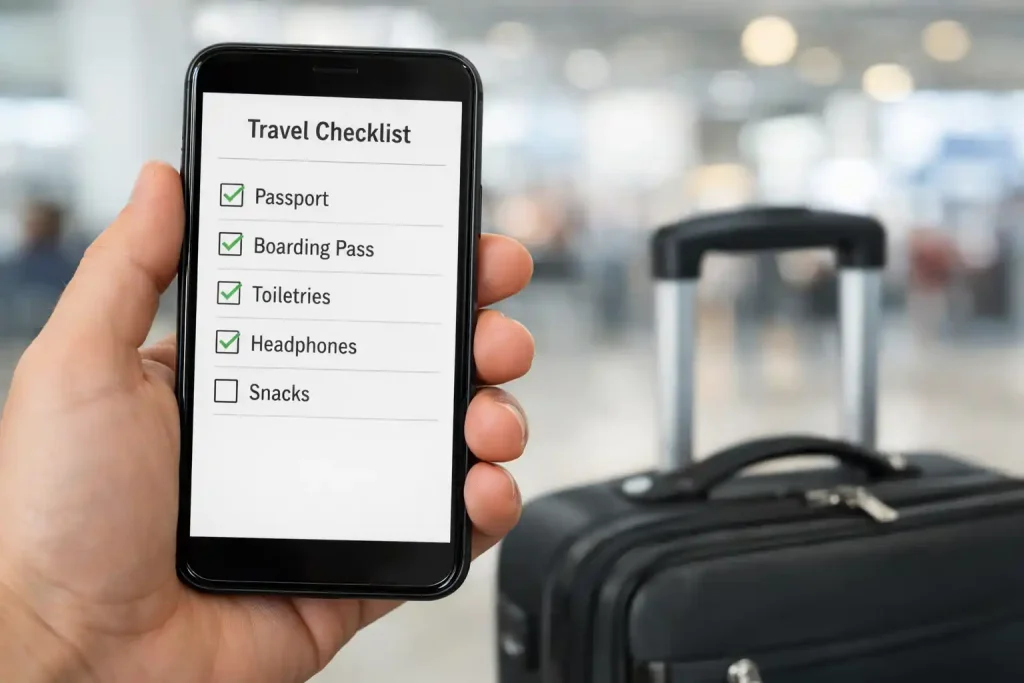
🚆 Option 1: Link light rail (the “predictable” move)
If your goal is downtown fast with minimal drama, rail is often the cleanest path because it ignores curb gridlock. The Port of Seattle describes Link light rail as “just a 38-minute ride from downtown Seattle.”
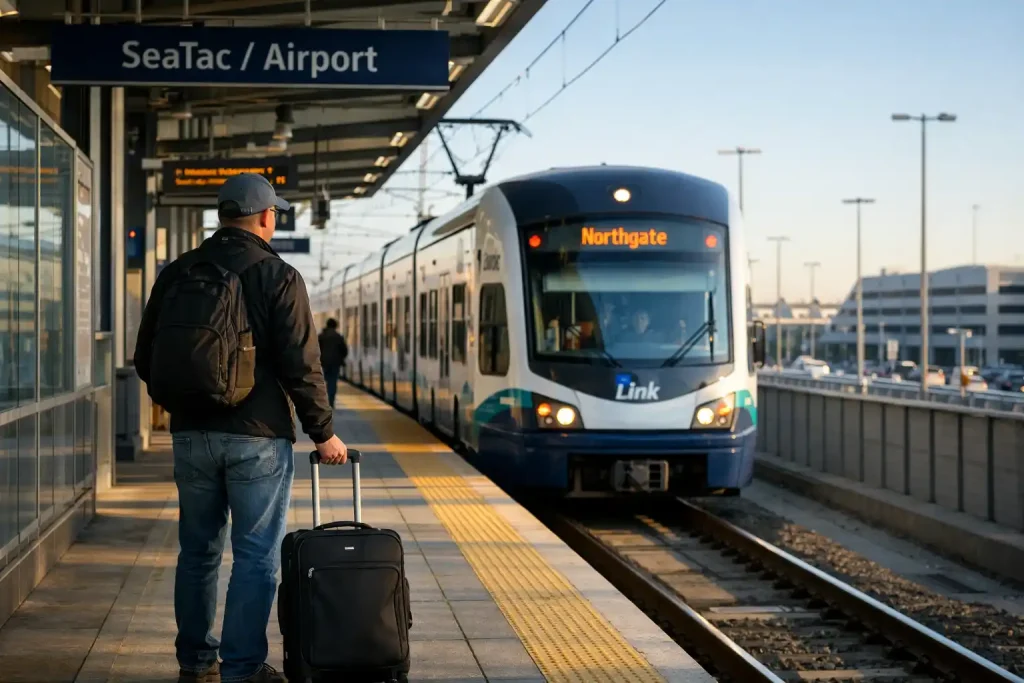
Choose light rail when:
- you’re solo or a pair,
- you’re not hauling an awkward pile of bags,
- your destination is near a downtown station or a quick rideshare/taxi from one.
Skip light rail when:
- you’re landing late and don’t want to think,
- you’re moving a family + luggage,
- you’re dressed for a meeting and don’t want the “rolling suitcase obstacle course.”
Real-world note: schedules can change (special service periods, maintenance). Check the official Sound Transit 1 Line schedule before you commit.
🚗 Option 2: Rideshare (fast when it’s calm, slow when it’s chaotic)
Rideshare works—until it doesn’t. The most common failure isn’t “traffic.” It’s meeting the car.
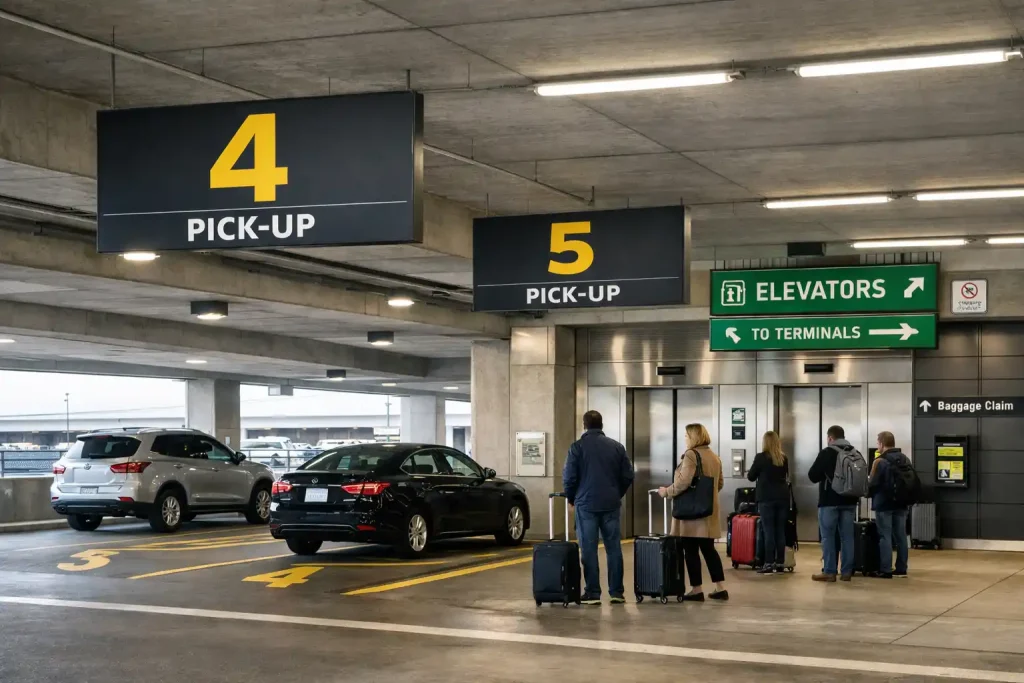
At SeaTac, Uber/Lyft pickup is on the 3rd floor of the airport parking garage.
Port guidance also references marked stall numbers (1–34) for the rideshare pickup area.
The mistake that burns time
People try to “wing it” at the wrong curb, then start the classic text loop:
- “Where are you?”
- “I’m outside.”
- “Outside where?”
- “By the door.”
- “Which door?”
Don’t do that. Do this instead.
One-text meetup script (copy/paste)
“SeaTac rideshare pickup: Parking Garage Level 3. I’m at stalls 1–34 by the elevator bank. I’m wearing a BLACK jacket. If you can’t see me, text your stall #.”
Premium rides are different
Premium Uber options like Uber Black can meet at the baggage-claim-level door the passenger selects, per Port of Seattle guidance.
That can be a big time-saver—if you pick the door clearly and don’t “change your mind” mid-walk.
🚕 Option 3: Taxi (the underrated “no app” exit)
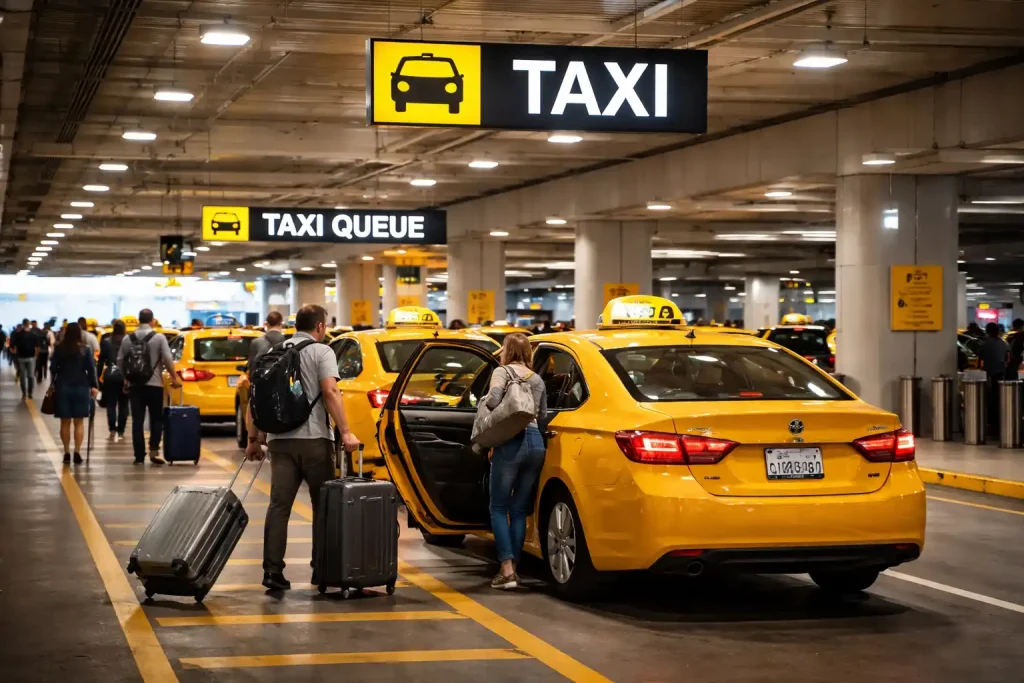
If you’re tired, your phone is dying, or you just want a simple line with a simple rule: taxi is your friend.
SeaTac taxis are stationed on the 3rd floor of the parking garage, north and south curb.
Taxi is the move when:
- you want the least thinking after a long flight,
- rideshare wait times look ugly,
- you’re landing during a demand spike and don’t want surge + confusion.
🧳 Option 4: Pre-booked car service (the “control the variables” move)
This is less about luxury and more about certainty.
Pre-booked makes the whole transfer feel like a simple sequence:
- your pickup plan is set,
- your group has one instruction,
- your drop-off is intentional (not improvised).
If you’re coordinating clients, family, or a multi-stop day, this is the option that prevents the “we’re standing here… no, now we’re over there…” spiral.
If readers are browsing, push them to the fleet page for luggage/seat fit first—because the #1 time-waster for groups is realizing too late the car is too small.
📍 Local spotlight: the meet-point pattern that beats the busiest curb
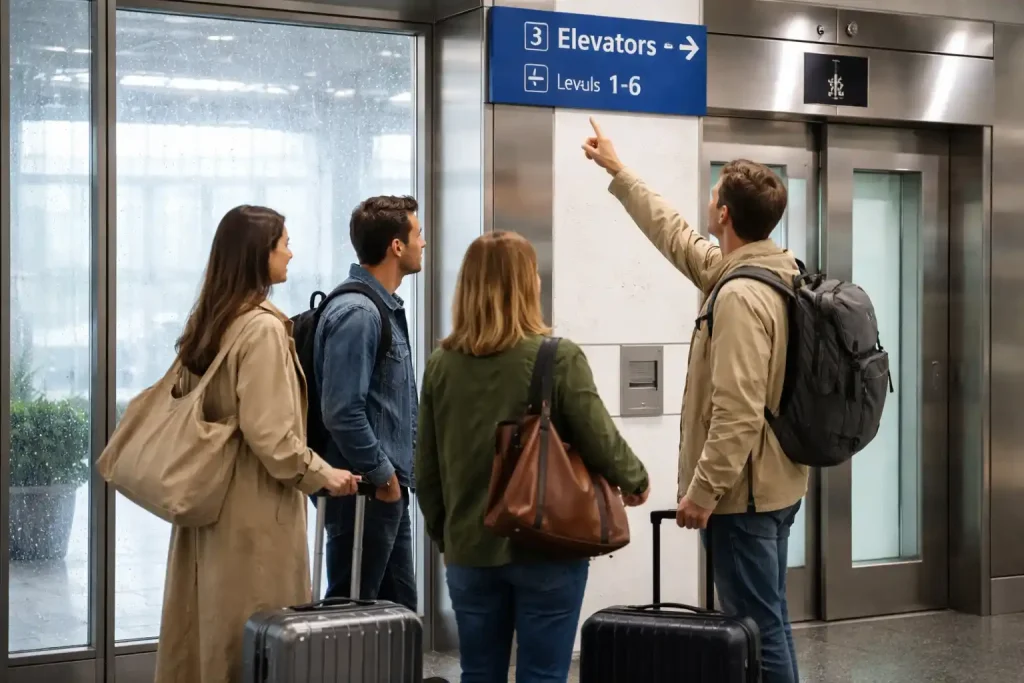
Here’s the pattern that consistently saves time at SeaTac:
Pattern: “Garage Level 3 + stall number” (not “outside baggage claim”)
Port guidance is explicit: rideshare pickup happens on parking garage level 3, in a marked stall area.
That means you can give a location that isn’t emotional (“I’m near the exit!”) but measurable (“stall #, elevator bank, level 3”).
Plan B if access is blocked (construction / event control / weather)
Use a fallback that doesn’t require debate:
- Plan B text: “Same level, different elevator bank. I’ll stand by the next bank and send the stall #.”
- Plan C (no-app fallback): “We’re switching to the taxi line on the garage 3rd floor north/south curb.”
That’s it. No long conversations. No scavenger hunt.
🏙️ Downtown drop-off: don’t lose the last 4 minutes
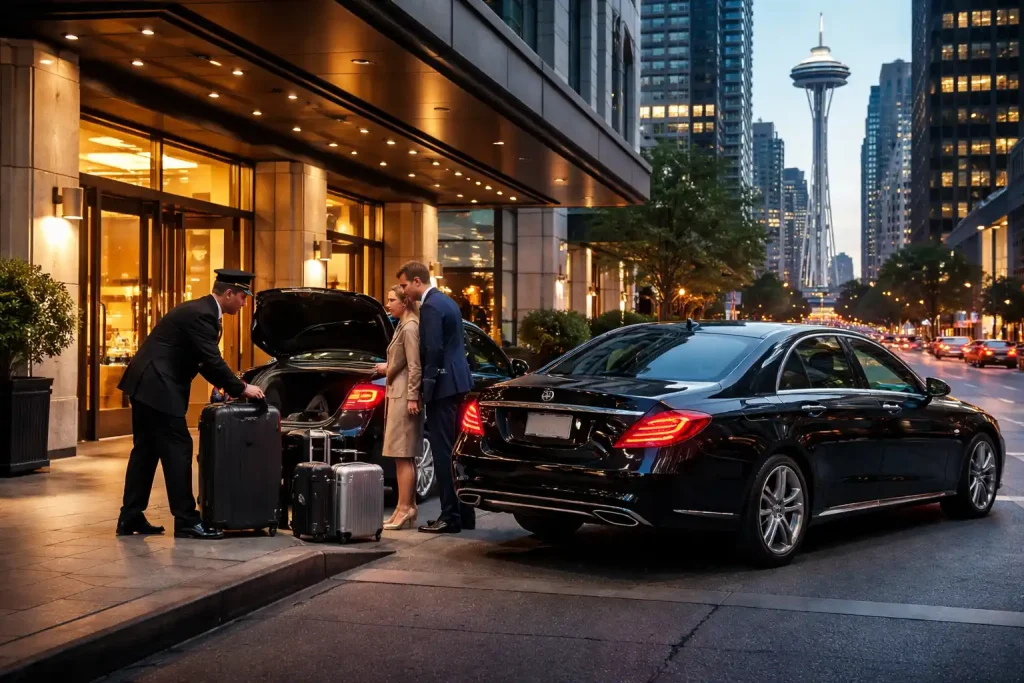
Downtown Seattle can punish sloppy drop-offs: one-way streets, blocked curbs, and that one “quick stop” that turns into circling.
When you’re close to arrival, give the driver one clean instruction:
- “Main entrance, quick unload, then go.”
- or “If the curb is jammed, drop on the calmer side entrance—short walk is fine.”
If you have multiple bags: say it early. The smoothest arrivals are the ones where unloading is planned, not discovered.
🔁 The return trip (downtown → SeaTac) is where people miss flights
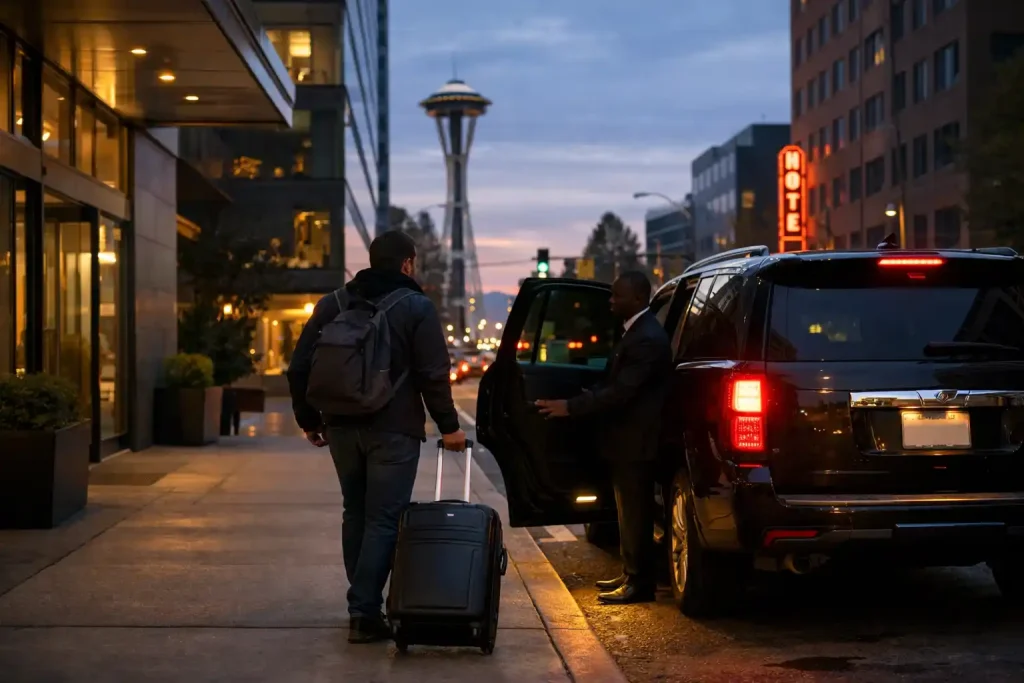
Arrivals are forgiving. Departures are not.
Your return plan should look boring—and that’s the point:
- pick a pickup point that’s easy to stop at (not the busiest curb on your block),
- build a buffer for elevator waits + lobby timing,
- if you’re taking light rail, confirm the day’s schedule/service alerts.
FAQ
I just landed—what’s the fastest, least-confusing rideshare meetup plan?
Go straight to the parking garage Level 3 rideshare pickup, pick one clear reference point (elevator bank + stall number), and don’t move. Send one group text with the exact spot.
My driver says “Arrivals curb”—should I go there?
For standard rideshare pickup, don’t improvise curbs. Stick to the garage Level 3 rideshare area to avoid loops, missed connections, and “Where are you?” texting. (Premium pickups can follow a different door-based rule—see next.)
Does Uber Black (or other premium rides) change the pickup plan?
Yes. Premium pickups can use a door-based meetup at baggage-claim level (the door you select). The key is committing to one door and not switching mid-walk.
We’re 3–5 people with luggage—what’s the fastest “downtown without chaos” choice?
Choose based on load, not price: if you’re tight on time, a pre-booked SUV (or a properly sized vehicle) beats splitting into multiple rideshares and re-uniting downtown.
When is Link light rail the best move from SeaTac to downtown?
When you’re traveling light, your destination is close to a downtown station (or an easy last-mile), and you want predictable movement that isn’t affected by curb congestion.
What if pickup access is blocked (construction, event control, weather, heavy congestion)?
Use a three-step fallback:
- Plan B: same level, switch elevator bank and share a stall number.
- Plan C: switch to the taxi line on the garage 3rd floor (simple, no-app exit).
Keep it binary—don’t negotiate locations in real time.
Downtown drop-off: how do I avoid circling and awkward curb drama?
Ask for a single, realistic drop point: “main entrance quick unload” or “calmer side entrance with a short walk.” If you have multiple bags, say it upfront so unloading is clean and fast.
Returning downtown → SeaTac: what buffer keeps this from getting stressful?
Plan your pickup 10–15 minutes earlier than feels necessary so you’re not burning time on lobby elevators, loading, and blocked curbs. The goal is a boring departure—boring is on-time.